The Salesforce Integration Mistakes That Cost B2B SaaS Companies 3 Months of Rework

Table of content
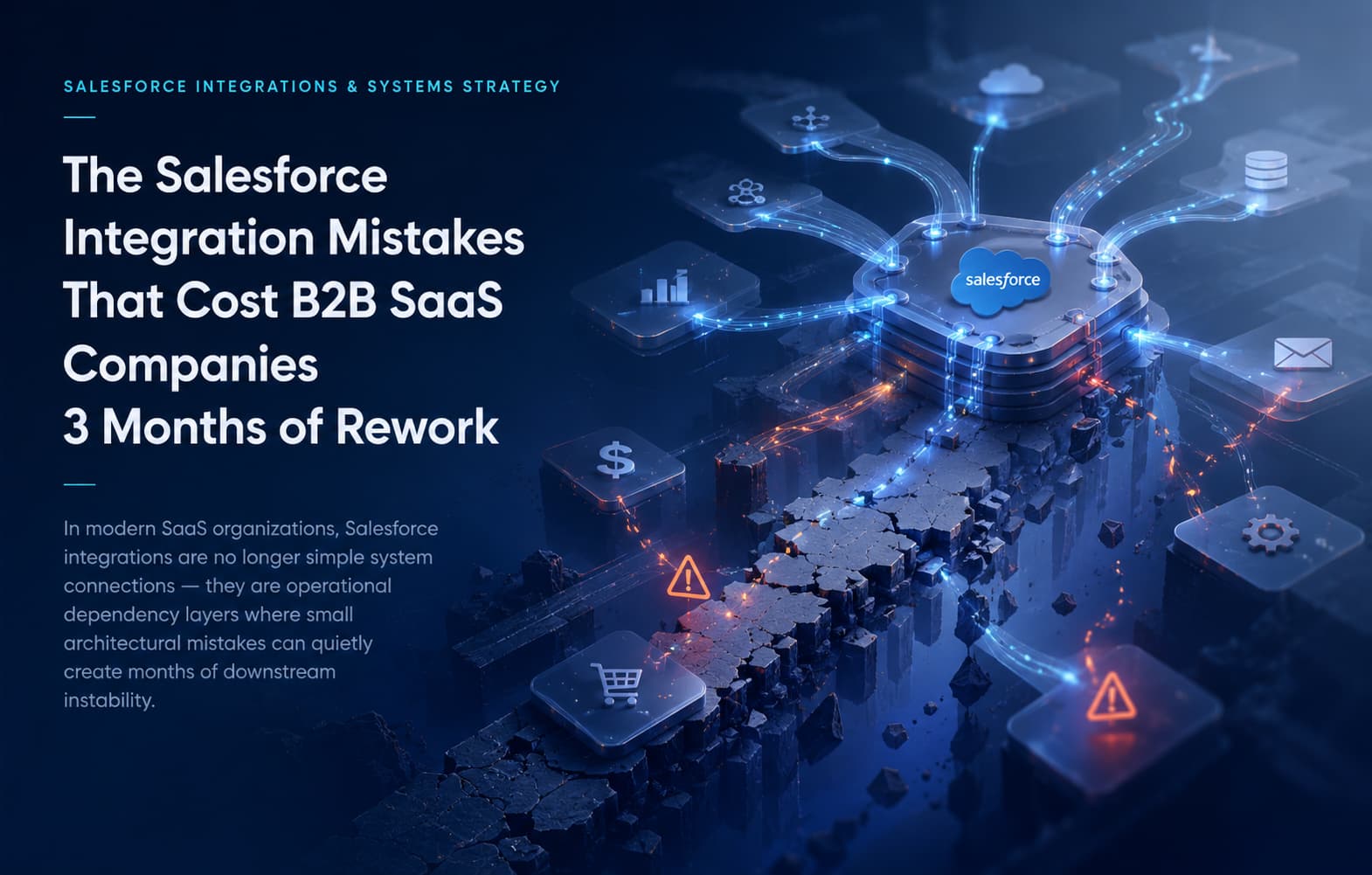
Salesforce integration projects fail in predictable ways. The same five structural mistakes appear in the majority of integration projects that arrive at a consulting partner for remediation — often six to twelve months after go-live, when the cost of fixing them has multiplied significantly from what it would have been to prevent them.
These mistakes are not caused by obscure technical complexity. They are caused by decisions made (or deferred) in the design phase — decisions about data ownership, API governance, error handling, and testing scope that feel like details at the start of a project and feel like catastrophic gaps when a production integration fails at 2 AM on a Monday.
If you are a VP Sales or RevOps leader evaluating a Salesforce integration project, or you have inherited a Salesforce environment where the integrations behave unpredictably, this is the diagnostic.
Mistake 1: No System-of-Record Definition for Shared Data
Every field that exists in both Salesforce and another system — your ERP, your marketing automation platform, your customer success tool — needs a defined system of record: which system owns the data and which system receives it.
When this decision is not made explicitly, two things happen. First, both systems update the field independently — and the last write wins, regardless of which system has the more accurate or more recent value. Second, when the two systems disagree, there is no documented rule for which one is correct.
The conflict surfaces in production as data inconsistency that no one can explain: an account's billing address updated in the ERP that does not appear in Salesforce, or a Salesforce contact record overwriting a corrected email address from the customer success tool.
The fix is a system-of-record matrix — a document that lists every shared field, its system of record, the direction of data flow, and the update frequency. This document should be reviewed and signed off by the business owner of each system before integration build begins. It is a governance document, not a technical one.
Mistake 2: No API Error Handling or Retry Logic
Every Salesforce API integration will fail at some point. Network timeouts, API limit exhaustion, authentication token expiration, and rate limiting from third-party systems are not edge cases — they are routine events in production environments.
The question is not whether your integration will encounter these failures. It is whether the integration is designed to handle them gracefully or fail silently.
Integrations built without structured error handling and retry logic fail silently. A record that failed to sync appears in neither system as an error — it simply does not appear. The sales rep trying to access an account record that was updated in the ERP finds stale data. The Salesforce report querying live ERP inventory shows yesterday's figures. No alarm fires. No notification triggers.
A production-grade Salesforce integration includes:
- Structured error handling for every API call — a defined response for each failure type (timeout, authentication failure, rate limit, invalid record).
- Retry logic with exponential backoff — failed calls are retried automatically, with increasing delays between attempts, before escalating to an alert.
- A dead-letter queue — records that cannot be processed after a defined number of retries are captured in a dedicated error log, not discarded.
- Monitoring and alerting — operations or IT is notified when error rates exceed a defined threshold, before the business impact is felt.
Integrations built without these components are not production integrations. They are prototypes deployed into production.
Mistake 3: Batch Sync Where Real-Time Sync Is Required
Batch integration — syncing data between Salesforce and another system on a scheduled interval (hourly, nightly, weekly) — is appropriate for data that does not drive real-time business decisions. Historical reporting data, archival records, and low-urgency reference data can safely sync on a schedule.
Batch sync is not appropriate for data that drives the real-time decisions your sales and service teams make today. Inventory availability. Contract status. Payment records. Customer health scores. Inbound support tickets.
When this data syncs on a four-hour or 24-hour schedule, the rep checking Salesforce before a customer call is working with information that may be four hours or 24 hours out of date. They may not know that. They make the call based on what Salesforce shows them.
The architectural principle is simple: if a human will make a business decision based on this data within the sync interval, it needs real-time or near-real-time integration. If the only consumer of this data is a weekly report, batch sync is fine.
The most common place this distinction is ignored is ERP-to-Salesforce order and invoice data. It is treated as reporting data (batch sync) when it is actually operational data that drives collection calls, renewal conversations, and upsell opportunities.
Mistake 4: No Integration Testing Environment
Salesforce integration projects regularly go directly from development to production without a structured testing phase. This is partly driven by timeline pressure and partly driven by the mistaken belief that the Salesforce sandbox is a sufficient testing environment.
A Salesforce sandbox is not a full integration testing environment. It does not replicate the behavior of the target third-party system. It does not simulate API rate limits under production load. It does not reproduce the data volume that production traffic generates.
A structured integration testing phase includes:
- End-to-end integration tests using production-representative data volumes, not sample data sets of 50 records.
- Error injection testing — deliberately triggering error conditions (API timeout, invalid records, rate limit breach) to verify that error handling and retry logic behave as designed.
- User acceptance testing by the business team that will work with the integrated data — not sign-off by the technical team that built it.
Integration projects that skip structured testing consistently surface their first real errors in production, under the worst possible conditions.
Mistake 5: No API Versioning or Change Management Protocol
Salesforce releases three major platform updates per year. Third-party APIs change on their own release schedules. When an integration is built against a specific API version without a documented versioning and change management protocol, every platform update becomes a potential breakage event.
The specific failures this causes:
- Salesforce deprecates an API version or object field that the integration depends on. The integration breaks without warning when the deprecation takes effect.
- A third-party system updates its API contract — changing a field name, adding a required parameter, or deprecating an endpoint. The integration continues to call the old contract and receives errors it was not built to handle.
- A Salesforce platform update changes the behavior of a formula field or automation that the integration reads from. The data the integration sends to the third-party system changes in a way no one anticipated.
API versioning and change management means: pinning integrations to specific API versions, reviewing those pins against each Salesforce release, subscribing to third-party API change notifications, and having a named owner for the integration who is responsible for monitoring and responding to upstream changes.
"An integration is not complete at go-live. It is a production system that requires the same ongoing governance as every other system your business depends on. Treat it accordingly from day one."
The Common Thread: Integration Is Treated as a Technical Project, Not an Operational Asset
Every mistake on this list traces back to the same root cause: integration is scoped, built, and delivered as a technical project with a go-live date. It is not designed and governed as the operational asset it immediately becomes once it is live.
Production integrations move business-critical data between systems that your sales team, service team, and finance team depend on every day. They require the same governance maturity as the systems they connect: defined ownership, documented behavior, structured testing, and ongoing monitoring.
The companies that get integration right treat it as infrastructure, not implementation. The companies that get it wrong discover the distinction during a production incident at the end of a quarter.
Working With Makedian
Makedian's Salesforce Integration practice designs and delivers API integrations with the production governance built in from the first sprint: system-of-record documentation, structured error handling, real-time vs. batch architecture decisions, full integration testing, and a post-go-live monitoring protocol included as standard deliverables.
If you have inherited integrations that behave unpredictably or have just received a proposal for a new integration and want a second opinion on the architecture, our Salesforce RevOps Diagnostic covers integration health as part of its standard scope.
Book your RevOps Diagnostic at
.webp)












Agentforce for Financial Services: AI-Driven Banking & Insurance Solutions










.webp)









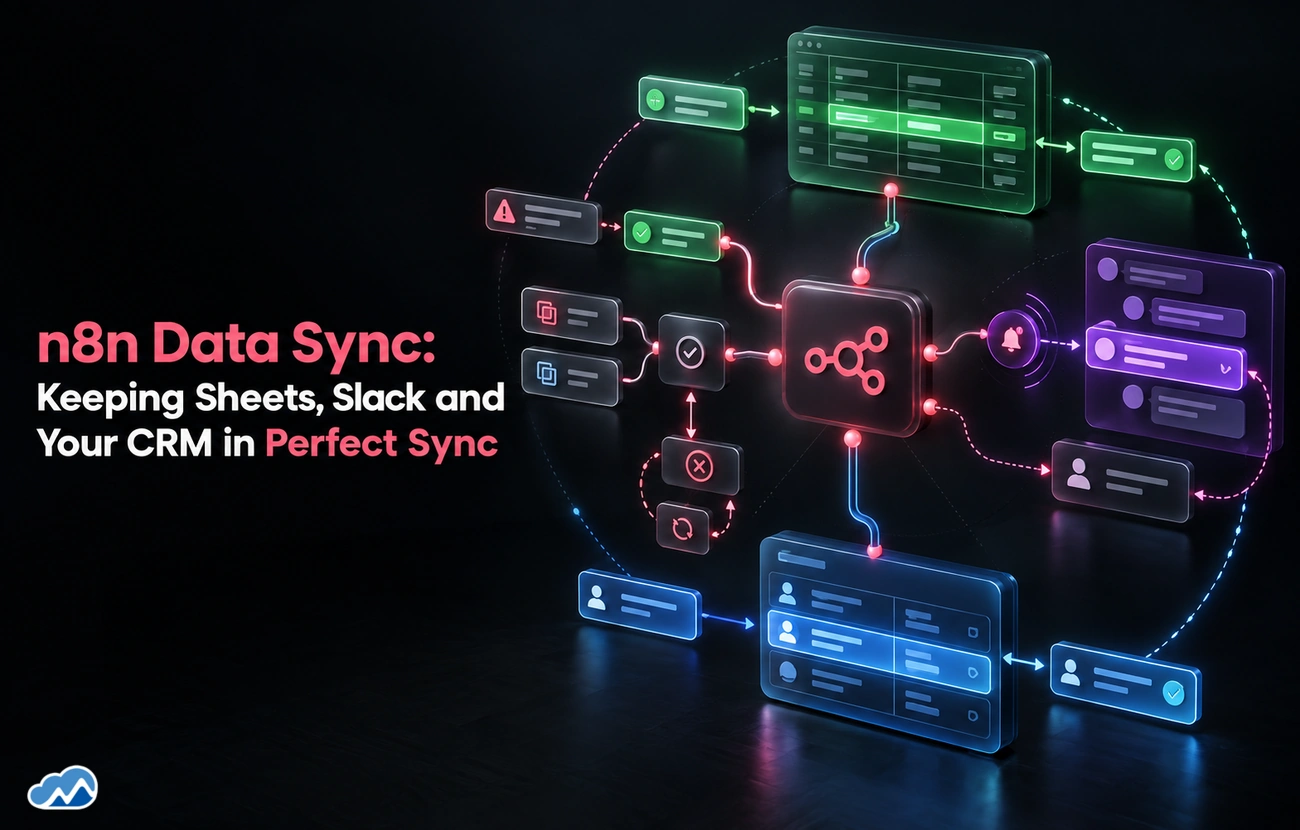
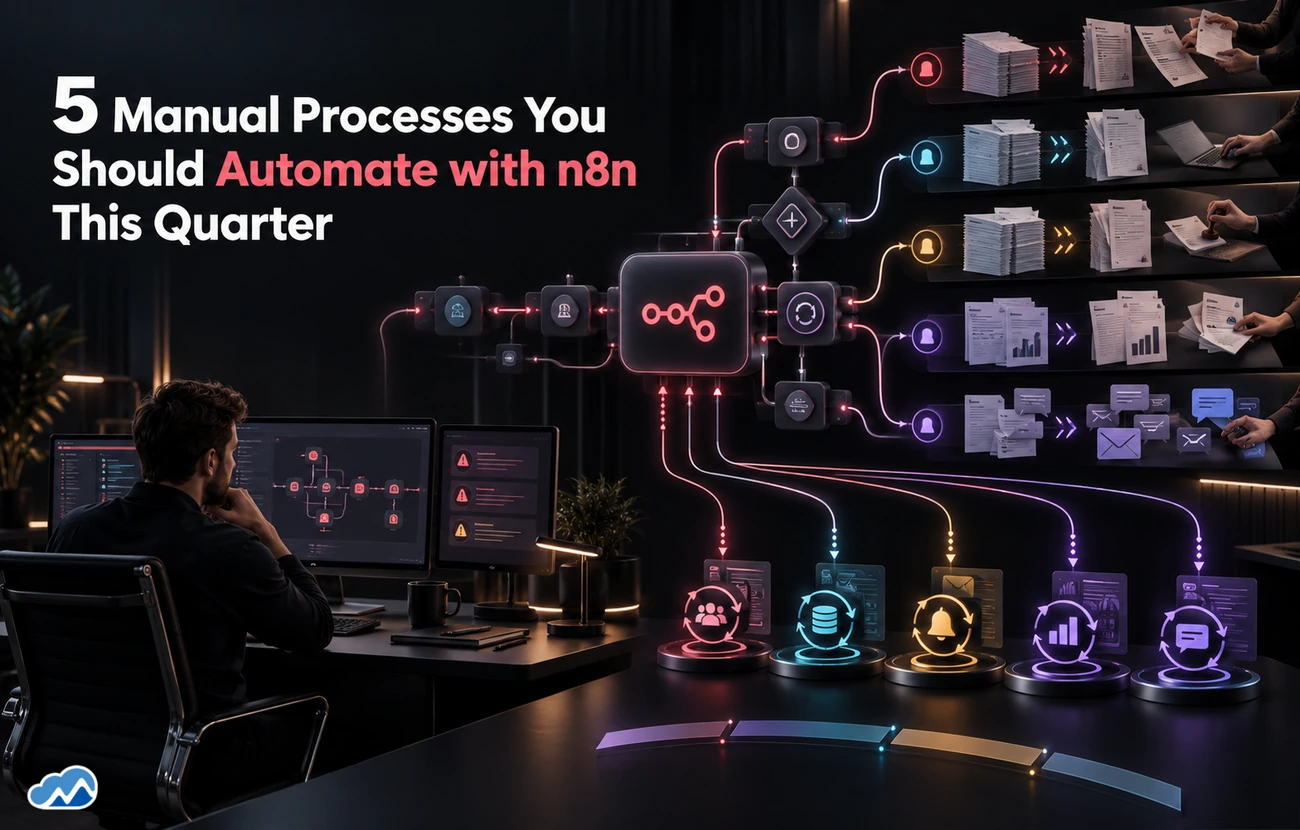
n8n Workflow Automation: From Lead Capture to CRM in Minutes, Not Hours

%20(1).webp)