Salesforce RevOps Consulting: Aligning Sales, Marketing & Service in 2026

Table of content
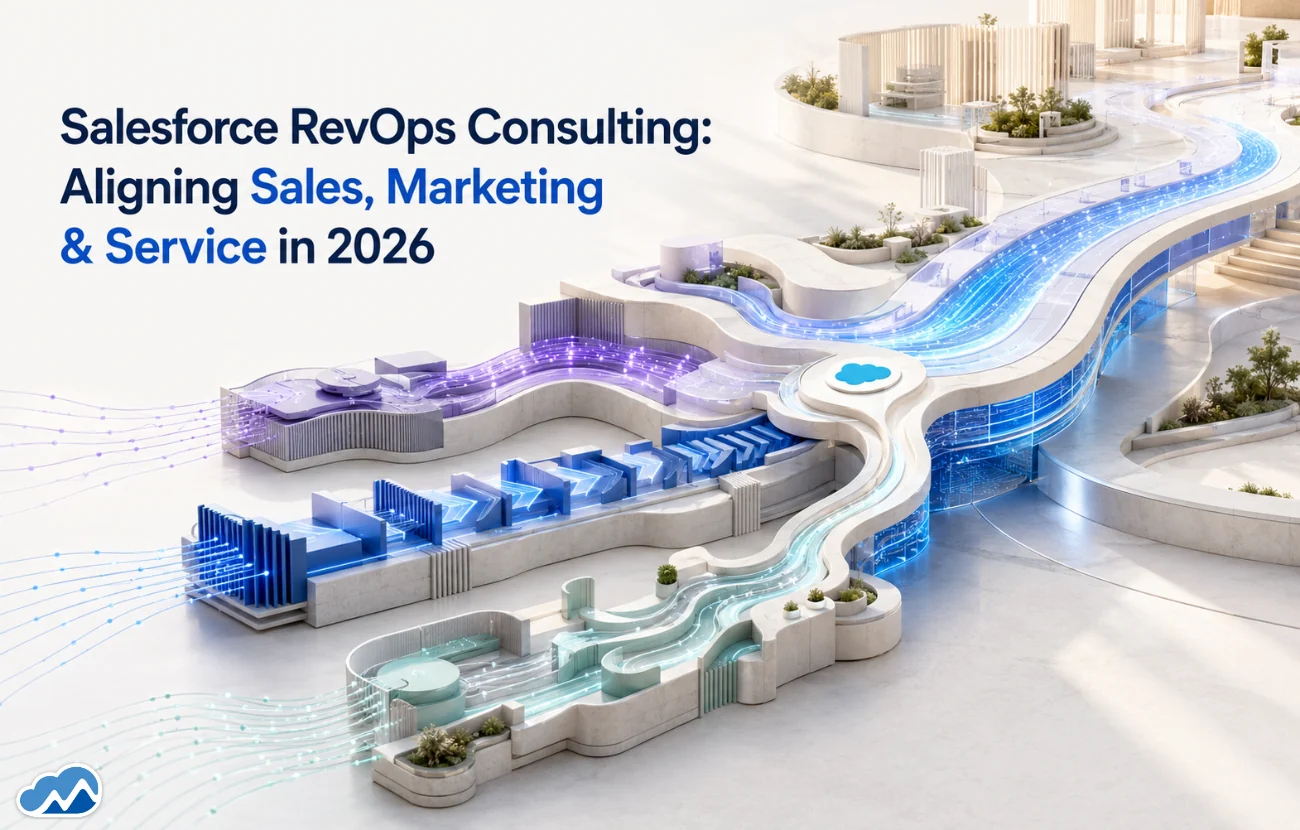
In a lot of companies, sales, marketing and service each run their own tight ship, and each ship is sailing in a slightly different direction. Marketing optimises for leads, sales for deals, service for tickets closed, and every team hits its own numbers while revenue quietly leaks out of the gaps between them. Nobody's doing anything wrong. That's what makes it so hard to fix.
Revenue operations, RevOps, is the discipline of closing those gaps by aligning all three around one shared revenue process, on one shared view of the customer. And Salesforce RevOps consulting is about making that real on the platform, so marketing, sales and service stop optimising their own patch and start pulling in the same direction. Let's talk about why it matters and what it actually involves.
What RevOps Actually Is
RevOps is the idea that revenue is one continuous process, not three separate ones. A customer doesn't experience your marketing, sales and service as different departments; they experience one relationship with your company. RevOps aligns your teams, data and systems around that reality, so the whole journey from first touch to renewal is joined up rather than fragmented across silos.
Salesforce RevOps consulting brings that principle to life on the platform. It means getting marketing, sales and service onto shared data, aligned definitions and a connected process, so handoffs are clean, reporting is consistent and everyone works from one version of the truth. It's less about a single feature and more about designing the platform around one revenue engine instead of three disconnected tools.
RevOps sits alongside the AI shift as one of the defining moves in how modern businesses run on Salesforce. For the wider trends picture, see our Agentforce & AI Trends Master guide. This one focuses on RevOps specifically.
Why Misalignment Quietly Costs You
The cost of siloed teams rarely shows up as a single dramatic failure. It shows up in a hundred small leaks. A lead marketing generated gets lost because the sales handoff was messy. Two teams report the same number differently, so nobody trusts the dashboard. A customer gets a cheerful upsell email from marketing the same day they raised an angry support case, because service and marketing can't see each other.
Each of these feels minor in the moment. Collectively, they add up to real lost revenue and a customer experience that feels disjointed. That's the problem Salesforce RevOps consulting exists to solve, and the reason it's moved up the priority list: at scale, the leaks in the seams between teams become the single biggest source of wasted growth.
What Salesforce RevOps Consulting Actually Does
A good Salesforce RevOps consulting engagement goes after alignment on several fronts at once. It gets your teams onto shared, unified customer data, so everyone sees the same complete picture. It aligns definitions and lifecycle stages, so a qualified lead means the same thing to marketing and sales. It connects the process end to end, so handoffs between marketing, sales and service are designed rather than accidental. And it builds reporting that follows revenue across the whole journey, so leadership sees one funnel, not three.
The throughline is a single revenue engine on one platform. Instead of three teams each optimising their own tool, Salesforce RevOps consulting designs the whole system around the customer's journey, which is where the leaks close and the growth that was slipping away gets recovered.
It also has to account for the stack you actually have. Very few businesses run every revenue process inside Salesforce, so part of the work is deciding what belongs on the platform, what stays where it already lives and how the two talk to each other without drifting apart over time. Get that boundary wrong and you rebuild the same silos with better tooling.
Where AI and Agentforce Fit in RevOps
AI makes aligned revenue operations sharper, but only once the alignment exists. On unified data, Einstein can predict which deals will close and which customers might churn, and Agentforce agents can handle routine work across the funnel, qualifying leads, resolving service cases, keeping the process moving without human bottlenecks. The AI amplifies a well-aligned revenue engine.
The order matters, though. AI layered onto misaligned, siloed data just produces confident predictions from a fractured picture. That's why sensible Salesforce RevOps consulting gets the alignment and data foundation right first, then uses AI to make the aligned system faster and smarter. Foundation first, intelligence second, every time.
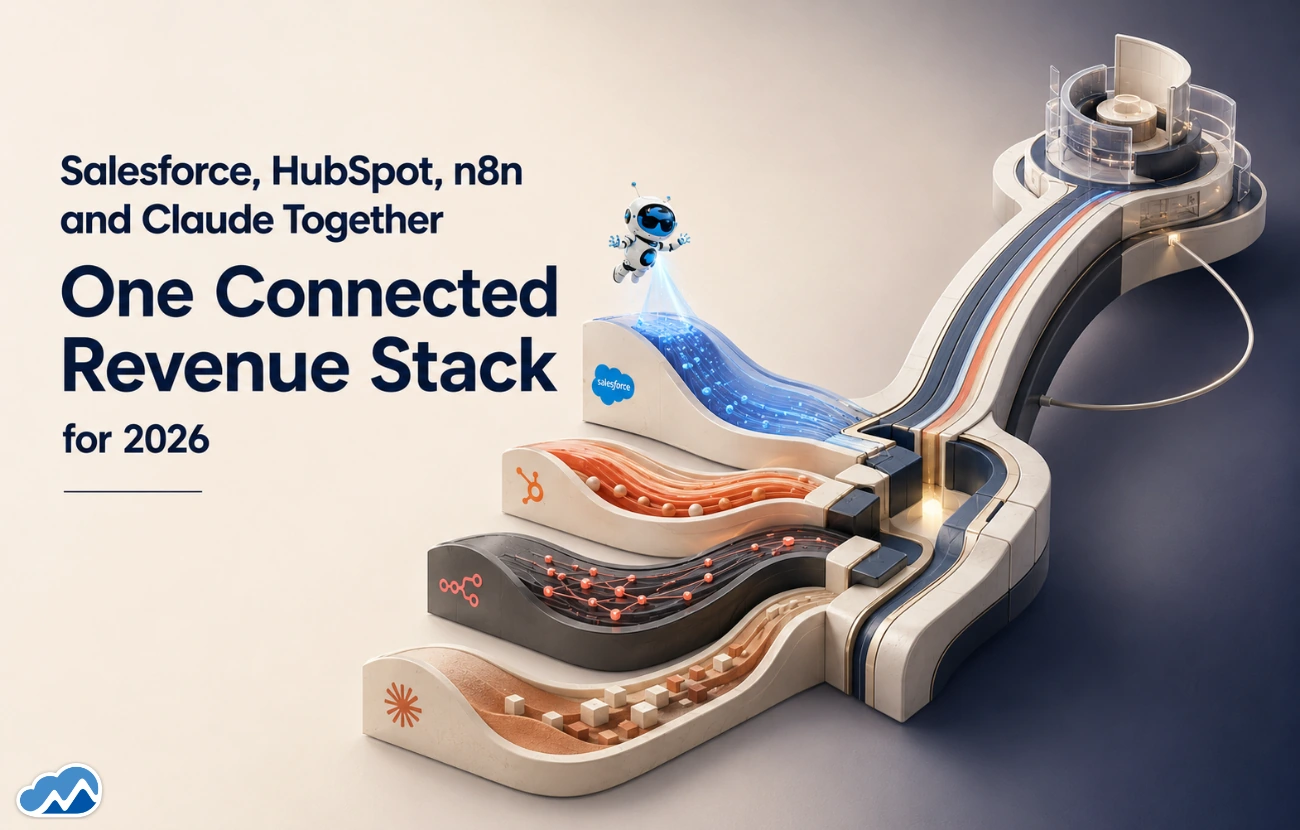
Where HubSpot, n8n and Claude Fit
Most companies do not run on Salesforce alone. Marketing often sits in HubSpot, a few processes run on scripts nobody documented and the newer AI work happens in whatever tool someone tried first. RevOps has to account for that, because alignment breaks at the boundary between systems just as easily as it breaks between teams.
HubSpot is the most common case. Marketing runs campaigns, forms and nurture there while sales works opportunities in Salesforce, and the sync works just well enough that nobody questions it. Then a lifecycle stage means one thing in HubSpot and something else in Salesforce, lead source gets overwritten on the way across and the marketing-attributed pipeline number stops matching the sales one. Salesforce RevOps consulting fixes this at the definition level first: agree what a qualified lead is, decide which system owns which field, then make the integration enforce that instead of quietly fighting it. Some engagements end in a full migration onto Salesforce. Plenty of others keep HubSpot for marketing and simply make the handoff deliberate. Either works, as long as the definitions are shared and one system clearly owns the record.
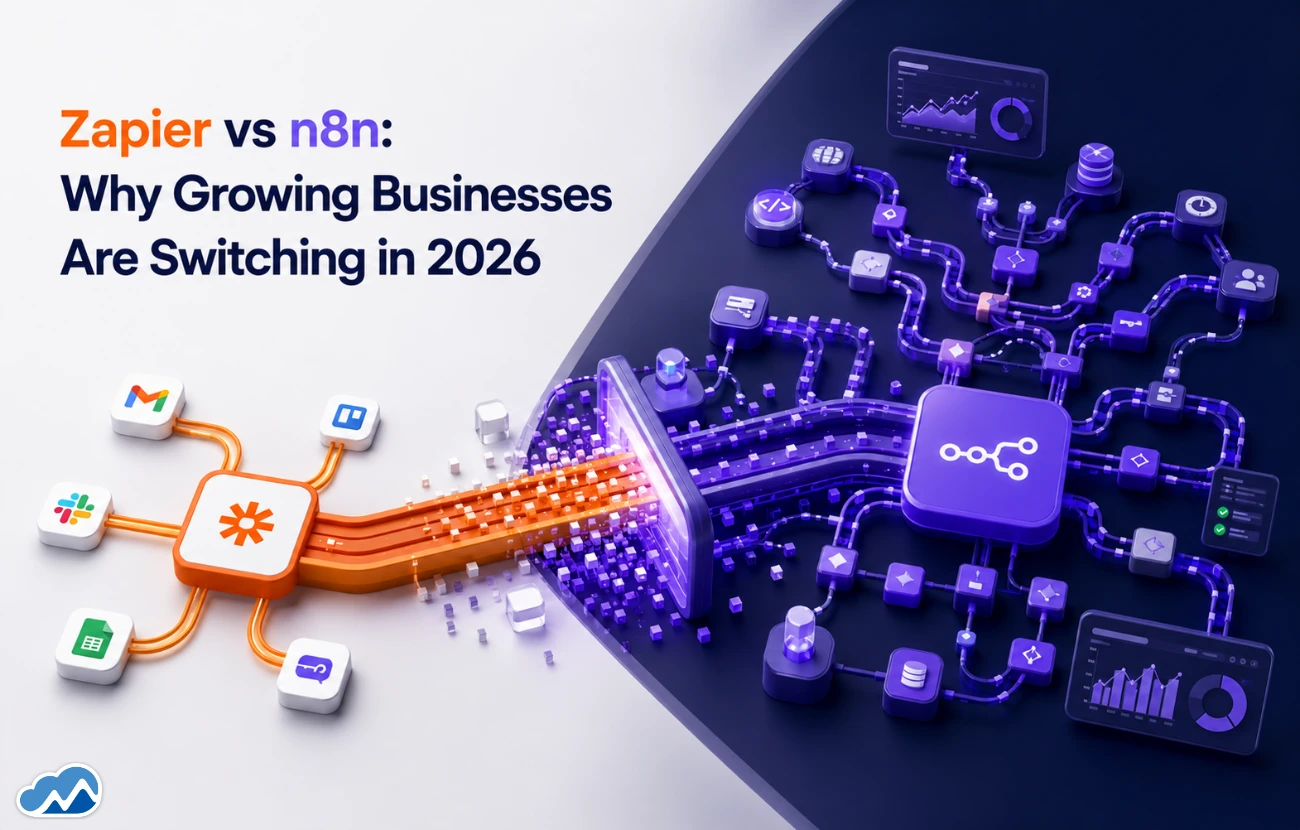
n8n covers the work between the systems. Salesforce Flow handles what happens inside Salesforce well, but revenue processes cross tools: an enrichment lookup, a billing record, a Slack alert when a strategic account raises a case, a nightly reconciliation between HubSpot and Salesforce. n8n gives those steps somewhere visible to run, with retries and logs you can read, instead of burying them in point-to-point integrations or a spreadsheet somebody maintains by hand. The rule worth holding to is simple: keep the record of truth in Salesforce, let n8n move and reconcile, and never let it become a second place where business logic lives.
Claude fits the same way Einstein and Agentforce do, on top of a foundation that already holds. Once the data is unified, a language model is useful for the messy work structured automation handles badly: summarising a long case history before a renewal call, drafting the first version of an account plan from activity data, reading through support conversations to find the churn signal nobody logged as a field. Called through n8n or the Salesforce APIs, Claude can sit inside the aligned process rather than beside it in a browser tab. The order does not change, though. Alignment first, then intelligence, whichever model you use.
Signs You Need RevOps
Not sure whether this applies to you? Run through these honestly. Marketing, sales and service report different numbers for the same thing. Leads regularly go cold in the handoff between teams. Nobody can see the full customer journey from first touch to renewal in one place. Customers get contradictory messages because your teams can't see each other. Your forecast is stitched together from separate, disagreeing sources.
Two or three of those, and the problem isn't any one team, it's the alignment between them, and that's exactly what Salesforce RevOps consulting addresses. The teams are probably performing fine individually; the money is leaking in the gaps.
What Good Looks Like
When RevOps is done well, the shape of the business changes. Marketing, sales and service work from one customer record and shared definitions. Handoffs are clean and deliberate. Leadership sees one revenue funnel they can actually trust. Customers get a consistent experience because every team can see the whole relationship. And AI, layered on top, makes the whole aligned engine faster.
That's the outcome Salesforce RevOps consulting is aiming at: not three teams working harder in their own silos, but one revenue process working smarter together. In a market where efficient growth matters more than ever, closing the gaps between your teams is often the highest-return work available. It also holds up as the stack changes. When the definitions are shared and Salesforce owns the record, adding a HubSpot campaign, an n8n workflow or a Claude summary on top of a renewal review is a small change rather than a fresh integration project, because the process underneath already agrees with itself.
If revenue feels like it's leaking between your teams, aligning them is usually the highest-return fix available. Explore our Salesforce Consulting Services, read the wider Agentforce & AI Trends Master guide, or book a 30-minute call and we'll help you find where the leaks are. That conversation is usually shorter than people expect.
Frequently Asked Questions
.webp)










Agentforce for Financial Services: AI-Driven Banking & Insurance Solutions






.webp)




n8n Workflow Automation: From Lead Capture to CRM in Minutes, Not Hours

%20(1).webp)