Salesforce Consulting in Singapore: What Enterprises Need to Know in 2026

Table of content
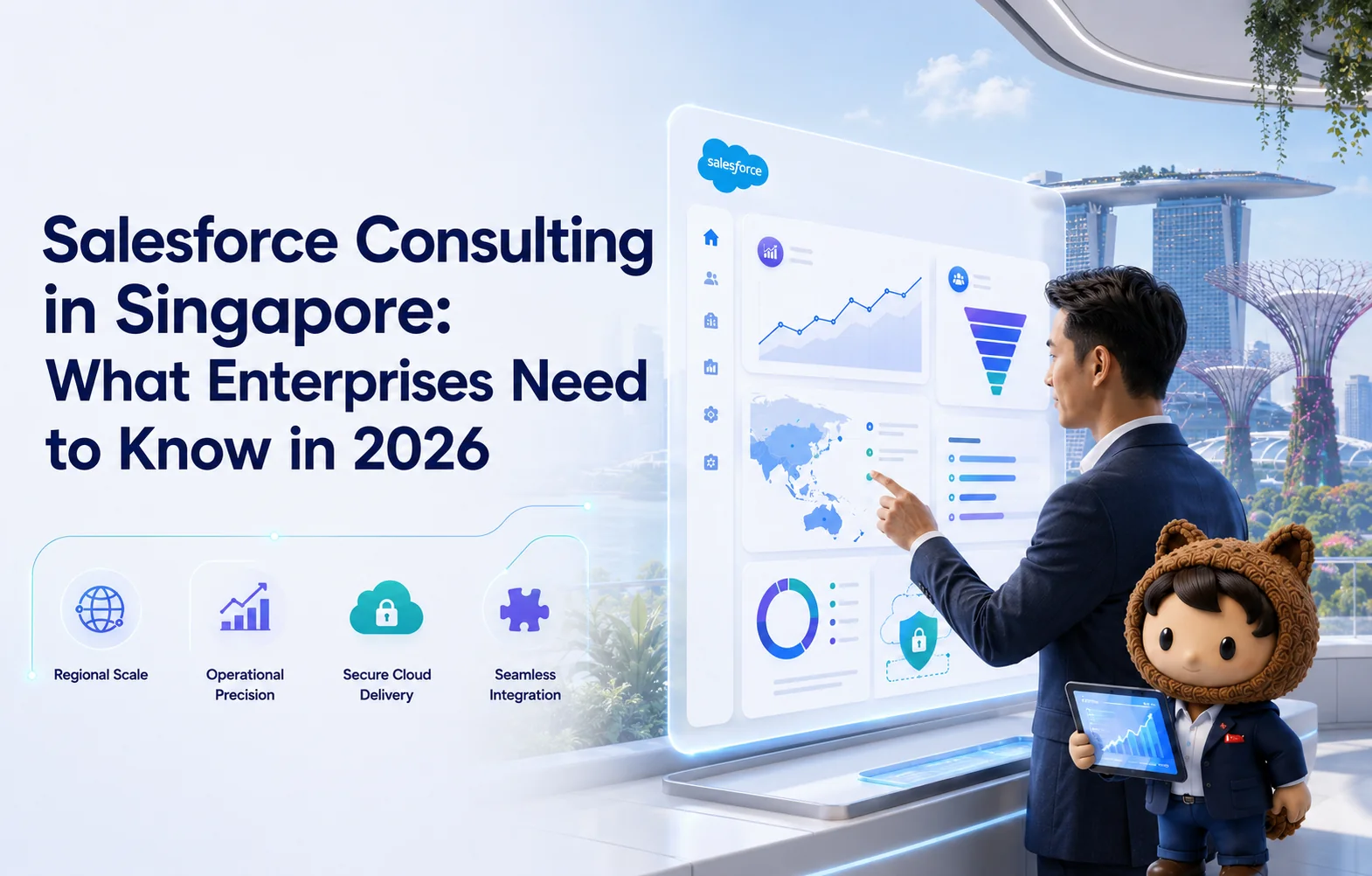
Singapore punches far above its size in the business world, a regional headquarters for countless multinationals and one of the most digitally advanced economies anywhere. That also makes it a crowded, sophisticated market for Salesforce partners, where enterprises expect a lot and the difference between firms isn't always obvious from a first meeting.
For enterprises here, choosing among salesforce consulting companies in Singapore is less about finding a capable firm, there are many, and more about finding one that fits the specific demands of operating in Singapore and often across the wider region. Get it right and Salesforce becomes a genuine competitive edge. Get it wrong and it's an expensive project that underdelivers. Let's talk about what to look for.
Why the Right Partner Matters More Than the Software
The point enterprises sometimes miss is that Salesforce is the same powerful, empty platform for everyone. Success comes from the implementation, and the implementation is only ever as good as the partner behind it. World-class software, poorly implemented, still fails. A sensible setup, implemented well, transforms how an organisation runs.
So the choice among salesforce consulting companies in Singapore is the most important decision in the whole project. A strong partner asks the right questions, designs around how your enterprise actually operates and delivers something people adopt. A weak one configures features and leaves you wondering why the investment didn't land.
Singapore is one of several markets where partner selection has its own character. For the global view, our Salesforce Consulting Worldwide guide covers how it varies across regions. This one is specifically about Singapore.
What Makes the Singapore Market Different
Singapore's Salesforce market has a distinct shape. It's enterprise-heavy, with many regional and global headquarters, so partners are used to complex, multi-country requirements, and that's often exactly what you need. The city-state's strong government push on digital transformation sets a high bar for ambition and delivery. Data protection under the PDPA is taken seriously, so a partner must understand it and, frequently, the data rules of neighbouring markets too.
Then there's the regional dimension. Many Singapore-based enterprises run operations across Southeast Asia, so the best salesforce consulting companies in Singapore think beyond the island, comfortable with multi-country rollouts, multiple languages and the varied regulations of the region. If your business extends into ASEAN, that regional fluency is one of the most important things to look for.
What to Look For in Salesforce consulting companies in Singapore
Once you accept that the partner matters more than the licence, the question becomes how to tell a good one from a confident one. A few things separate the salesforce consulting companies in Singapore worth your time.
Real, certified expertise. Salesforce certifications aren't everything, but they're a baseline, and a serious firm will have genuine, current ones across admin, development and the specific clouds you need, not one certificate from three years ago.
Relevant experience, not just any experience. A partner who has solved problems like yours, in your industry and at your size, will move faster and make fewer expensive assumptions than a generalist learning on your project.
A process-first mindset. The best salesforce consulting companies in Singapore ask about how your business actually works before they talk configuration. A firm that only wants to discuss features is one that will build you something technically fine that nobody's workflow fits.
Documentation and no lock-in. A confident partner documents what they build and hands it over. One that keeps the knowledge in their heads is protecting their retainer, not your interests.
A point of view on AI. Agentforce and Einstein are real now, and a modern partner should be able to tell you sensibly where AI helps and where it doesn't, rather than either ignoring it or overselling it.
Local, Offshore or Hybrid? The Honest Answer
This is where a lot of firms get evasive, so let's be direct. A fully local partner gives you Singaporean and regional context, easy timezone overlap and face-to-face where it matters, usually at a higher rate. A purely offshore team is cheaper but can struggle with context, hours and communication. A hybrid model, local strategy and relationship with delivery support elsewhere, often gives the best balance of value and understanding.
There's no universally right answer, only the one that fits your project. What matters is that the partner is honest about how they work and that someone who genuinely understands your market is close to your project, not just an account manager relaying messages to a team you never speak to.
What a Singapore Engagement Actually Looks Like
Enterprises often ask what they are actually buying when they engage a consulting partner, so it helps to set out the shape of a typical project. The first phase is discovery, and it is the phase most often rushed. A good partner spends real time with your sales, service and finance teams, maps how work moves today and separates the processes worth keeping from the ones that only exist because an old system demanded them. In a Singapore context this is also where regional variation surfaces, because the way your Indonesian distributor is handled rarely matches the way your Australian direct team operates.
Design comes next. This is where decisions get made about objects, record types, permission models and which parts of the business share data and which stay separated for PDPA or commercial reasons. The output should be a document you can read and challenge, not a wireframe you are asked to trust. If your partner cannot explain a design decision in plain business language, that is a signal worth acting on early.
Build and configuration follow, usually in short iterations with something demonstrable at the end of each one. Then comes data migration, which is consistently the most underestimated part of any programme. Legacy CRM data in regional businesses tends to be duplicated across country spreadsheets, inconsistently formatted and full of contacts nobody has spoken to in three years. Cleaning it is unglamorous work and it is the difference between a system people trust and one they quietly abandon.
Finally there is enablement and hyper-care. Training in a regional business means accounting for different languages, different sales motions and different levels of digital comfort across markets. Hyper-care, the weeks immediately after go-live, is when adoption is either won or lost, and it is worth confirming in writing what support you get in that window before you sign anything.
Red Flags to Watch
A few warning signs come up again and again. A partner who only talks technology and never asks about your business. Vague answers on certifications or references. A rush to build before the process is agreed. No clear plan for documentation or handover. And anyone promising to solve everything with AI before your data and foundations are anywhere near ready. Any one of those is a reason to slow down and ask harder questions.
Questions to Ask Before You Sign
Before committing, get honest answers to a handful of things. Can you show me relevant work with businesses like ours? Who exactly will be on my project, and where are they based? How do you approach discovery before building? What happens after go-live, and how do you hand over? And where do you think AI genuinely fits for a business like mine? The quality of those answers tells you more than any pitch deck.
Where AI Fits in a Modern Singapore Salesforce Project
Singapore's appetite for innovation makes it fertile ground for AI, and Agentforce and Einstein feature in serious enterprise conversations. A good partner will be specific about where AI adds value, scoring leads, predicting churn, resolving routine service across a regional customer base, deployed on clean data with proper governance and human oversight. Given PDPA and cross-border data considerations, that governance matters. A firm that oversells AI or ignores the data rules is one to be cautious of.
It is also worth separating the AI that ships inside Salesforce from the AI you bring to it. Agentforce and Einstein are strong where the work sits inside the CRM, but a lot of the value enterprises are chasing in 2026 summarising long service threads, drafting regional proposals, extracting structured fields from unstructured email is being delivered by general-purpose models called from workflows around the platform. Our practical guide to Claude AI for business covers how those chatbots, automations and structured outputs are built and governed, and it is a useful reference to have in hand when a partner starts talking about AI in your project.
The distinction matters commercially. Licensing every user for platform AI to solve a problem that a governed model call could handle for a fraction of the cost is a common and expensive mistake, and a partner willing to tell you that is worth more than one who is not.
Salesforce Rarely Stands Alone in a Singapore Stack
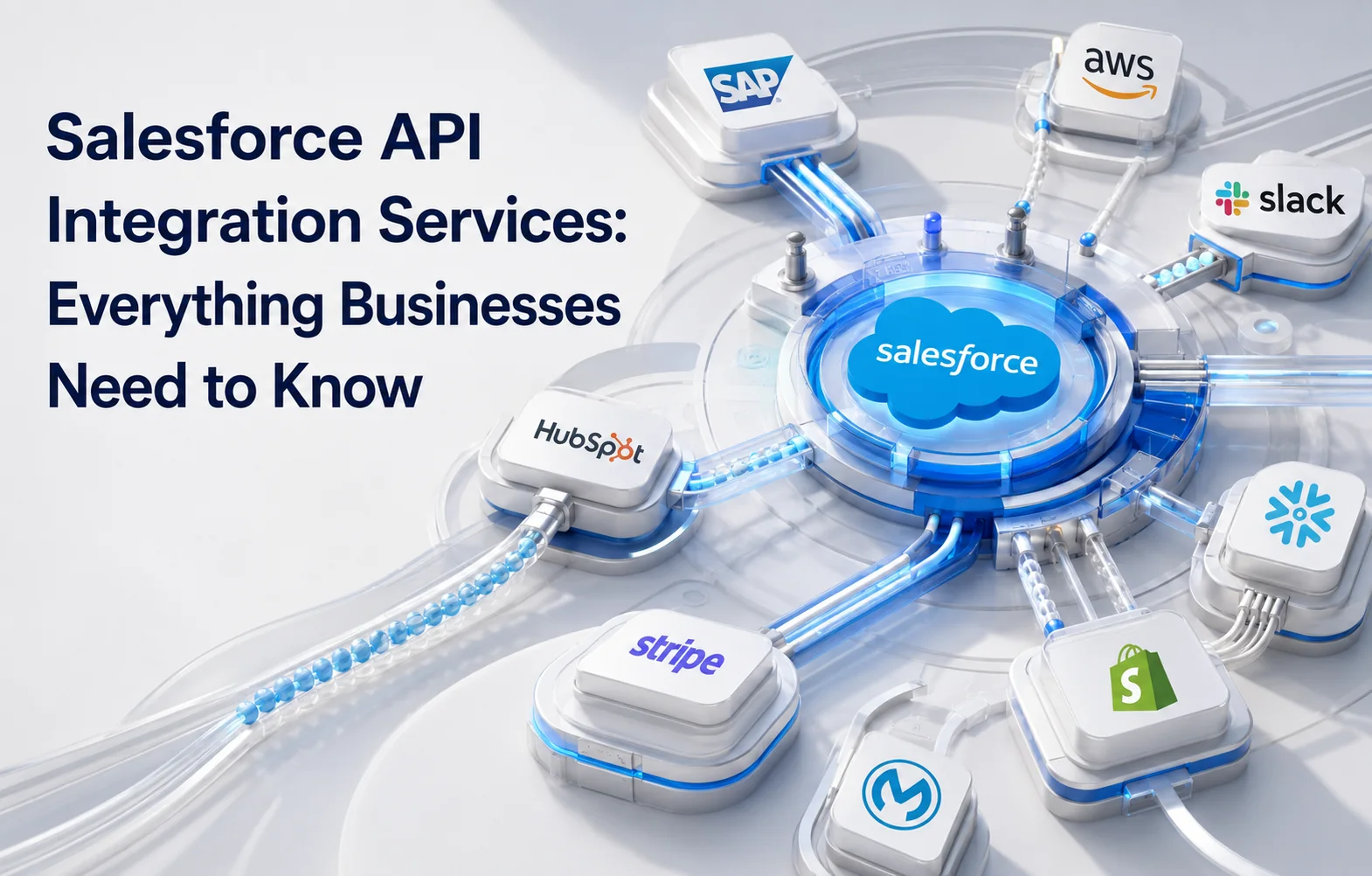
One thing that catches enterprises out is discovering, mid-project, that Salesforce is only one part of the revenue system. Marketing may be running on HubSpot, finance on a regional ERP, support on a separate ticketing tool and half the reporting in spreadsheets that someone maintains by hand. A Salesforce implementation that ignores those neighbours produces a very tidy CRM sitting in the middle of a disconnected business.
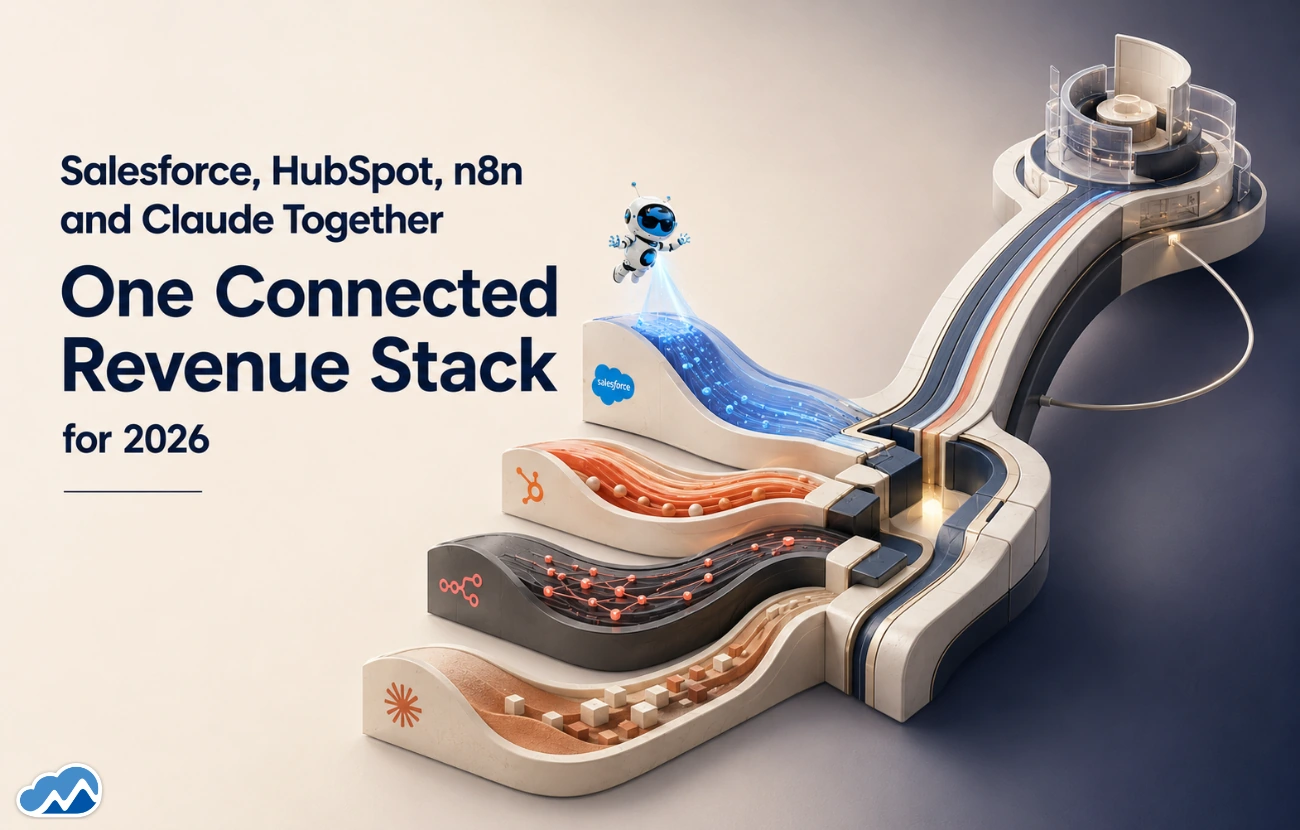
This is where the better partners earn their fee. Deciding which system owns the customer record, where marketing hands off to sales, how quoting data returns from finance and what gets synchronised versus what gets reported on is architecture work, not configuration work. We have written about how these pieces fit together in Salesforce, HubSpot, n8n and Claude together: building one connected revenue stack, which is worth reading before you scope your project rather than after.
If marketing automation and lifecycle campaigns are a significant part of your regional go-to-market, our complete guide to HubSpot services covering CRM, marketing and RevOps sets out how that side of the stack is usually structured and where the overlap with Salesforce needs a deliberate decision rather than a default.
And for everything in between the platforms the syncs, the approval routings, the regional data transformations, the alerts that stop a deal stalling in a market nobody is watching orchestration usually does the job more cheaply and transparently than custom Apex. Our guide to n8n automation services and connecting your business tools explains that layer, and it is the part of the stack most often left undesigned until something breaks.
Frequently Asked Questions




Agentforce for Financial Services: AI-Driven Banking & Insurance Solutions




.webp)


n8n Workflow Automation: From Lead Capture to CRM in Minutes, Not Hours
%20(1).webp)