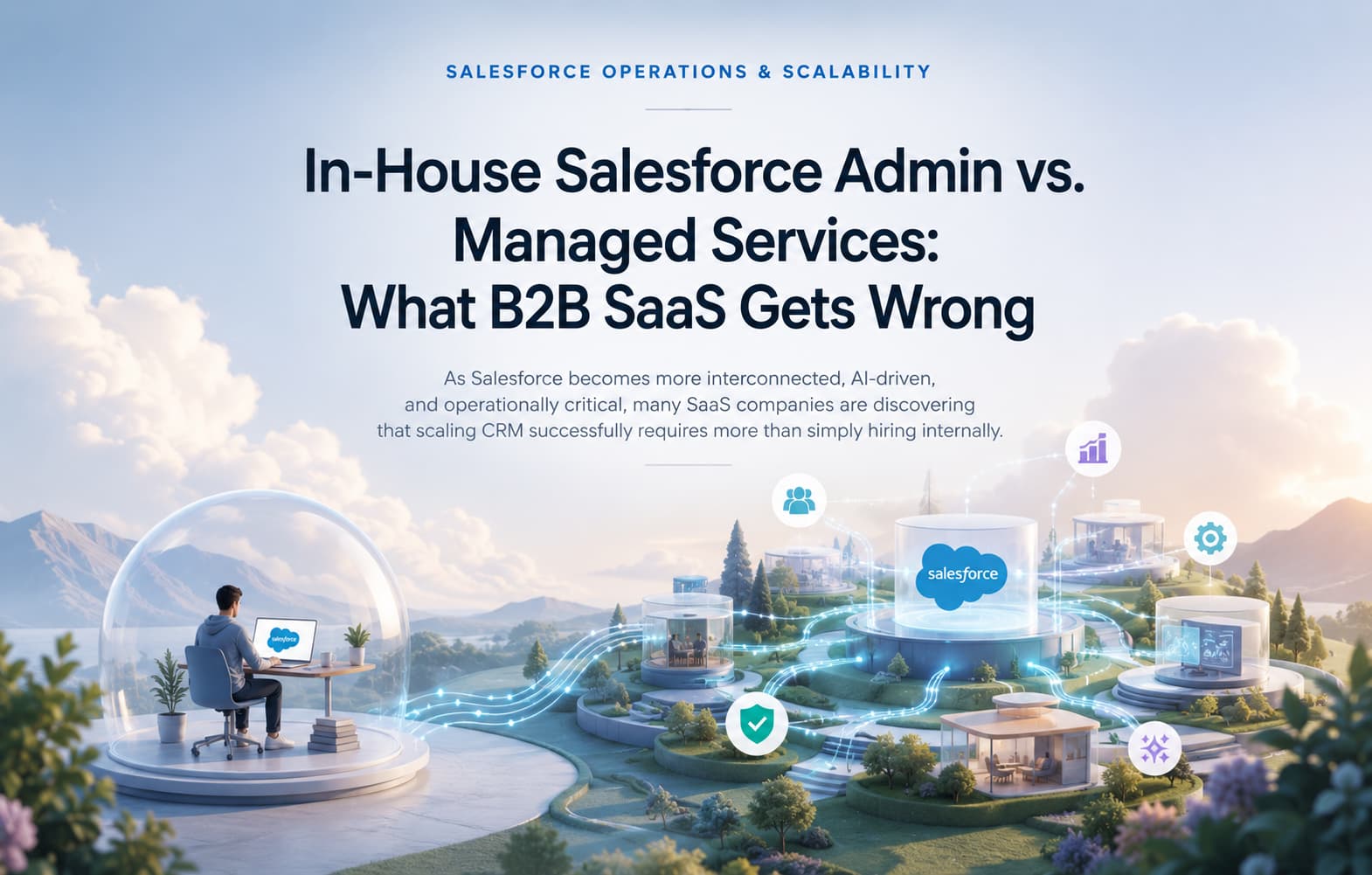
Salesforce Consulting Companies in the USA: How to Find the Right Partner

Table of content

Search for a Salesforce partner in the United States and the results can feel endless. Thousands of firms compete for the same work, from global systems integrators to small specialist teams. Many use the same language on their websites. The case studies sound familiar, the promises overlap and every proposal says the new CRM will improve visibility, productivity and growth. That makes the choice harder than it looks. Many US businesses end up choosing the lowest bid, the best-known logo or the partner with the most confident sales call. That choice may look sensible at first, but it often becomes expensive once discovery starts and the gaps become clear.
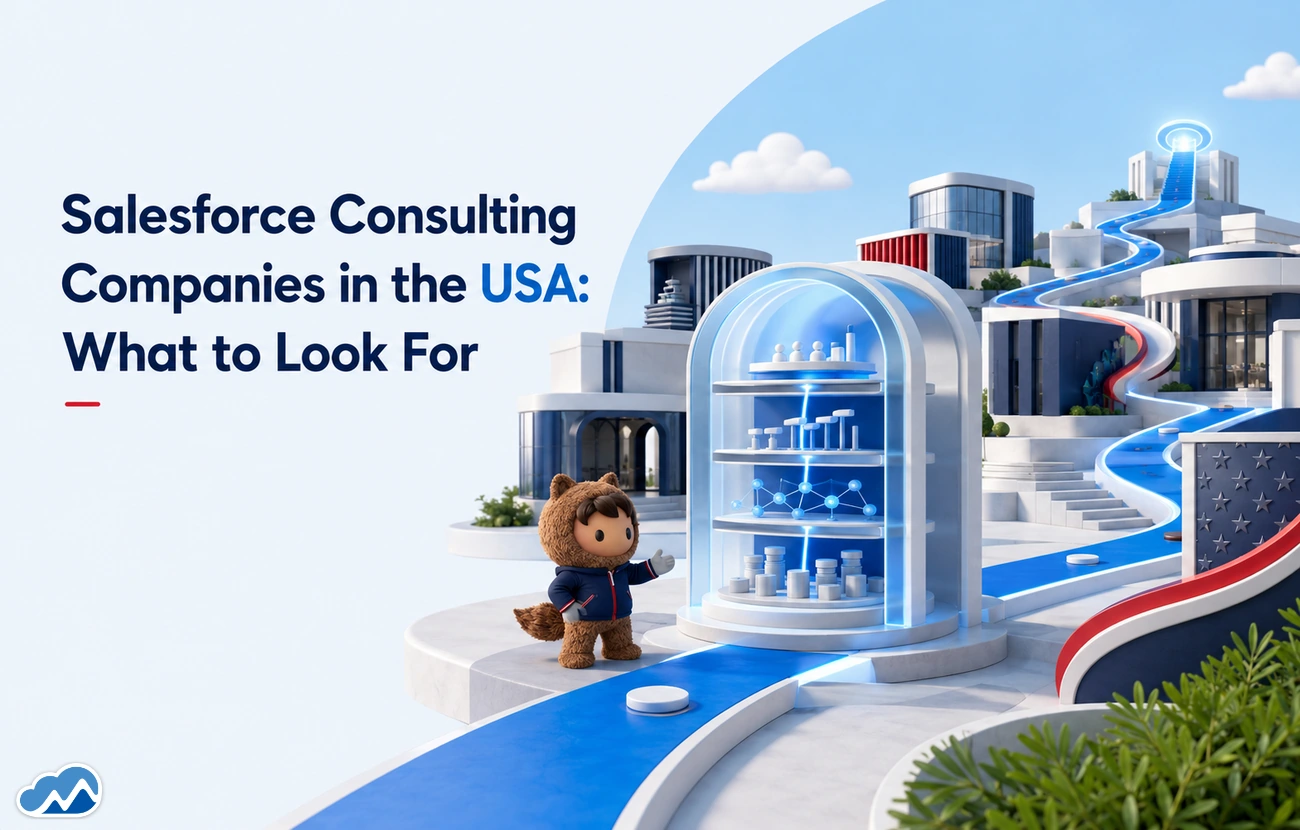
Choosing among salesforce consulting companies in USA is not about picking the biggest name or the cheapest quotation. It is about fit. The right partner understands your industry, your sales process, your data quality, your internal politics and the way your teams already work. Salesforce can improve pipeline visibility, customer service, reporting, automation and forecasting, but only when the implementation reflects the business rather than forcing people into a generic template. This guide explains how to evaluate partners, what warning signs to watch for, which questions to ask and how Salesforce fits with the rest of your revenue and automation stack.
Why the Right Partner Matters More Than the Software
Salesforce arrives with every customer as the same platform: capable and largely empty. What it becomes depends on the decisions made during implementation, and those decisions are made by your partner. Two companies can buy identical licences in the same month and end up with completely different outcomes, because one had someone who understood the business sitting in the design sessions and the other did not.
For that reason, the choice of partner often matters more than the edition you buy. A strong partner questions your process before touching a field, designs around how your team sells or serves customers and builds something people are willing to use every day. A weak one activates features, works through a requirements list and leaves behind a system that looks complete but never becomes part of daily work. Adoption problems usually start here. If users cannot see why Salesforce helps them, they will return to spreadsheets, inboxes and side conversations.
The US is one of several markets where choosing a partner works a little differently. For the global view, our Salesforce Consulting Worldwide guide covers how it varies across regions. This one is specifically about the United States.
What Makes the US Market Different
The American Salesforce market is the largest and most mature anywhere, which makes the search both easier and harder. There is almost certainly a firm that fits your requirement, but finding it means filtering out a lot of noise. Specialisation runs deep across retail, financial services, healthcare, manufacturing, non-profits and many narrower niches. Pricing also varies widely, from boutique day rates to enterprise programmes billed in the millions, so cost alone tells you little about capability.
Geography and regulation matter too. The United States covers several time zones, so working-hour overlap affects stand-ups, testing and support. Compliance can also shape the build, especially for health, finance and privacy-heavy businesses. A partner familiar with HIPAA, FINRA or state privacy rules will design around those constraints early instead of treating them as a late checkpoint.
Another difference is the buying process. In many US companies, Salesforce touches sales, marketing, finance, legal, operations and customer success at once. A good consulting partner helps those teams agree what the first release must achieve instead of turning every decision into a long workshop.
What to Look For in Salesforce consulting companies in USA
Once you accept that the partner matters more than the licence, the practical problem is separating a capable firm from a persuasive one. Focus on these signals.
Certified, current expertise. Certifications are not proof of judgement, but they are a floor. Expect genuine, in-date credentials across administration, development and the specific clouds your project touches, held by the people who will actually do the work rather than by one architect whose name appears on every proposal.
Experience that resembles your situation. A firm that has solved your problem before, in your industry and at roughly your headcount, moves faster and makes fewer costly assumptions than a generalist learning your business at your expense. Ask for two references at a similar size and call them.
A process-first approach. Good consultants ask how your business runs before they open a sandbox. A firm that steers every conversation back to features will hand you something technically competent that nobody's daily workflow fits.
Documentation and no lock-in. A confident partner writes down what it builds, records the reasoning behind the configuration and hands the lot over. A firm that keeps that knowledge in its own heads is protecting a retainer rather than your interests. Ask in writing what documentation is included and who owns the code at the end.
A defensible position on AI. Agentforce and Einstein are shipping products now rather than roadmap items, and a competent partner can tell you which parts of your process they would improve and which they would leave alone.
Commercial transparency. Ask how the estimate was built, what sits outside it and what happens when the scope moves. A partner who cannot explain the shape of a budget in plain terms will not get clearer once the work has started.
Local, Offshore or Hybrid? The Honest Answer
A fully US-based team gives you local context, overlapping hours and the option of in-person workshops, but it costs more. A purely offshore team costs less, with trade-offs in context, time zones and the number of clarification rounds. A hybrid model, with US-based strategy and delivery capacity elsewhere, is where many mid-market projects land.
The best answer depends on the work. Discovery, process design and executive alignment benefit from local context and time-zone overlap. Configuration, testing, data cleanup and administration can often be handled by a broader delivery team if governance is clear.
Red Flags to Watch
Some warning signs turn up again and again. Be cautious if a partner talks only about technology and never asks what the business is trying to fix. Watch for vague answers about certifications, references that cannot be contacted, pressure to start building before the process is agreed, no plan for documentation or handover, and an estimate that arrives as one number with no breakdown. Turnover during the project is another concern, especially when the senior people who sold the work are quietly replaced by juniors. Be wary of anyone promising that AI will solve your problems while your data still sits in spreadsheets and disconnected tools. One warning sign deserves harder questions. Several warning signs are usually enough reason to walk away.
Questions to Ask Before You Sign
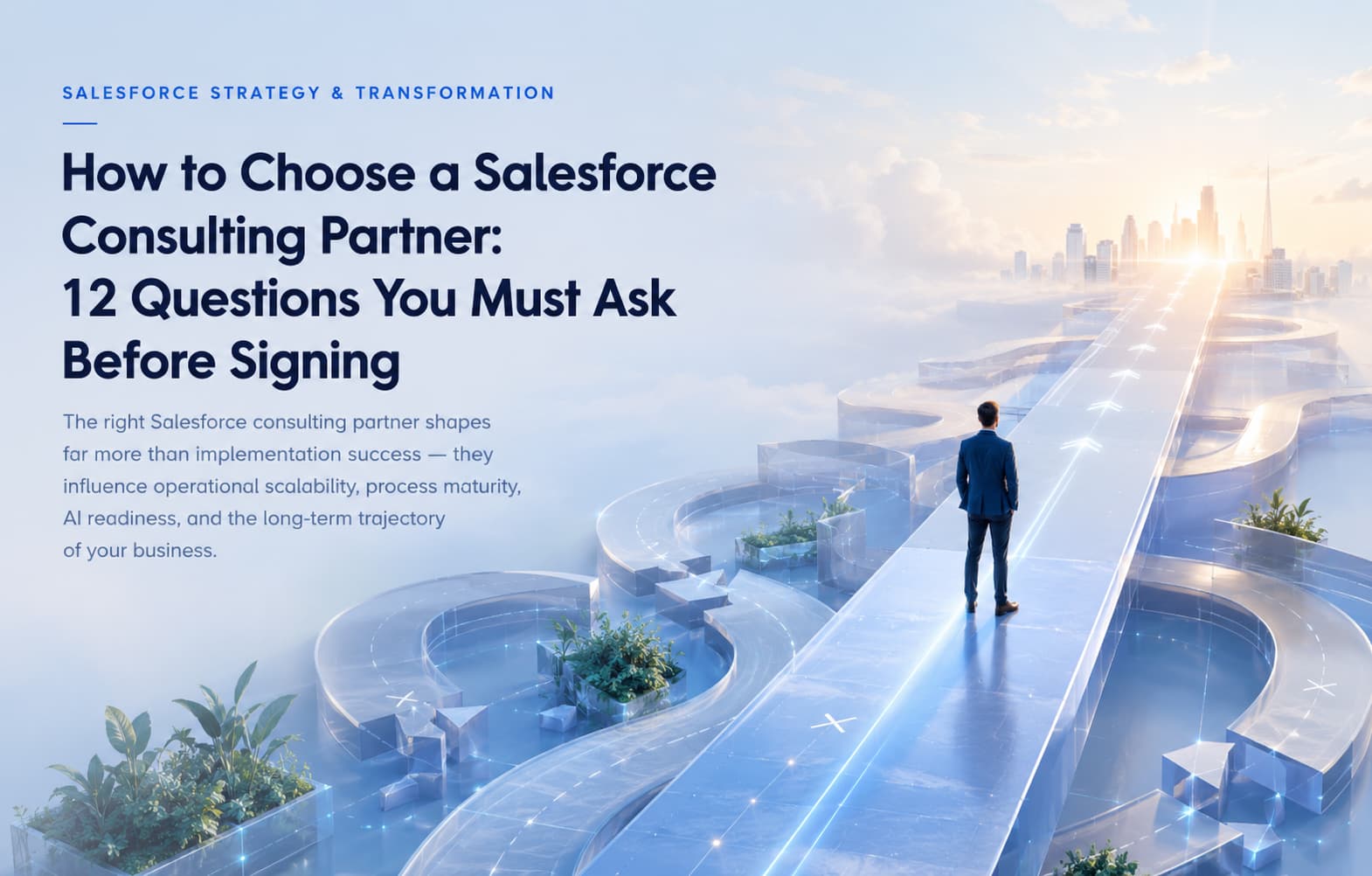
Before signing, get clear answers to these questions. Can you show work with businesses of our size and industry, and can we speak to them? Who exactly will be on the project, what are their roles and where are they based? What does discovery include? What is out of scope? How are change requests handled? What support and handover do we get after go-live? Where does AI genuinely help a business like ours? How a firm handles the awkward questions tells you more than any pitch deck.
Also ask what the partner would challenge. Good consultants do not accept every requested field, rule or dashboard. They push back when a request will make Salesforce harder to use or when the business is trying to automate a problem it has not solved.
How to Run the Shortlist Without Losing Weeks
Selection processes usually fail in one of two ways. They either drag on while a committee circulates spreadsheets, or they compress into one week of demos and a decision made on instinct. A better approach takes about three weeks.
Start by writing what the project must achieve in business terms. "Cut quote turnaround from three days to one" is useful. "Implement Sales Cloud" is not. Shortlist three firms, give each the same brief and score them against criteria agreed in advance, with fit and delivery approach weighted above price.
Ask each finalist to walk through one specific, messy part of your process. Then speak to references without the partner on the call and ask what went wrong, how it was handled and whether the firm stayed responsive when the project became difficult.
During the final decision, compare how each partner thinks, not how polished the presentation looks. The best proposals explain trade-offs, risks and what should wait for a later phase.
Where AI Fits in a Modern US Salesforce Project
The US market moves quickly on AI, and Agentforce and Einstein now come up in most serious Salesforce conversations. A partner worth hiring will be specific about where AI helps: scoring and routing leads, flagging churn risk, drafting first-pass replies or closing routine service cases. A firm that dismisses AI outright is behind the market. A firm that presents it as a cure for messy process and poor data is selling the demo. Ask which workflows would change in the first ninety days and how results would be measured.
It also helps to know what AI looks like outside Salesforce. Our guide to Claude AI for business covers chatbots, automation and structured AI outputs, and helps separate practical use cases from demo-only ideas.
Where Salesforce Sits in the Rest of Your Stack
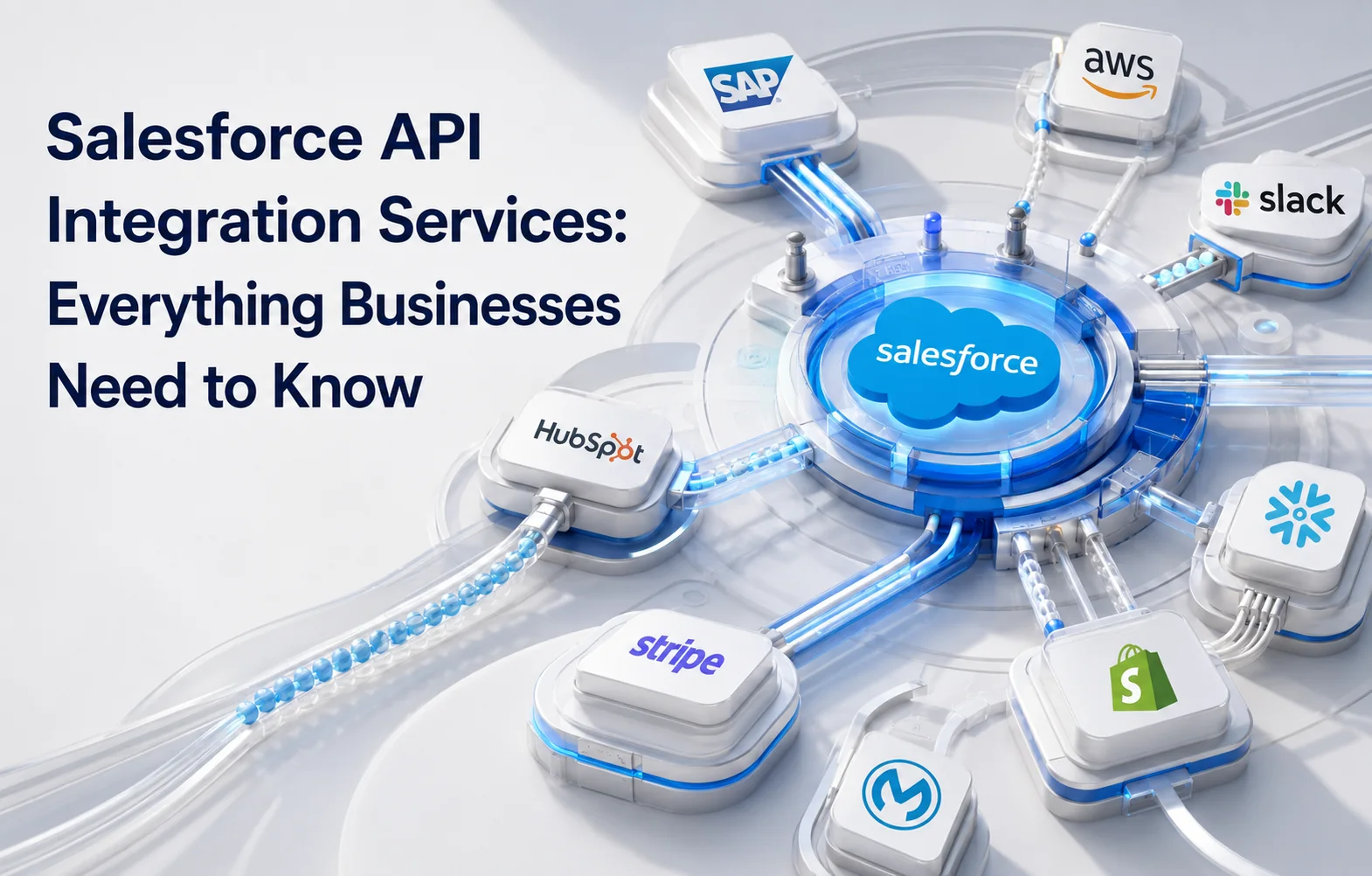
Very few US businesses run Salesforce on its own. Marketing often lives in HubSpot, finance and support sit in separate systems, and the job of moving records between them tends to land on whoever is closest to the problem. A partner who thinks only inside the CRM boundary will hand you a tidy Salesforce org surrounded by manual work, so it is worth asking early how they handle the edges.
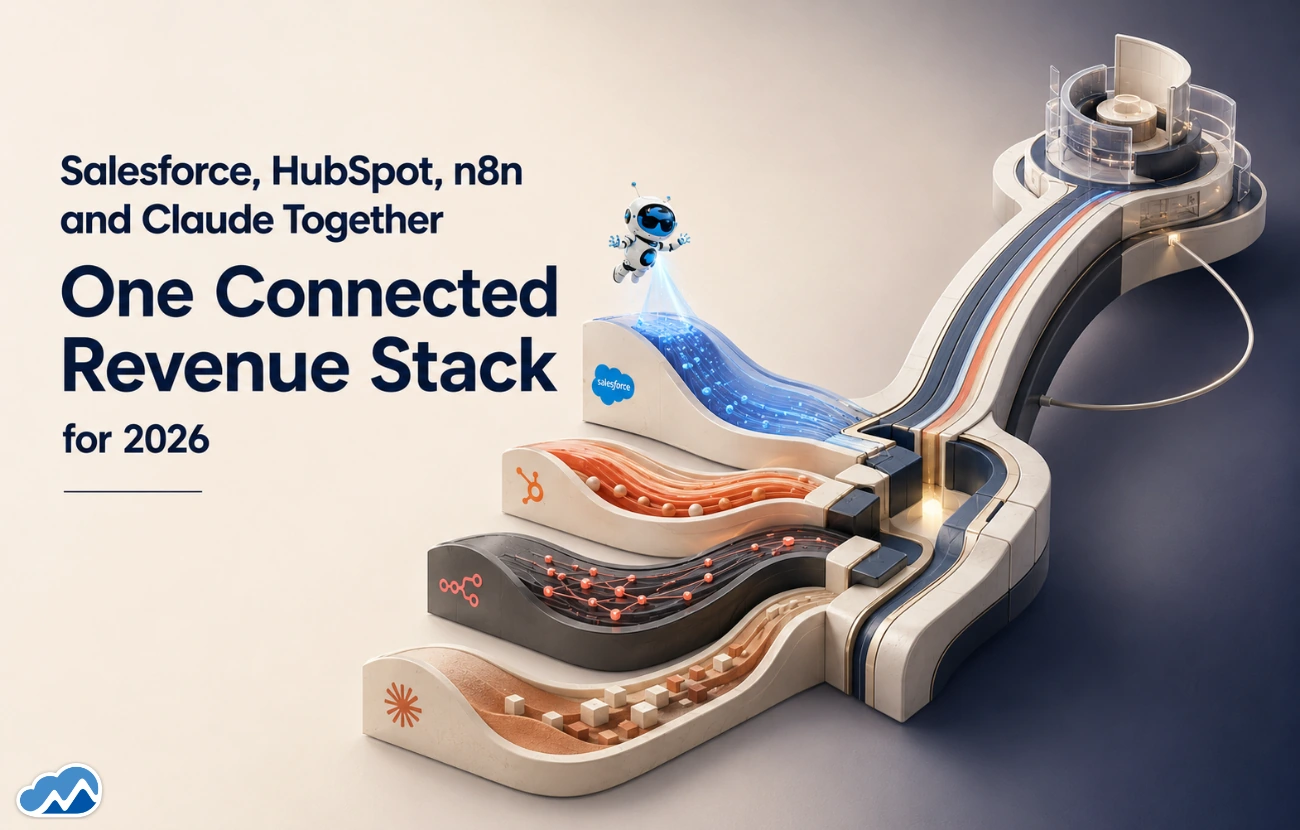
Three related guides can help when Salesforce is part of a wider stack. Our HubSpot services guide covers CRM, marketing and RevOps. Our n8n automation services guide explains tool-to-tool automation. For the wider picture, building one connected revenue stack shows how Salesforce, HubSpot, n8n and Claude can work together.
What a Good First Phase Looks Like
Most businesses do not need to rebuild everything at once. In fact, the best first phase is often tighter than the original wish list. It should solve a visible business problem, prove that the data can be trusted and give users a reason to come back to the system. For a sales team, that might mean lead routing, opportunity stages, activity capture and forecasting. For service, it might mean case intake, assignment rules, knowledge articles and escalation paths. For leadership, it might mean a small set of reports that finally match reality.
A sensible first phase also leaves room for the next one. That means clean naming, documented decisions, scalable security roles and automation that will not collapse when the team grows. A smaller implementation that people use is worth more than a broad rollout that creates confusion. When comparing Salesforce consulting companies in USA, ask what each firm would leave out of phase one. The answer shows whether they can prioritise.
The first phase should include a real adoption plan. Training is not just a one-hour session before launch. Users need to know what changed, why it matters and what they should do differently from day one.
Frequently Asked Questions












Agentforce for Financial Services: AI-Driven Banking & Insurance Solutions







.webp)





n8n Workflow Automation: From Lead Capture to CRM in Minutes, Not Hours
%20(1).webp)