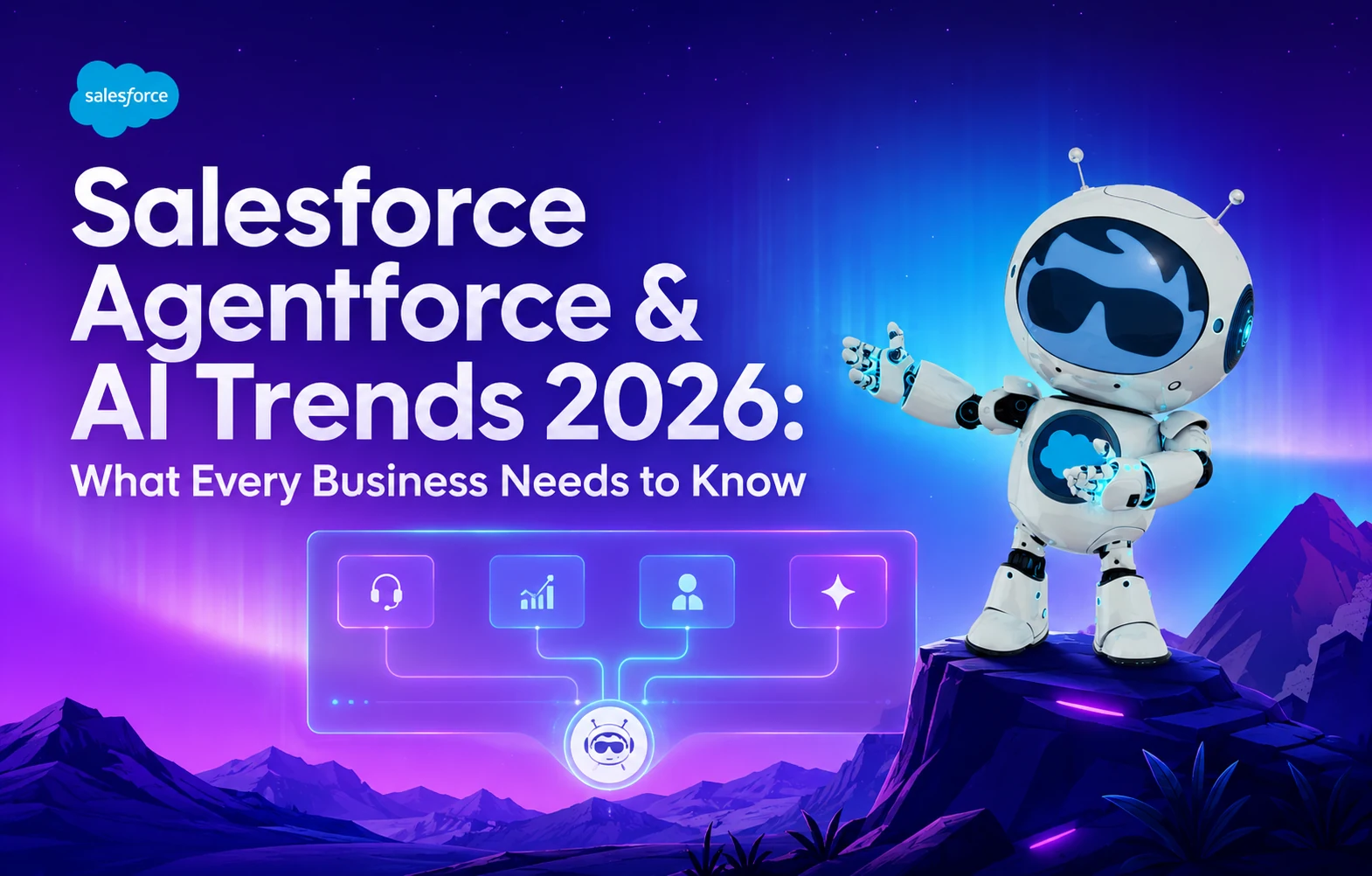
Salesforce Agentforce & AI Trends 2026: What Every Business Needs to Know

Table of content
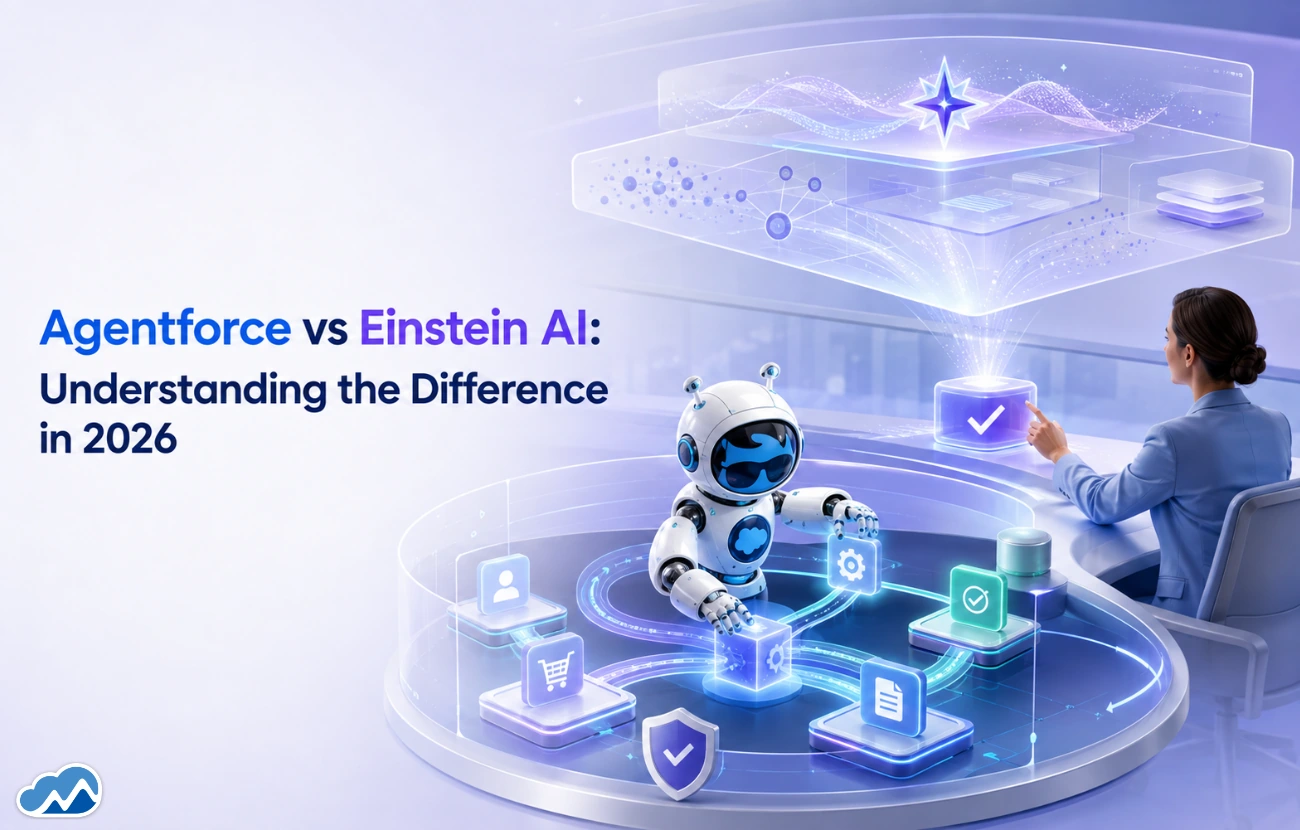
Agentforce surpassed $500 million in annual recurring revenue in Q3 of Salesforce's fiscal 2026, up 330% year-over-year, making it the fastest-growing product in the company's 26-year history. More tellingly, over 60% of Agentforce and Data 360 bookings in the most recent quarter came from existing customers expanding deployments, not new pilots. Businesses aren't just testing this technology anymore. They're scaling it. Here's what that actually means if you're evaluating Salesforce Agentforce Services for your own organization.
What Agentforce Actually Does Now
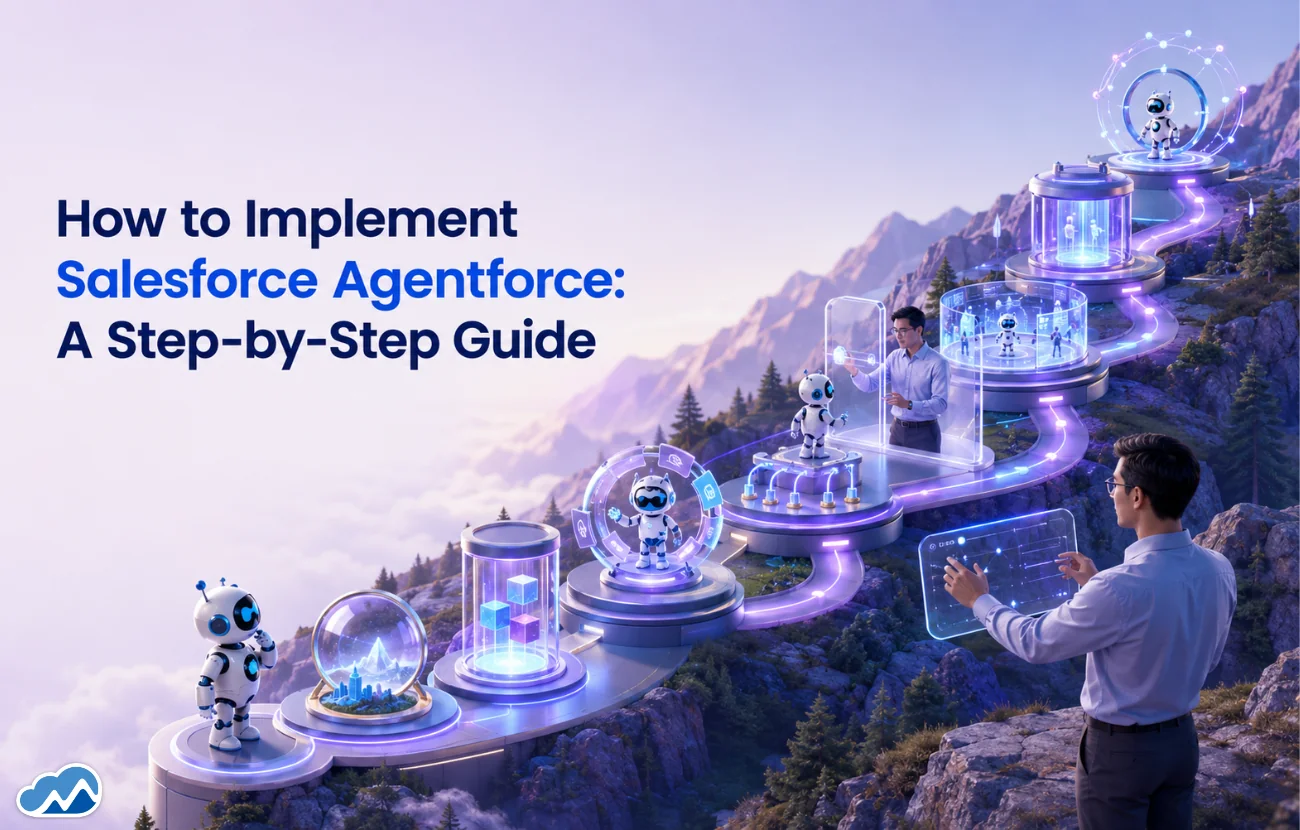
Agentforce has moved well past simple chatbot-style Q&A. Four capabilities define the current generation:
Triggered agents respond automatically to defined events such as a deal stage change, a support ticket escalation or a signal from Data Cloud, then take AI-driven action without a human starting the process.
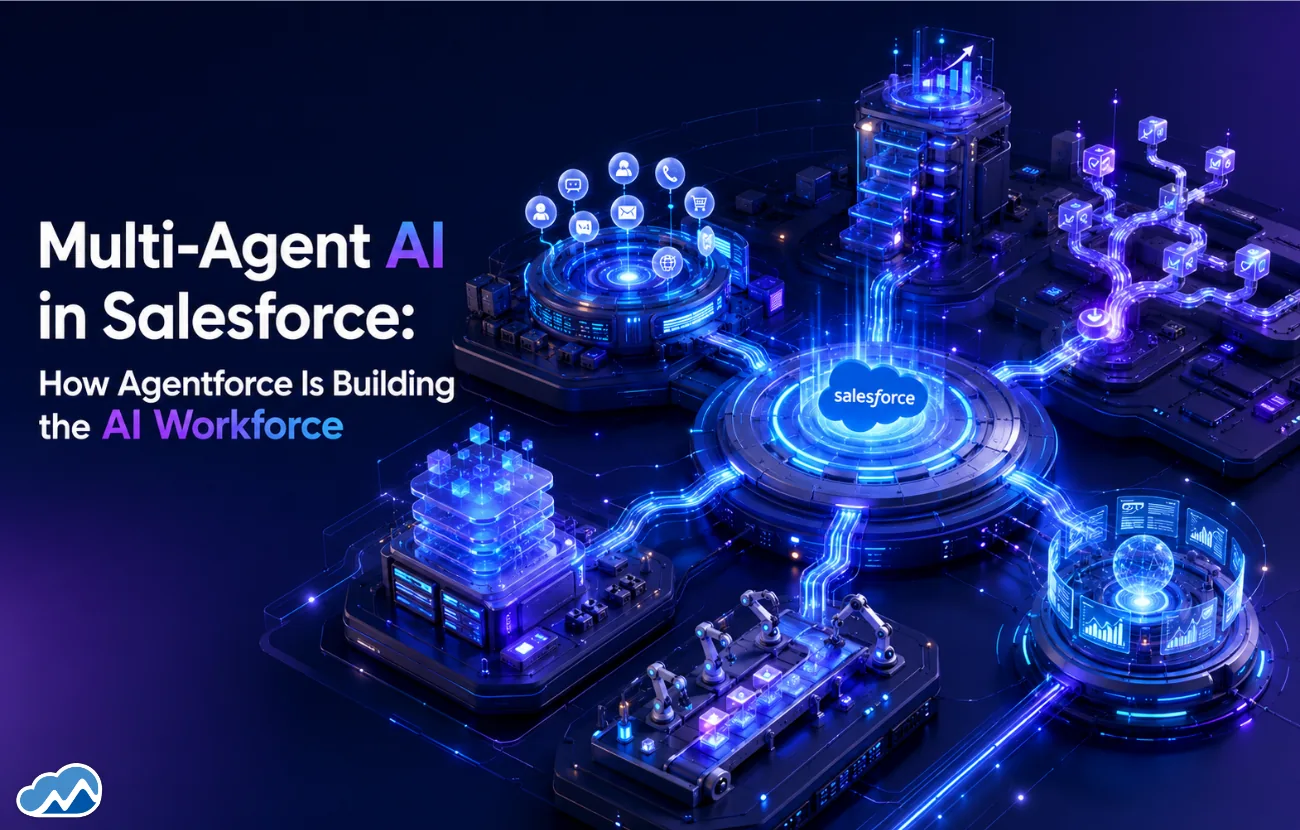
Multi-agent orchestration, introduced in the Summer '26 release, lets multiple agents work together as a coordinated team across sales, service and other functions to resolve end-to-end workflows, rather than each agent handling an isolated task.
Agentforce Self-Service handles first-line customer support autonomously, escalating to human agents only when a case exceeds what the agent is authorized to resolve.
Agentforce in Slack. As of the most recent release cycle, Agentforce for Sales, IT Service, HR Service and Tableau run natively inside a rebuilt Slackbot, letting reps query CRM records, pull AI-generated account research and update opportunities without leaving Slack.
Sales Cloud and Service Cloud have effectively been rebranded around this shift. They're now marketed as Agentforce Sales and Agentforce Service, reflecting that AI agents are treated as core functionality, not an add-on module.
The Trend That Matters Most: Data Cloud Is No Longer Optional
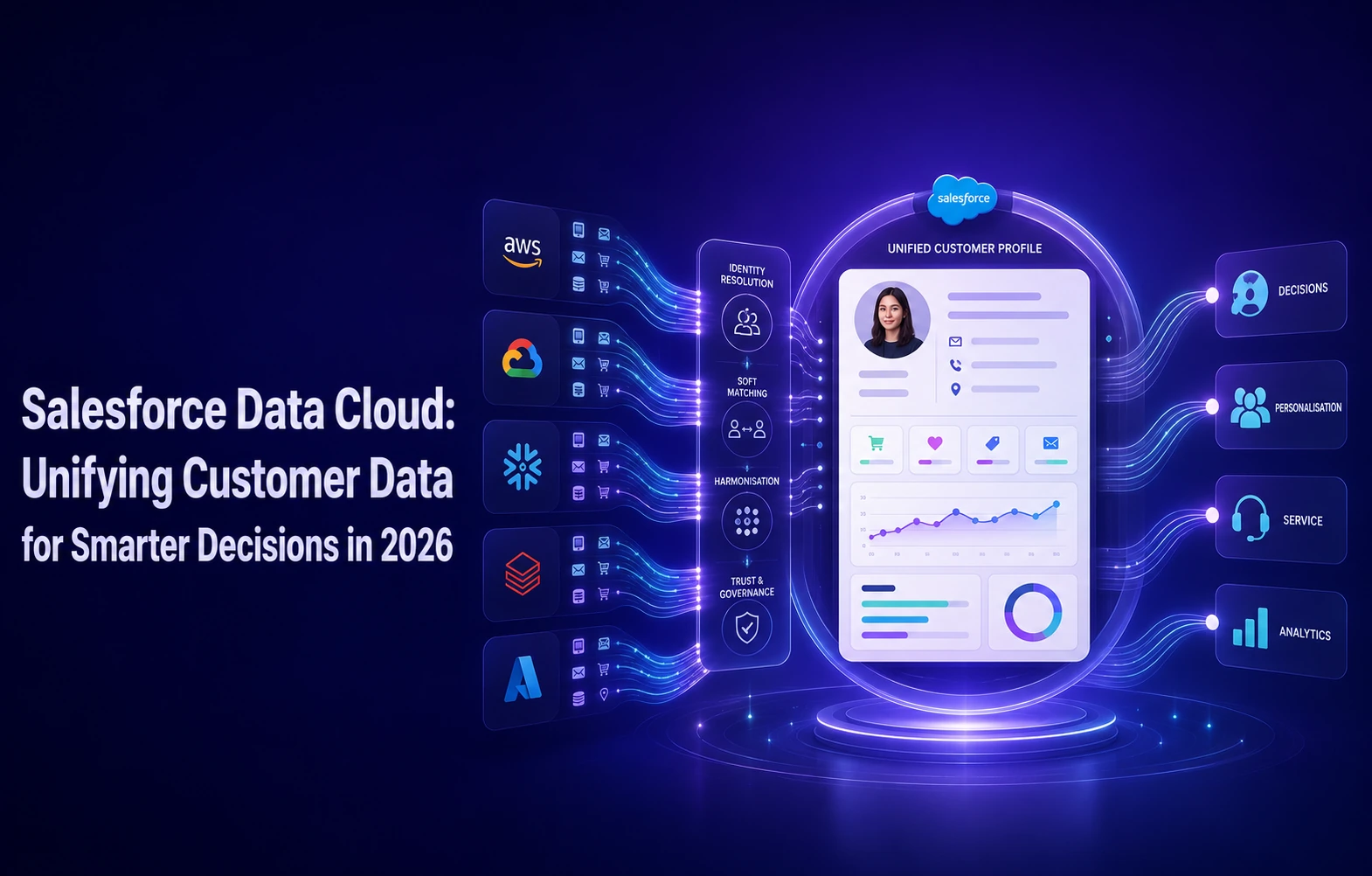
The single most important operational change in 2026 is that Data Cloud is now a mandatory foundation for Agentforce. Clean, unified customer data isn't a best practice anymore. It's a hard technical prerequisite. An agent making decisions off fragmented, duplicated or stale records will make confidently wrong decisions at scale, which is a materially worse outcome than having no automation at all.
This is the single biggest reason Agentforce rollouts stall: businesses want the AI capability before they've done the unglamorous work of unifying their data. Any credible Agentforce Services engagement should start with a data readiness assessment, not an agent-building sprint.
AI as an Operating Model, Not a Feature
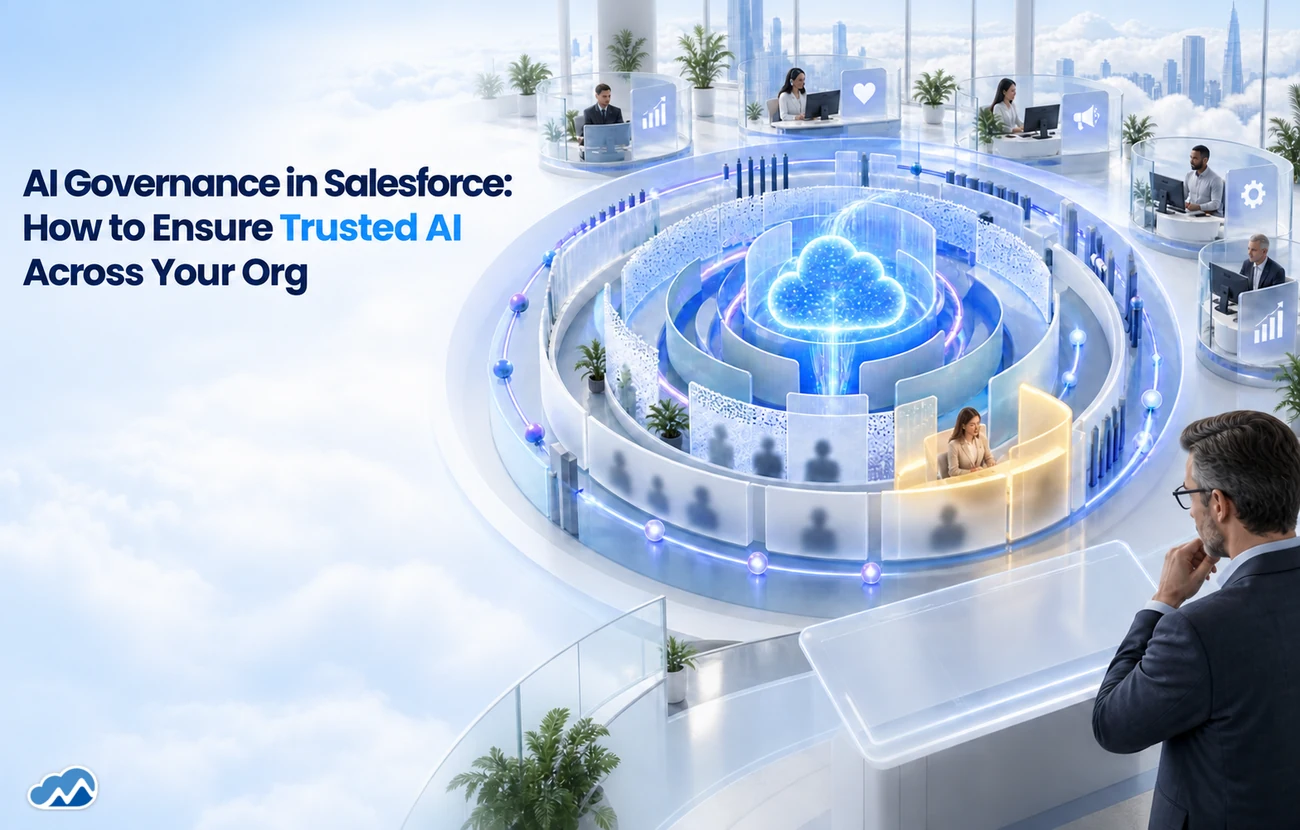
Salesforce's own framing for 2026 is worth taking seriously: AI is not a feature you turn on. It's an operating model you have to design, govern and continuously improve. In practice, that means:
Governance has to be designed up front: which agents can take which actions, what requires human approval and how errors get audited, rather than bolted on after something goes wrong.
Compliance monitoring is shifting from reactive to real-time. Salesforce's Process Compliance Navigator, part of the current release cycle, monitors live workflows and intercepts noncompliant actions before they happen, rather than catching them in a quarterly audit.
Adoption is a change management problem as much as a technical one. The businesses seeing real ROI from Agentforce are the ones that retrained workflows and expectations around agents working alongside staff, not just the ones with the most sophisticated configuration.
Where This Intersects With Industry-Specific Needs
AI governance requirements aren't uniform across sectors. A financial services firm deploying agents against client accounts has very different audit and compliance obligations than a manufacturer automating sales agreement management. We cover how Salesforce's industry clouds handle this differently in our guide to Salesforce industry solutions. It's worth reading alongside this one if your business sits in a regulated sector.
Should Your Business Adopt Agentforce Now?
If your Salesforce data is still fragmented across systems, the honest answer is: fix that first. Agentforce amplifies whatever foundation you already have. A clean, unified data model gets meaningfully more valuable, while a messy one gets automated at scale, which is worse than doing nothing.
If your data foundation is solid, the current window is a genuinely good time to move. The fact that more than 60% of bookings are coming from expansion rather than new pilots suggests the early adopters are finding real value, not just experimenting.
Either way, this isn't a project to run without experienced guidance. Our Salesforce Consulting Services team scopes Agentforce readiness, including a data audit, before recommending any agent build.
The Bottom Line
Agentforce's growth numbers are real, but they're also a reflection of which businesses did the foundational data work first. The trend for 2026 isn't "add AI agents." It's "treat AI as an operating model that needs governance, clean data and change management, or don't deploy it yet." We'll be publishing deep dives on specific Agentforce use cases and trend topics in the coming weeks, linked from this guide as they go live.
.webp)
.webp)
.webp)









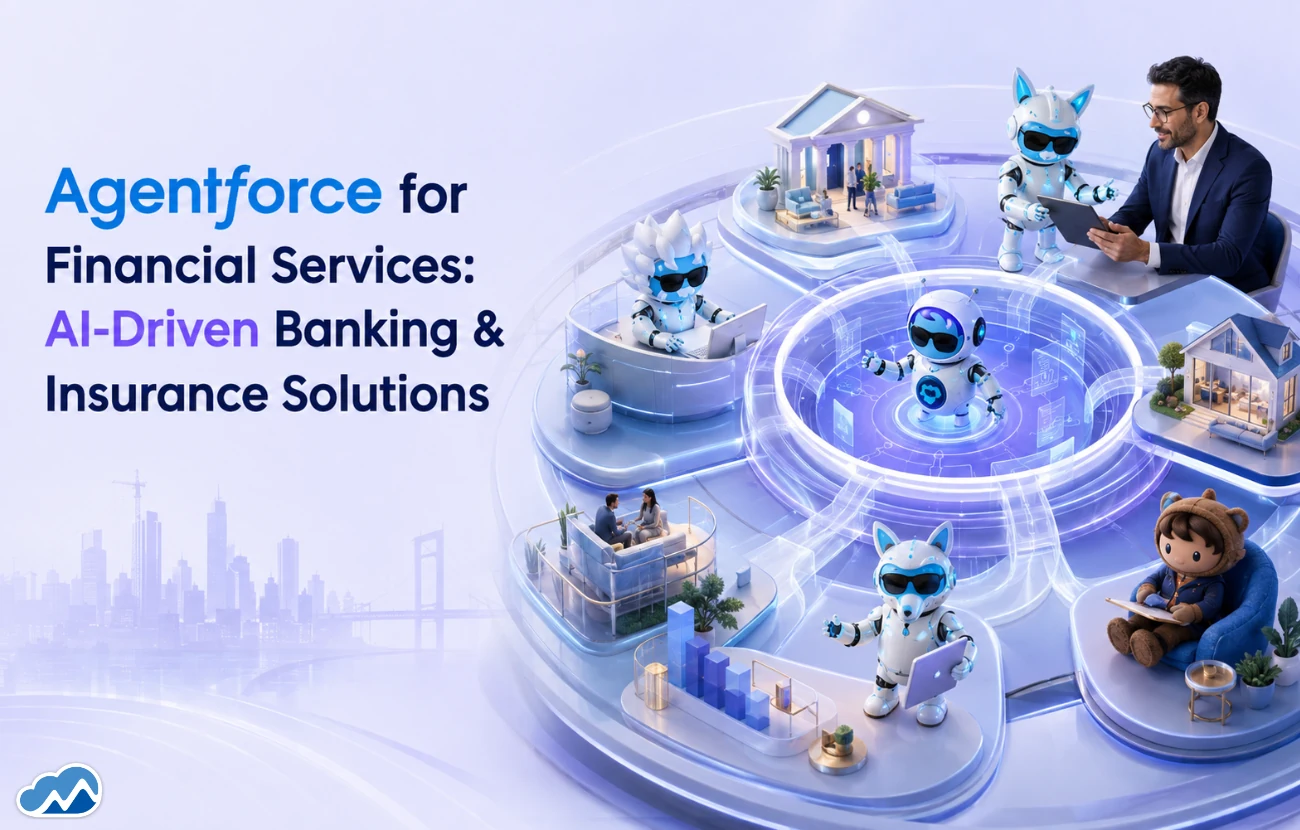
Agentforce for Financial Services: AI-Driven Banking & Insurance Solutions






.webp)





n8n Workflow Automation: From Lead Capture to CRM in Minutes, Not Hours

%20(1).webp)