Salesforce, HubSpot, n8n and Claude Together: Building One Connected Revenue Stack in 2026

Table of content
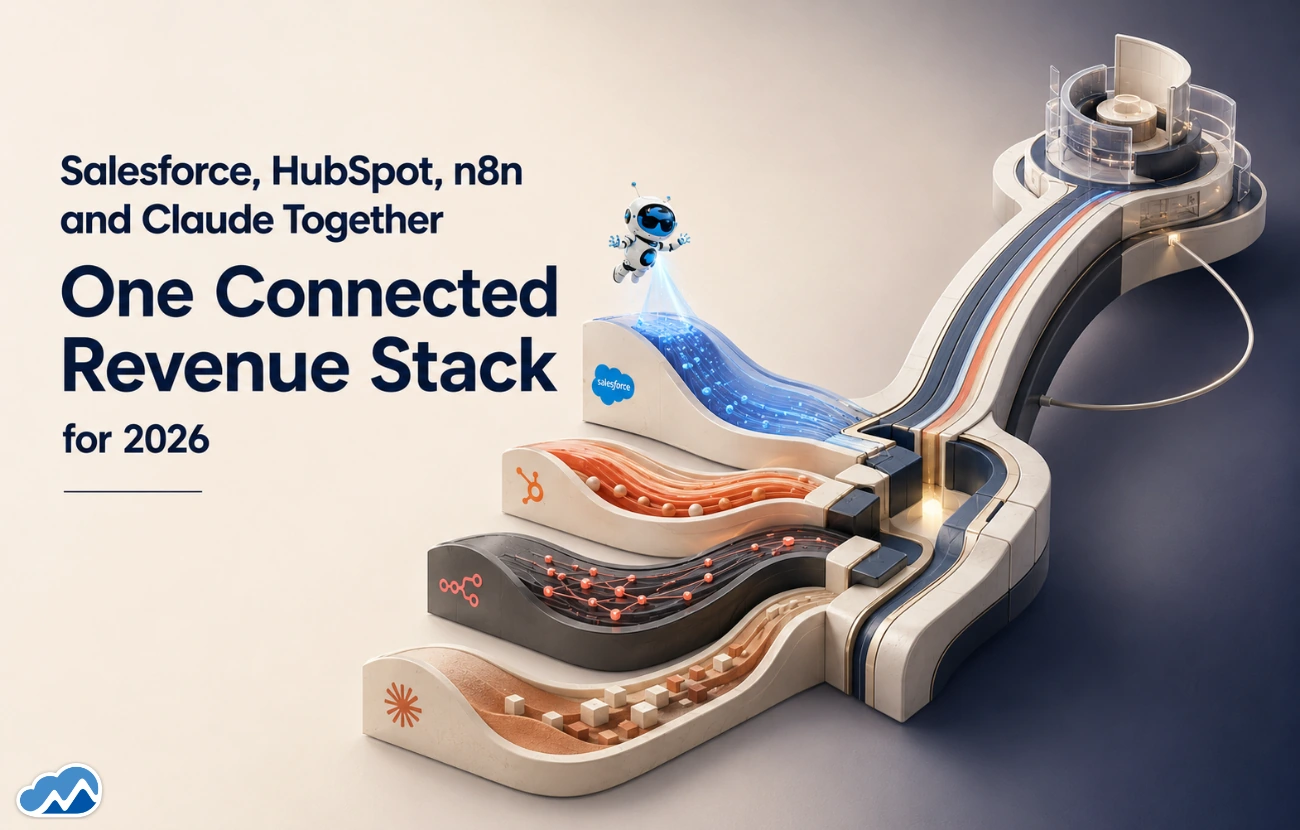
Any one of these platforms is useful on its own. The real leverage shows up when you connect them. Salesforce holds the customer record, HubSpot runs the marketing, n8n moves data between your tools and Claude reads and writes across all of it. Most agencies sell one of those layers and call it a day. Wiring all four into a single, self-running revenue stack is a different job, and cross-platform integration services exist to do exactly that. This guide walks through what a connected stack actually means, why teams are building one in 2026 and what to check before you start.
What a Connected Revenue Stack Actually Means
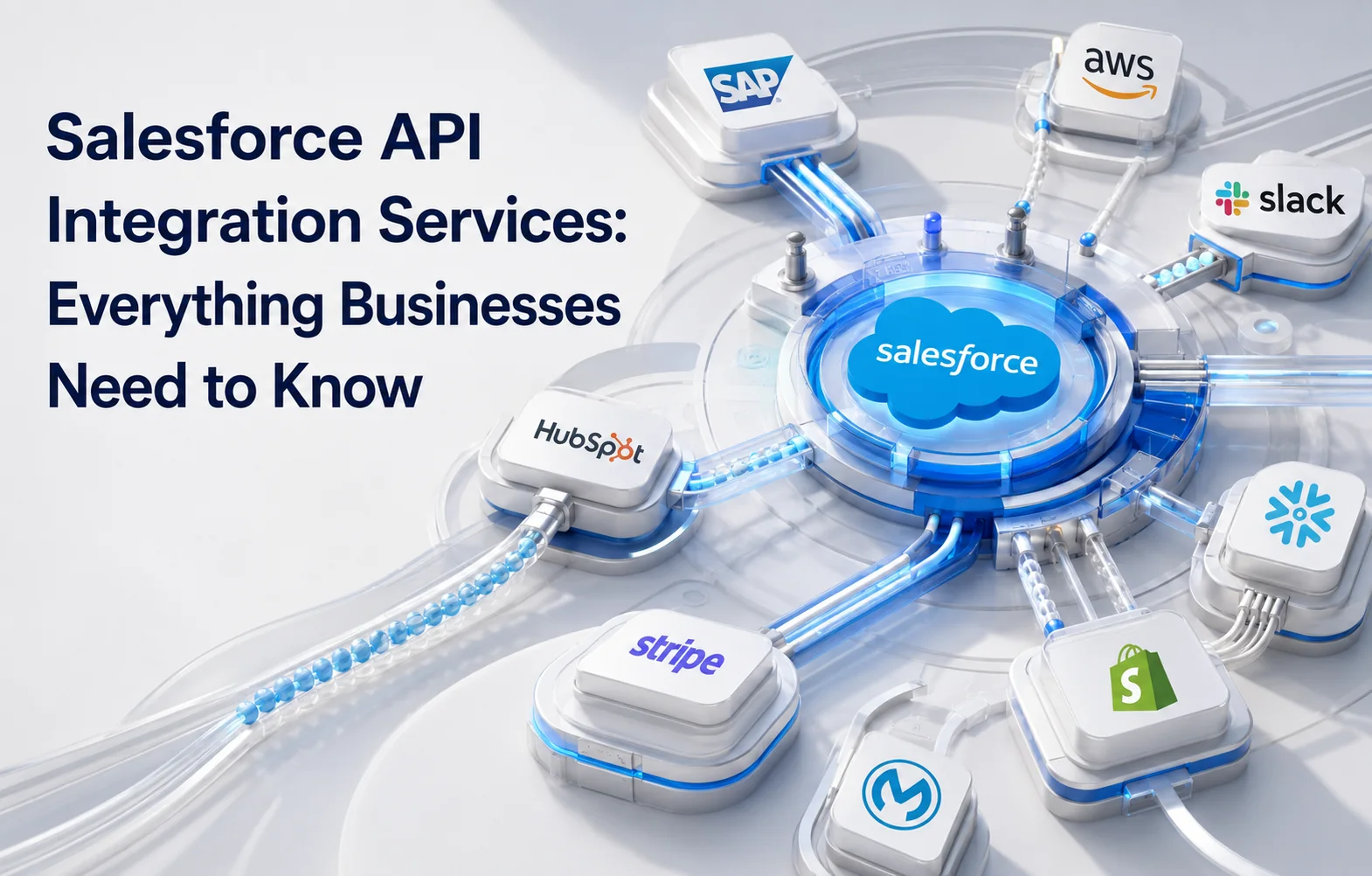
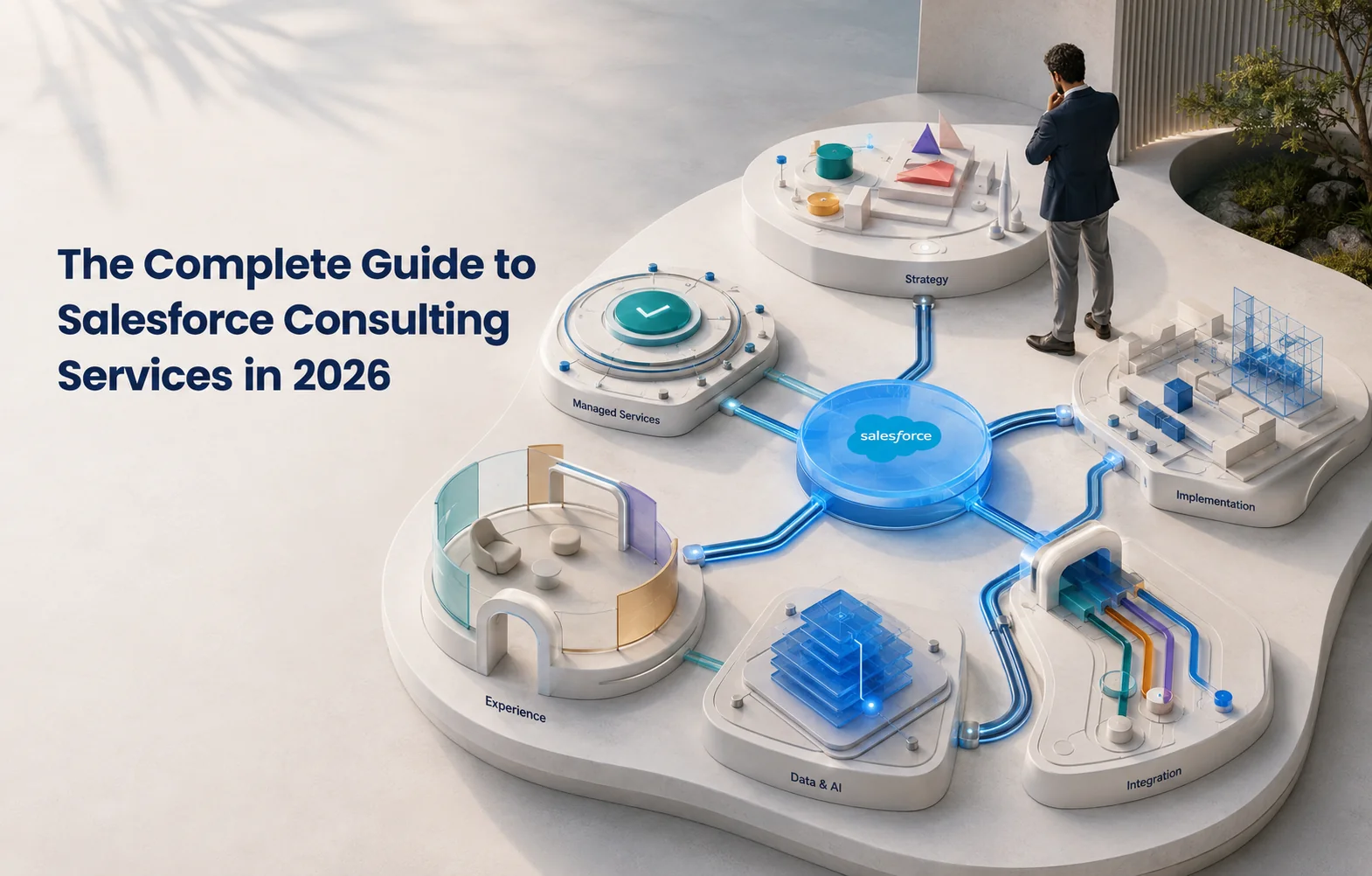
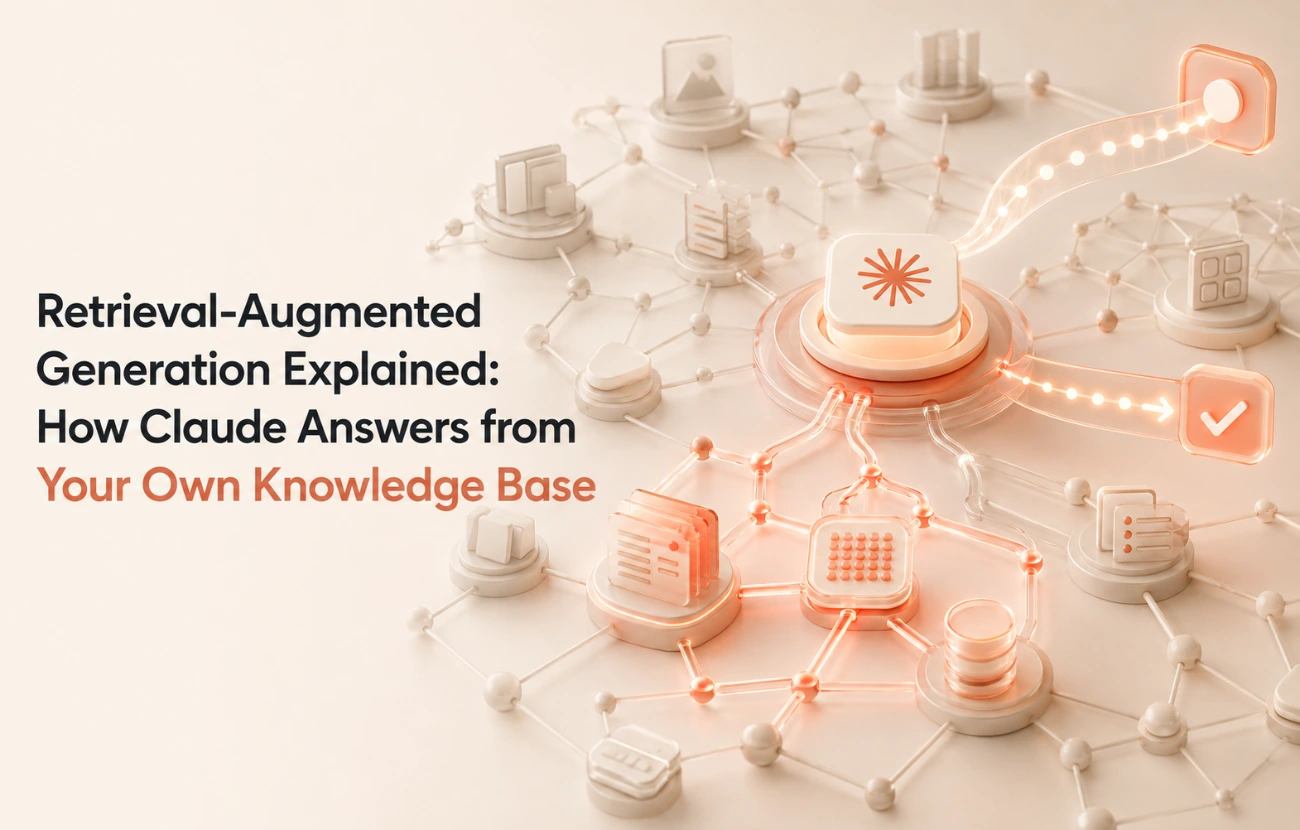
The idea is simpler than it sounds. Each platform plays one role, and the value comes from the data flowing between them instead of being re-keyed by hand. Salesforce is the system of record, the single source of truth for sales, service and customer data. HubSpot is the marketing engine, running campaigns, nurture and lifecycle. n8n is the nervous system, the connective tissue that moves information between everything without bespoke code you have to maintain forever. And Claude is the brain, the reasoning layer that reads a case, drafts a reply or turns raw data into a plain-English summary. Connected properly, they stop being four separate tools and start behaving like one system.
Why Businesses Are Building This in 2026
Adoption has accelerated for a few practical reasons. Most teams have quietly accumulated a stack of tools that don’t talk to each other, and the cost of that shows up as copy-paste, re-keyed data and handoffs that get dropped. AI has finally made the “brain” layer viable, so the connective work is worth more than it used to be. And tools like n8n have made integration affordable rather than a six-figure project. There’s a catch, though. The goal isn’t to connect everything for its own sake. It’s to connect the points where it earns its keep, and to leave the rest alone. That judgement is exactly where a good implementation earns its money.
What Cross-Platform Integration Services Cover
A good engagement is far more than plugging in a few connectors. It usually starts with discovery and process mapping across your systems, finding the handoffs that are costing you time and the ones best left manual. From there it covers the integration architecture, the build itself and any AI steps deployed with proper governance. The better solution providers add error handling and monitoring so cross-system flows don’t fail silently, and they document everything so your team can run it afterwards. Just as important is the honest advice on what not to connect, because an over-engineered stack is its own kind of problem.
The Four Layers
It helps to be clear on what each platform is actually for in a connected stack:
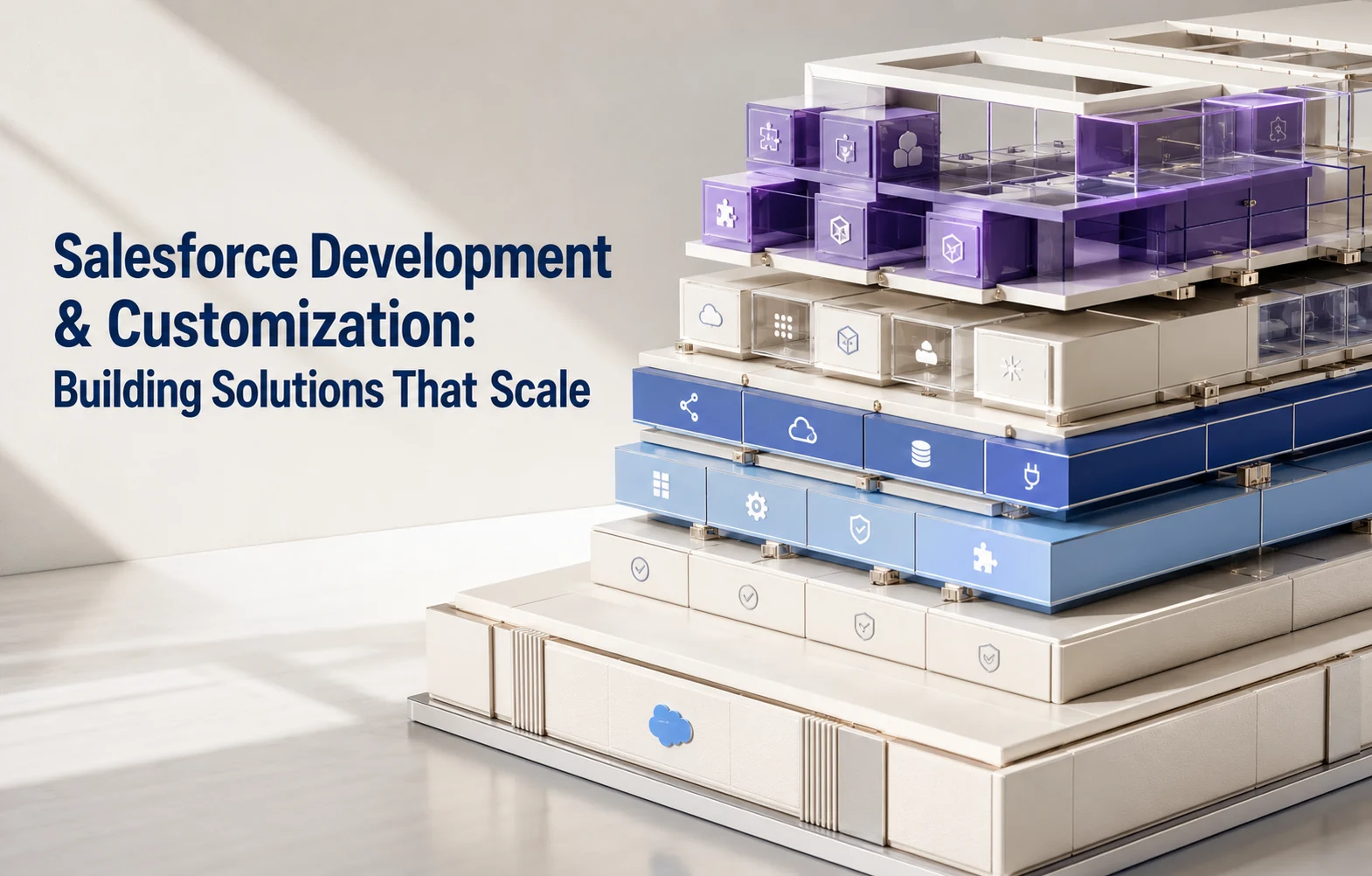
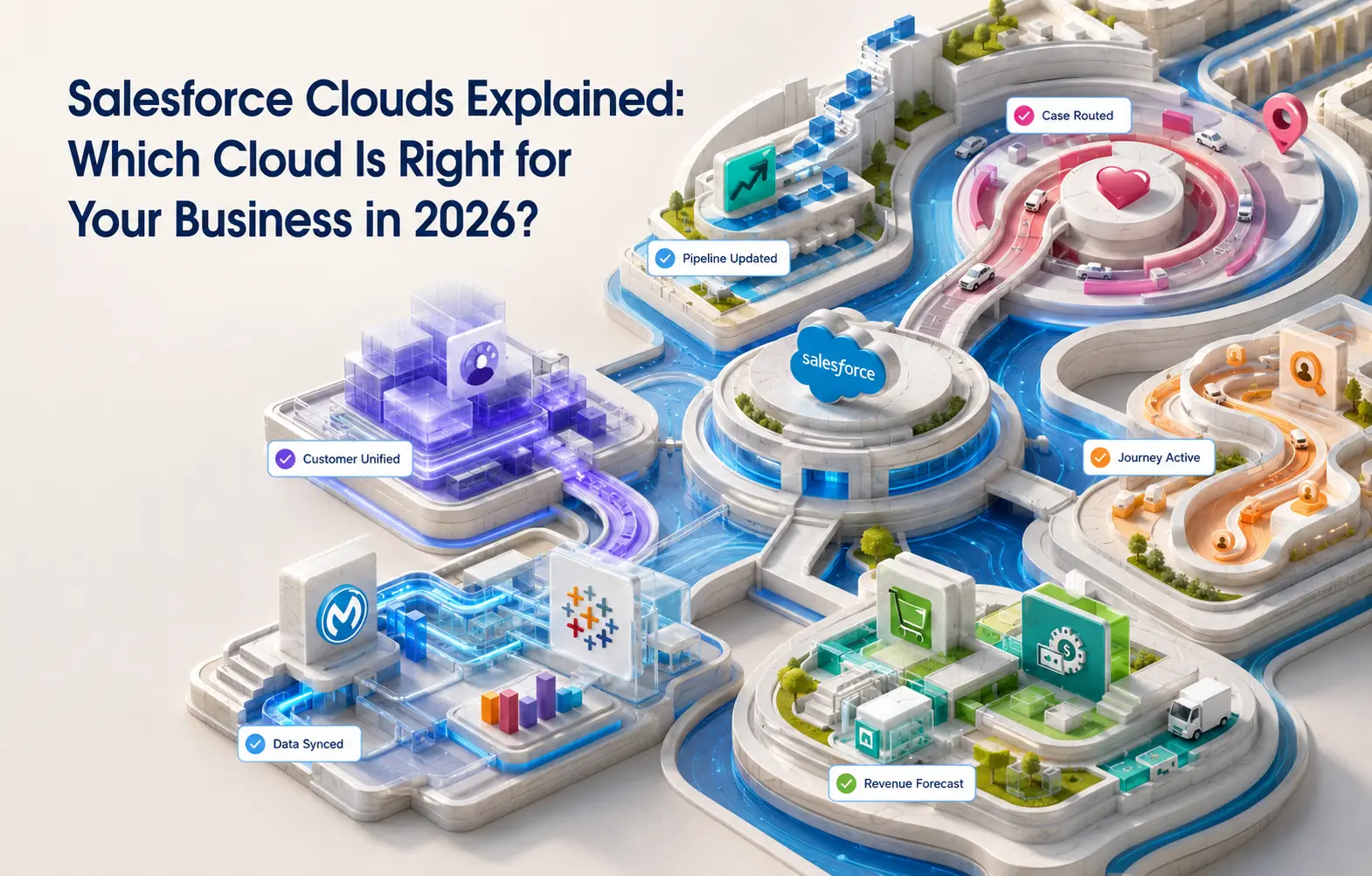
Salesforce is the system of record. It holds the authoritative customer, sales and service data that everything else refers back to.
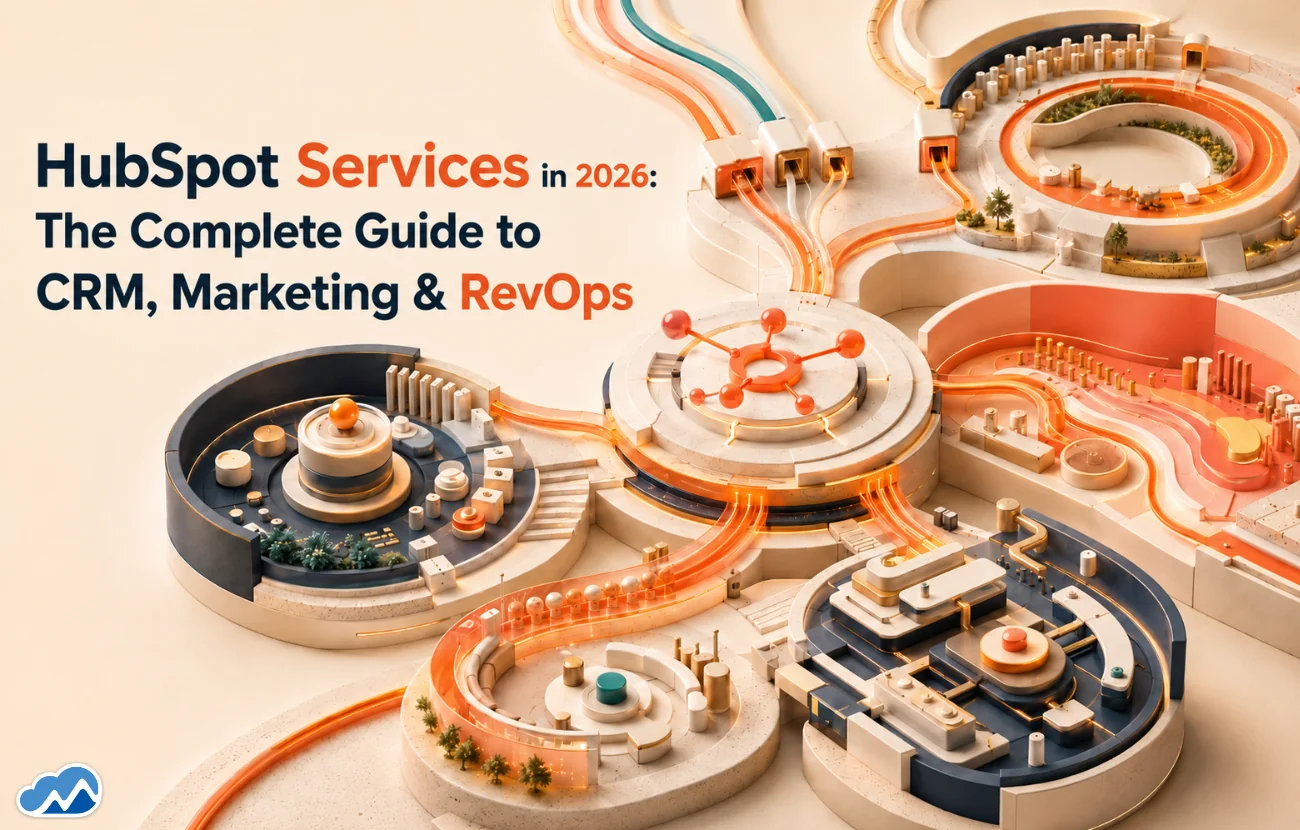
HubSpot is the marketing engine. Campaigns, lead nurture, lifecycle stages and the top of the funnel live here.
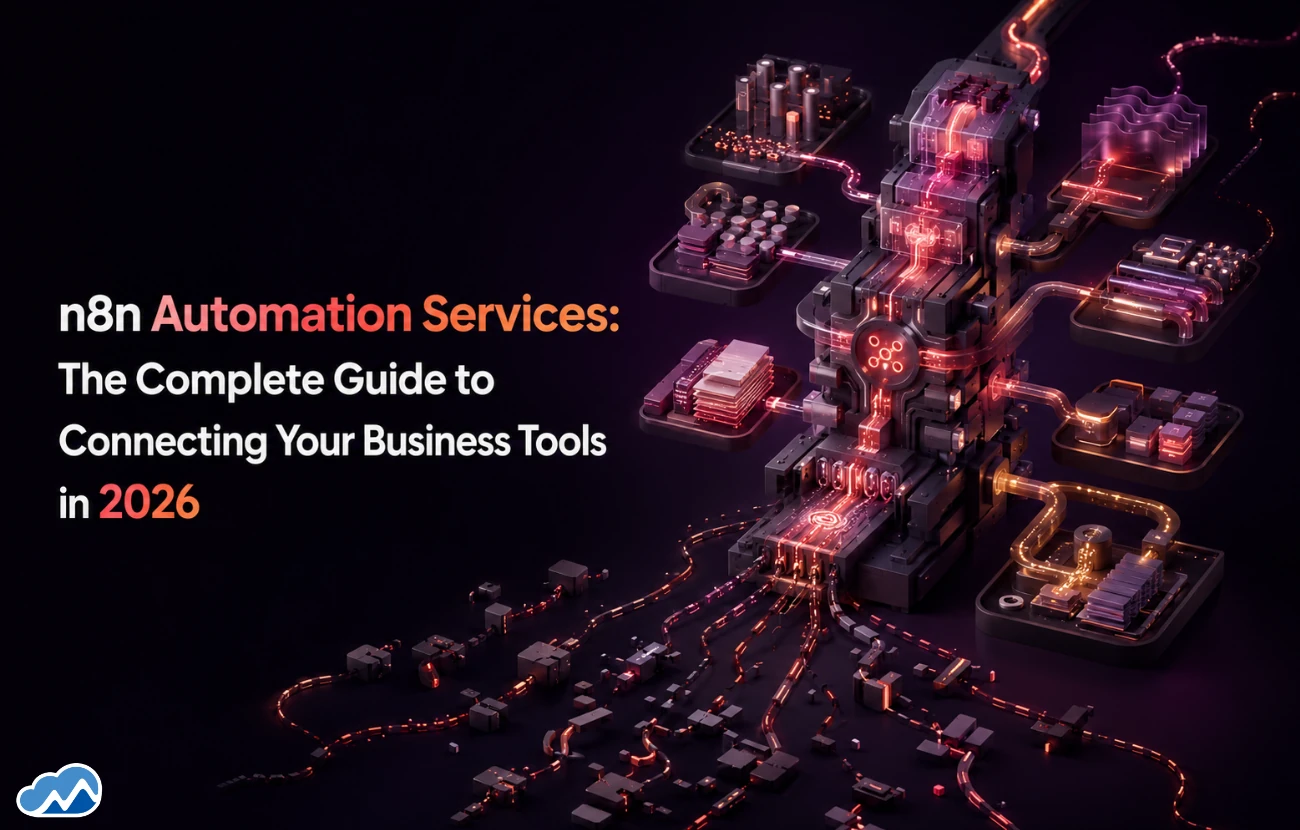
n8n is the nervous system. It moves data between your tools on triggers and schedules, without per-task pricing or brittle custom code.
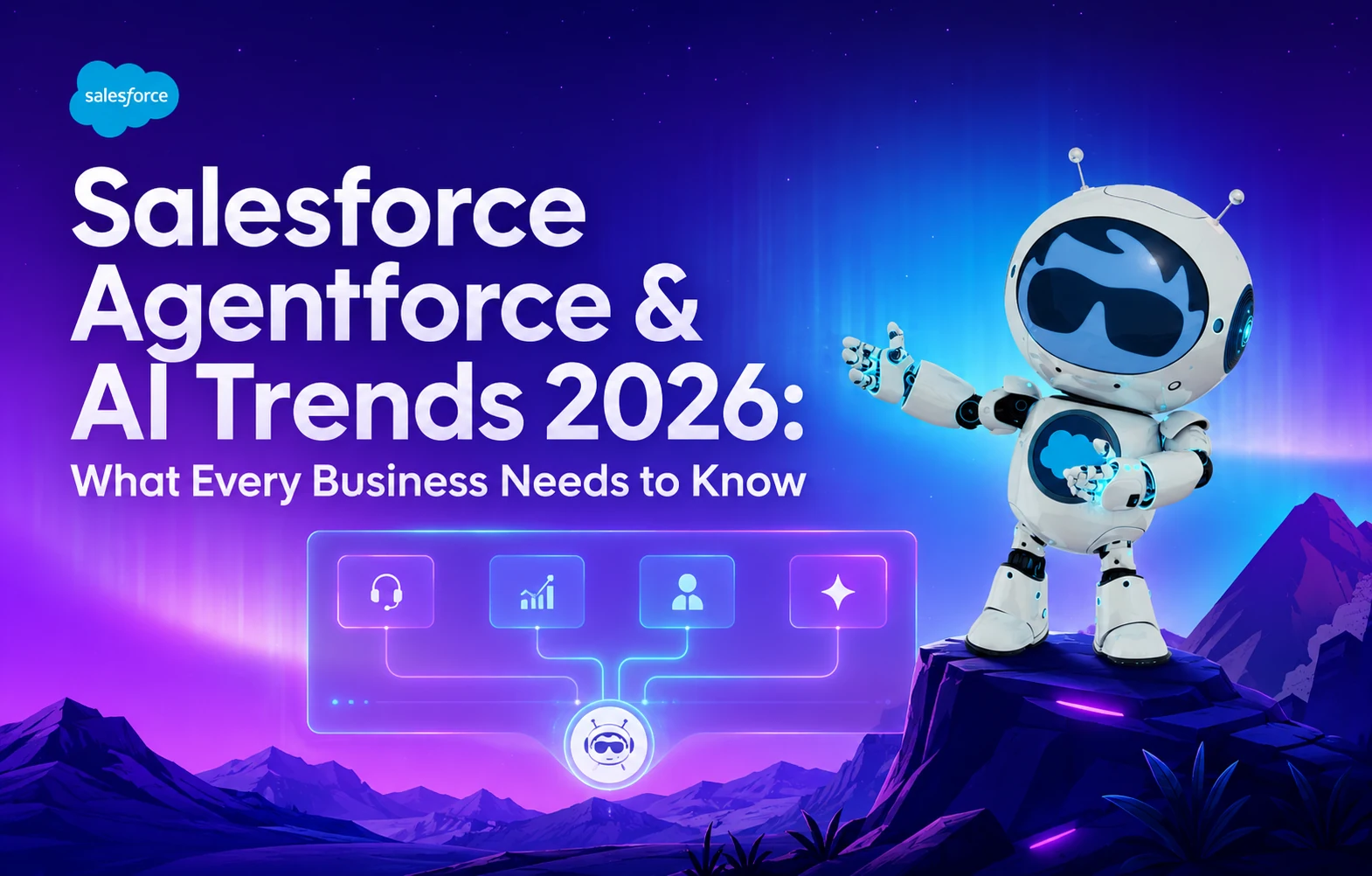
Claude is the brain. It reads, classifies, drafts and summarises and writes structured results back into the other three.
What It Looks Like in Practice
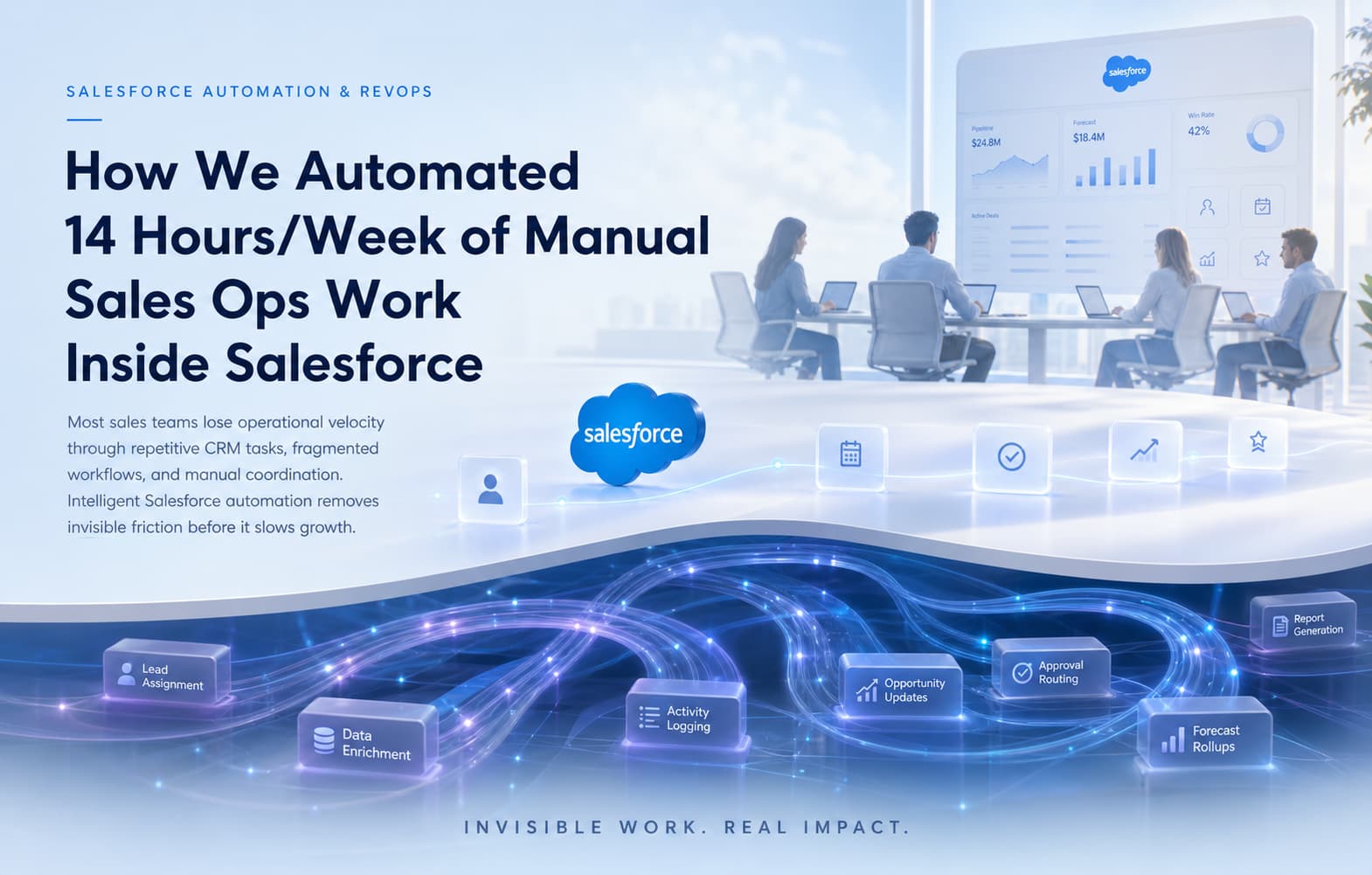
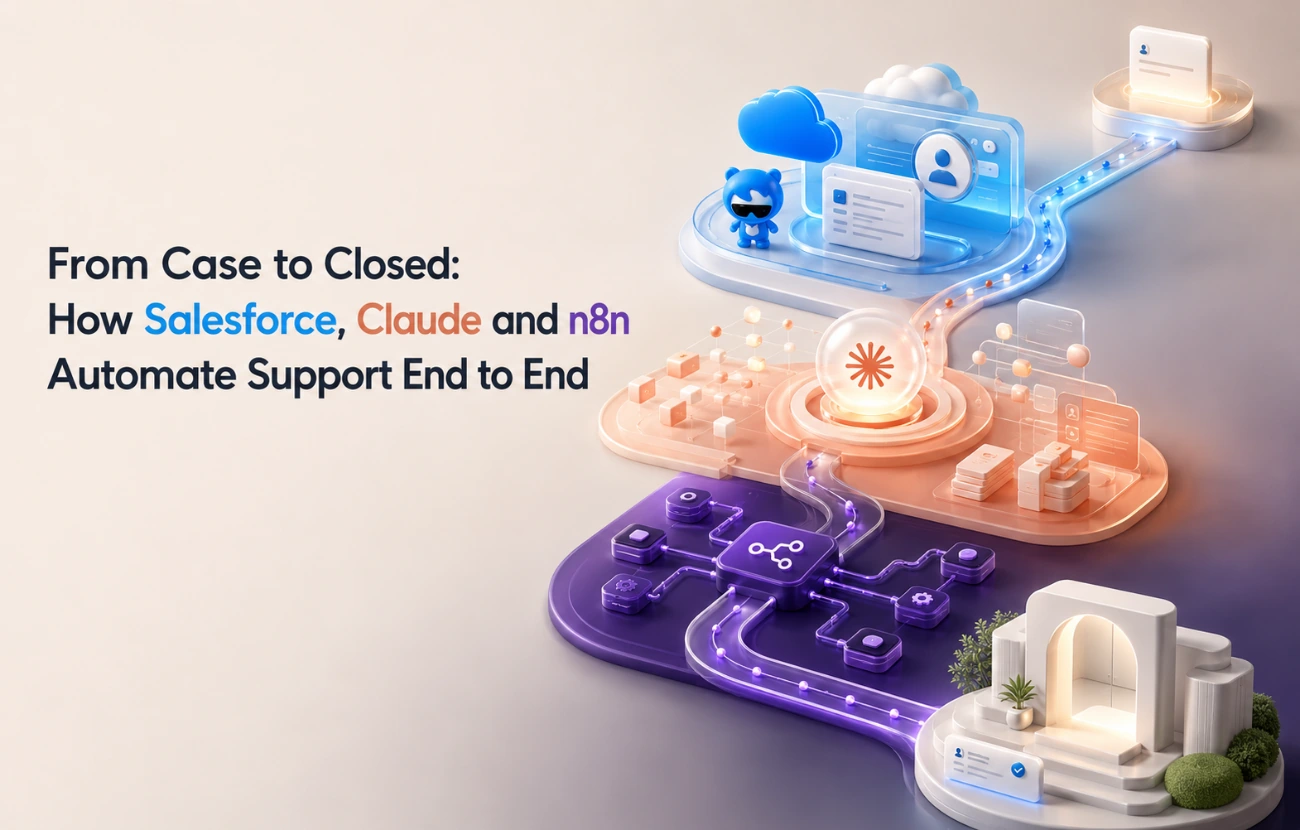
The plays are easier to picture with real examples. A deal closes in HubSpot, n8n syncs it to Salesforce, and Claude drafts the onboarding email for a human to approve. A case is created in Salesforce, Claude summarises it and suggests a reply, a person approves, and n8n writes the outcome back. An inbound WhatsApp message comes in, Claude classifies the intent, and n8n creates the lead in Salesforce or HubSpot and pings the right rep. Overnight, an n8n job feeds combined Salesforce and HubSpot data to Claude, which turns it into a plain-English performance brief and posts it to Slack before anyone’s awake. None of these need a human doing copy-paste, and none of them need bespoke code you’re stuck maintaining.
Do You Need All Four?
No, and you almost certainly shouldn’t start with all four. Most teams already run one or two of these, and the work is connecting what you have and adding the missing layer where it pays off. The disciplined approach is to start with the two or three highest-impact automations, prove the value, then expand. There’s no rip-and-replace involved. A good solution provider layers n8n and Claude on top of your existing Salesforce or HubSpot setup rather than tearing anything out. Your system of record stays exactly where it is. It just starts to think and move faster.
What to Look for in a Cross-Platform Solution Provider
A few things separate a capable cross-platform solution provider from a shop that knows one tool and bolts the others on:
Genuine fluency across all four platforms, not one specialism with the rest treated as an afterthought.
Real CRM data-model understanding. Connecting systems without understanding how the data is structured is how you create a fast, automated mess.
Proper error handling and monitoring, because cross-system flows are exactly the kind that fail quietly until a customer notices.
A model-flexible AI stance, so the reasoning layer is chosen for fit and cost rather than lock-in.
Documentation and handover, so your team can maintain and extend the stack without ringing someone for every change.
The Problems We Usually Get Called In For
Most teams who come to Makedian have already got the tools. What they don’t have is the tools working together. These are the situations we’re called in to fix most often, and how we sort them out.
“Our tools don’t talk, so everything is copy-paste.” Manual re-keying between systems is slow and error-prone, and it quietly caps how much your team can handle. We map the handoffs and automate the ones worth automating, so data moves on its own.
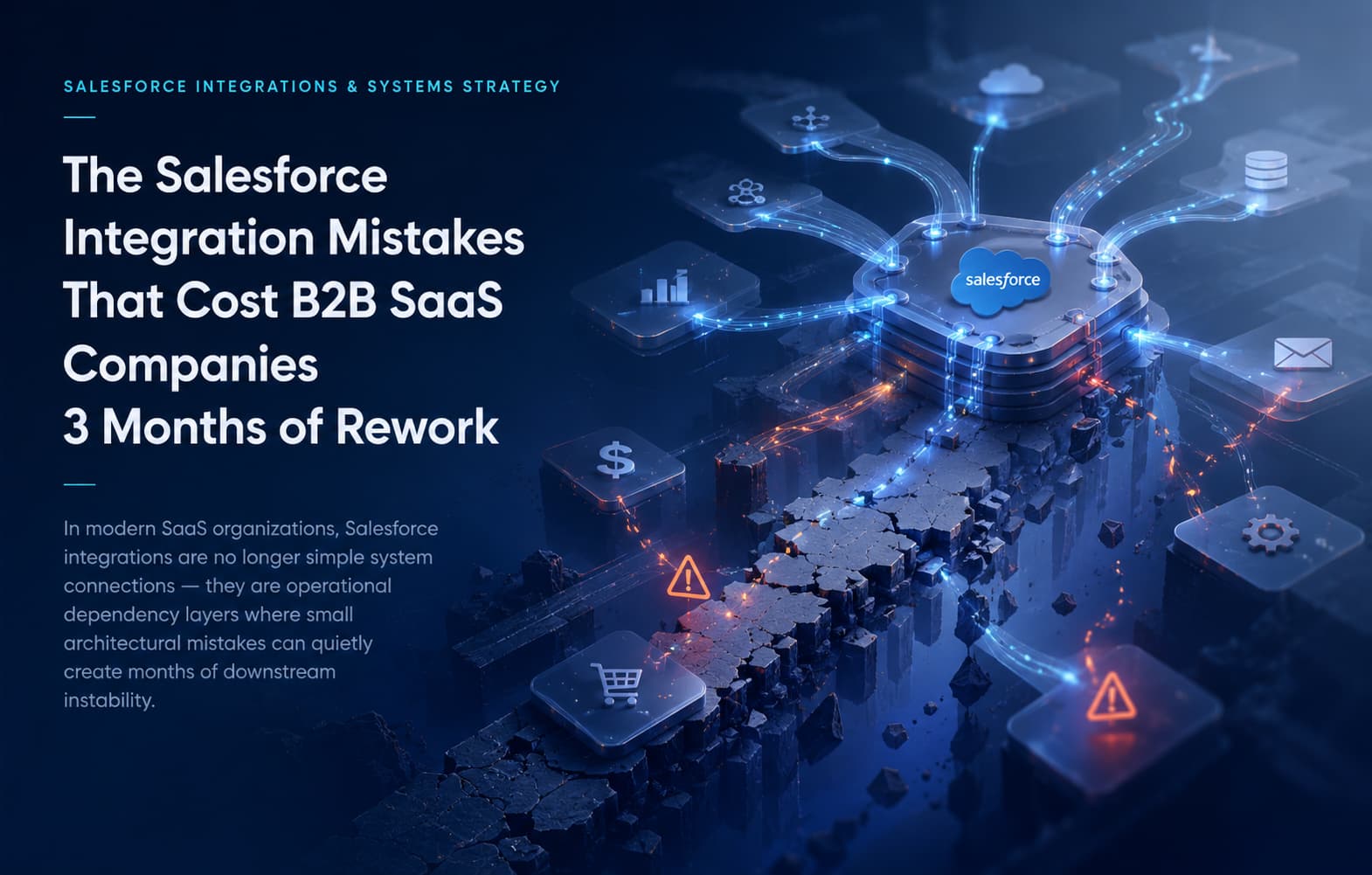
“We tried to connect them and it keeps breaking.” Integrations built in a hurry tend to fail silently. We rebuild them on n8n with proper error handling and alerting, so a broken flow pings your team instead of sitting there unnoticed.
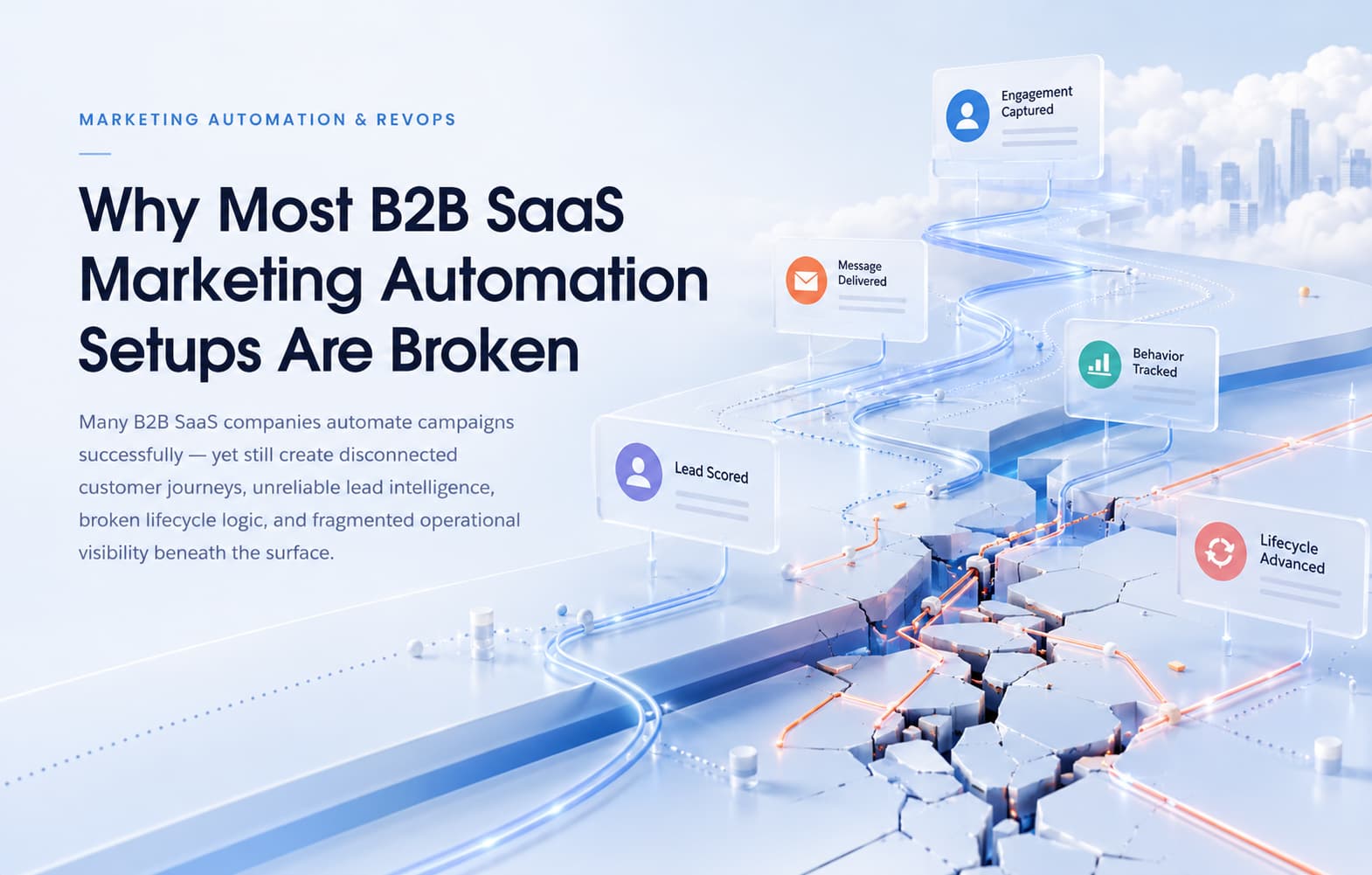
“Marketing and sales data live in two systems and never reconcile.” When HubSpot and Salesforce drift apart, nobody trusts the numbers. We put a reliable sync in place so both sides work off the same truth.
“We bolted AI on and it feels like a gamble.” Adding a model to a workflow is easy; making it reliable is not. We build the AI steps with grounding, cost controls and human checkpoints, so you get the upside without betting the process on a model’s good day.
“We don’t want a rip-and-replace.” You shouldn’t need one. We layer n8n and Claude on top of your current Salesforce or HubSpot setup, so nothing gets torn out and your system of record stays put.
Working With a Cross-Platform Solution Provider
If you’re running two or more of these platforms and losing time in the gaps between them, working with a specialist who understands all four is usually faster and safer than stitching it together yourself. That’s the gap Makedian was built to close, and owning all four layers end to end is our differentiator. Most shops sell one. We design, build and maintain the whole connected stack: Salesforce as the system of record, HubSpot as the marketing engine, n8n as the nervous system and Claude as the brain. Get in touch and we’ll map your current setup and the two or three automations worth starting with.
The Bottom Line
A connected revenue stack comes down to one idea: four platforms behaving like one system, with data flowing between them instead of being copy-pasted by hand. Salesforce holds the truth, HubSpot runs the marketing, n8n moves everything and Claude does the thinking. What separates a stack that works from one that’s fragile is nearly always the same handful of things. Connecting the points that matter and leaving the rest alone. Real error handling and monitoring. AI deployed with guardrails. And no rip-and-replace. This is a hub guide, and we’ll be publishing deep dives on the specific plays, integrations and AI workflows over the coming weeks, linked from here as they go live. And if you’d rather not wait, and your tools are costing you more in manual glue work than they should, that’s exactly the gap Makedian closes. Owning all four layers is what we do. Get in touch and we’ll show you what a connected stack actually looks like.










.webp)














%20(1).webp)