Salesforce Consulting Companies in the UK: What UK Businesses Must Know

Table of content
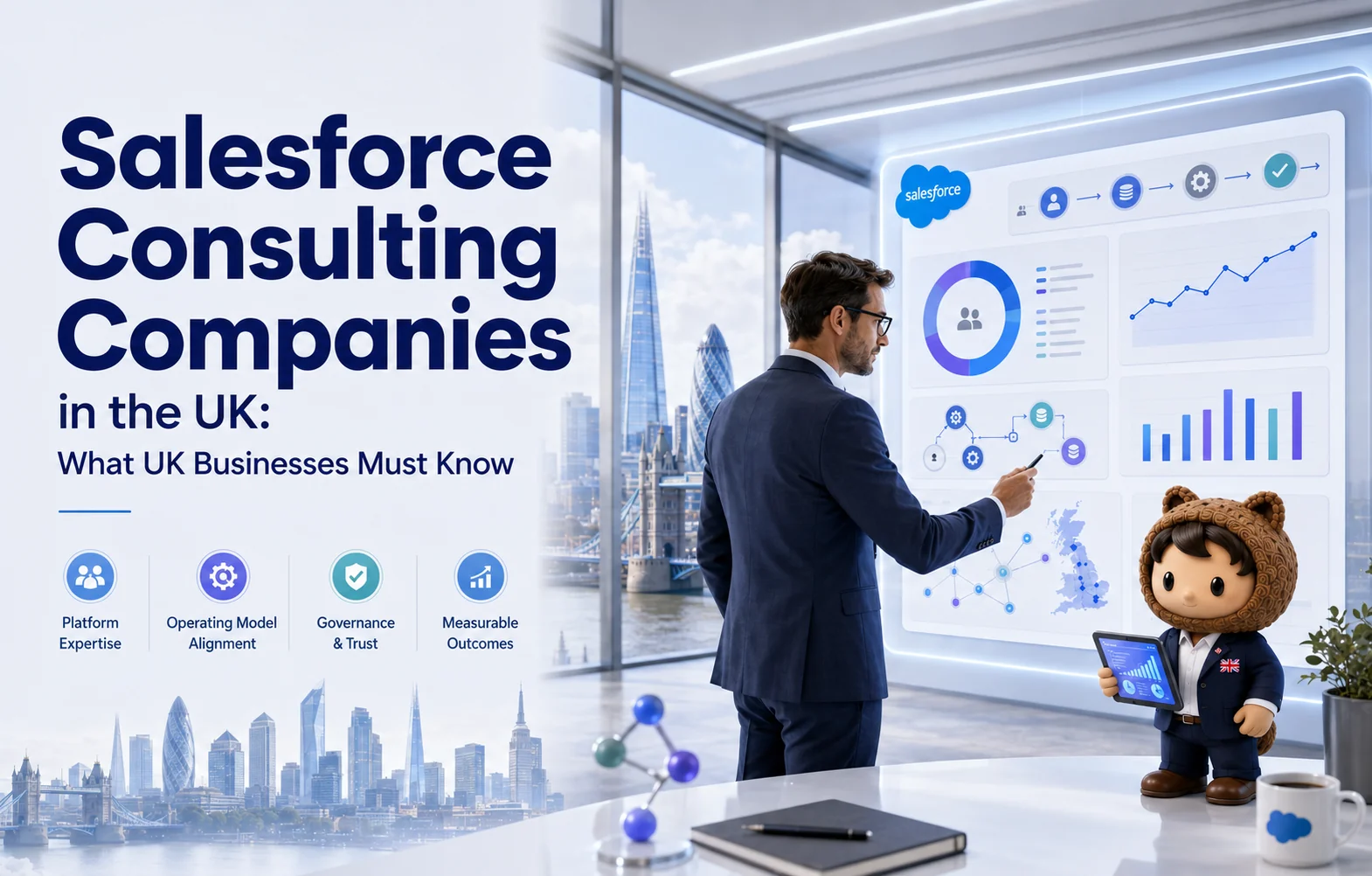
British businesses tend to approach big software decisions with a healthy dose of scepticism, and choosing a Salesforce partner is no exception. That instinct is a good one. The UK market is full of firms that sound impressive in a first meeting, and telling the substance from the sales polish is genuinely difficult, which is why so many organisations end up disappointed by a choice that looked fine on paper.
Picking among salesforce consulting companies in UK is less about the slickest pitch and more about finding a partner who understands your business, your sector and the specific rules you operate under. When that fits, Salesforce earns its keep quickly. When it doesn't, you have paid for complexity nobody asked for and a system your team works around rather than with. What follows is how to tell the two apart before you sign anything.
Why the Right Partner Matters More Than the Software
Salesforce ships to every customer as the same capable but largely empty platform. Success comes down to the implementation, and the implementation is only ever as good as the partner delivering it. Plenty of British companies have bought the best licence on the market and ended up with an expensive address book. Others have done genuinely impressive things on a modest edition because someone took the time to build it around how the business already works.
So the choice among salesforce consulting companies in UK is the most consequential decision in the project, ahead of edition or price. A strong partner asks the right questions, designs around how your organisation actually operates and builds something people adopt. A weak one configures features and leaves you wondering why the team quietly went back to spreadsheets.
The UK is one of several markets where partner selection has its own character. For the global view, our Salesforce Consulting Worldwide guide covers how it varies across regions. This one is specifically about the United Kingdom.
What Makes the UK Market Different
The British Salesforce market is mature and competitive, and a few local factors shape the search. Data protection is front of mind: UK GDPR and the Data Protection Act set a high bar, and post-Brexit data handling adds nuance, so a partner needs to genuinely understand compliance rather than wave at it. The market skews towards financial services, professional services and the public sector, so sector-specific experience is easy to find and worth insisting on.
There's also a cultural dimension. British buyers tend to value substance over hype, references over promises and a certain directness, so the best salesforce consulting companies in UK tend to be the ones comfortable being honest about what will and won't work, rather than the ones with the shiniest deck. London dominates, but strong partners operate nationwide, so don't assume you need a firm on your doorstep.
What to Look For in Salesforce consulting companies in UK
Once you accept that the partner matters more than the licence, the question becomes how to tell a good one from a confident one. A few things separate the salesforce consulting companies in UK worth your time.
Real, certified expertise. Salesforce certifications aren't everything, but they're a baseline, and a serious firm will have genuine, current ones across admin, development and the specific clouds you need, not one certificate from three years ago.
Relevant experience, not just any experience. A partner who has solved problems like yours, in your industry and at your size, will move faster and make fewer expensive assumptions than a generalist learning on your project.
A process-first mindset. The best salesforce consulting companies in UK ask about how your business actually works before they talk configuration. A firm that only wants to discuss features is one that will build you something technically fine that nobody's workflow fits.
Documentation and no lock-in. A confident partner documents what they build and hands it over. One that keeps the knowledge in their heads is protecting their retainer, not your interests.
A point of view on AI. Agentforce and Einstein are real now, and a modern partner should be able to tell you sensibly where AI helps and where it doesn't, rather than either ignoring it or overselling it.
Local, Offshore or Hybrid? The Honest Answer
Firms tend to get evasive on this one, so here it is plainly. A fully local partner gives you British context, easy timezone overlap and face-to-face where it matters, usually at a higher rate. A purely offshore team is cheaper but can struggle with context, hours and communication. A hybrid model, local strategy and relationship with delivery support elsewhere, often gives the best balance of value and understanding.
There's no universally right answer, only the one that fits your project. What matters is that the partner is honest about how they work and that someone who genuinely understands your market is close to your project, not just an account manager relaying messages to a team you never speak to.
How a UK Salesforce Project Usually Runs
One of the more useful things to ask a prospective partner is what the first eight weeks look like in practice. Firms that have delivered a lot of work in Britain tend to answer without hesitating, because the shape of the engagement is familiar to them. Firms that improvise will give you a version of "it depends".
Most credible engagements start with discovery: a few weeks of sitting with your sales, service and finance people, mapping how work moves through the business today and where it stalls. This is the stage buyers are most tempted to cut, and cutting it is the single most reliable way to overspend later. Every decision you leave undecided at this point comes back as billable rework once something has already been built on top of it.
Design and configuration follow, ideally in short cycles you can see and react to rather than a single reveal at the end. Data migration usually takes longer than anyone budgets for, because legacy records are messier than the spreadsheet suggests and because UK GDPR obligations mean you have to make deliberate decisions about what you keep, what you archive and what you delete rather than lifting everything across by default.
Then comes training, go-live and the weeks immediately after, which decide whether the system gets used. Adoption is where UK projects most often quietly fail: the build was fine, nobody explained why it mattered, and within a month half the team is back in Excel. Ask any partner you are considering how they handle the fortnight after go-live, and treat a vague answer as a warning.
Red Flags to Watch
A few warning signs come up again and again. A partner who only talks technology and never asks about your business. Vague answers on certifications or references. A rush to build before the process is agreed. No clear plan for documentation or handover. And anyone promising to solve everything with AI before your data and foundations are anywhere near ready. Any one of them is a reason to slow the process down and ask harder questions before you sign anything.
Questions to Ask Before You Sign
Before committing, get honest answers to a handful of things. Can you show me relevant work with businesses like ours? Who exactly will be on my project, and where are they based? How do you approach discovery before building? What happens after go-live, and how do you hand over? And where do you think AI genuinely fits for a business like mine? The quality of those answers tells you more than any pitch deck.
Where AI Fits in a Modern UK Salesforce Project
AI is firmly on the agenda for UK businesses, tempered by that characteristic caution about data and risk, which is no bad thing. A good partner will talk sensibly about where Agentforce and Einstein earn their place, whether that is scoring leads, predicting churn, drafting responses or handling routine service, always on clean, compliant data with a human reviewing the output. Given UK data-protection expectations, governance has to sit in the design from day one, and a partner who treats it as an afterthought is one to avoid. Push for specifics: which processes, which data, who reviews the output and what happens when the model gets something wrong.
Salesforce Rarely Lives on Its Own
Something worth raising early, because it catches out plenty of UK buyers: Salesforce is almost never the only system involved. Marketing sits somewhere else, finance sits somewhere else again, support tickets arrive through a third tool, and the gaps between them are where data quality goes to die. A partner who only looks at Salesforce will happily build you a very tidy island.
In practice, a lot of British mid-market businesses run a mixed stack, and quite often HubSpot is part of it, either as the marketing layer alongside Salesforce or as the CRM a growing team started on before the pressure to move upmarket arrived. Both situations are workable. Both go badly when nobody owns the boundary between the two. If that describes your setup, our guide to HubSpot services covers how the CRM, marketing and RevOps pieces fit together and where the overlap with Salesforce actually causes trouble.
The connective tissue matters just as much. Rather than commissioning custom integration code for every handoff, many teams now use an automation layer to move records, trigger follow-ups and keep systems in step, which keeps the logic visible and cheap to change. Our guide to n8n automation services walks through what that looks like when you are connecting real business tools rather than demo apps.
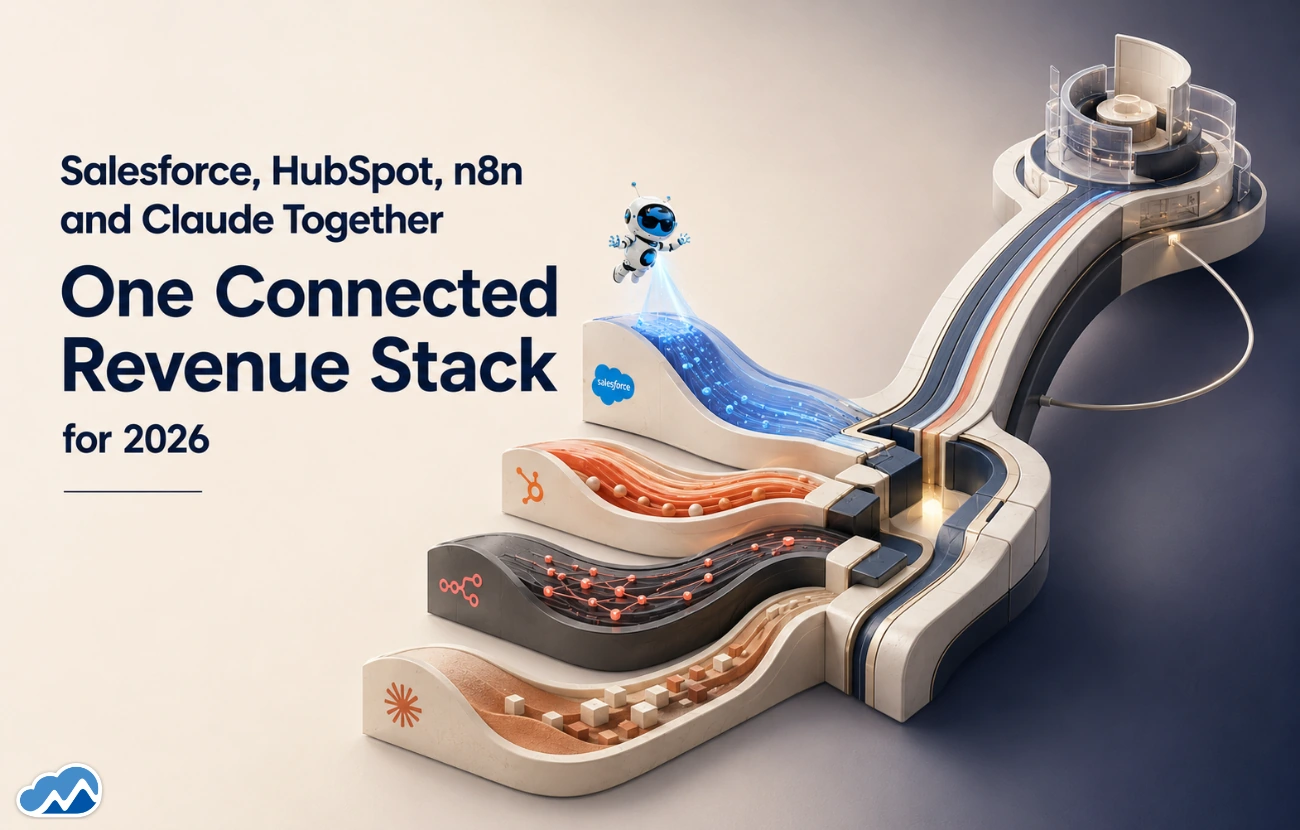
AI is the newest layer on top of all this, and the sensible version of it is far less dramatic than the marketing suggests. It is drafting the reply, summarising the call, classifying the ticket and pulling structured data out of documents, all inside a process someone still owns. Our practical guide to Claude AI for business goes through chatbots, automation and structured outputs without the hand-waving, and if you want to see how the whole thing hangs together, this walkthrough of Salesforce, HubSpot, n8n and Claude in one connected revenue stack is the closest thing to a blueprint.
None of this means you should hire one firm to do everything. It does mean you should ask any prospective Salesforce partner how they think about the systems either side of theirs. The ones who have an answer tend to build things that still work in two years.
Frequently Asked Questions










Agentforce for Financial Services: AI-Driven Banking & Insurance Solutions






.webp)




n8n Workflow Automation: From Lead Capture to CRM in Minutes, Not Hours
%20(1).webp)