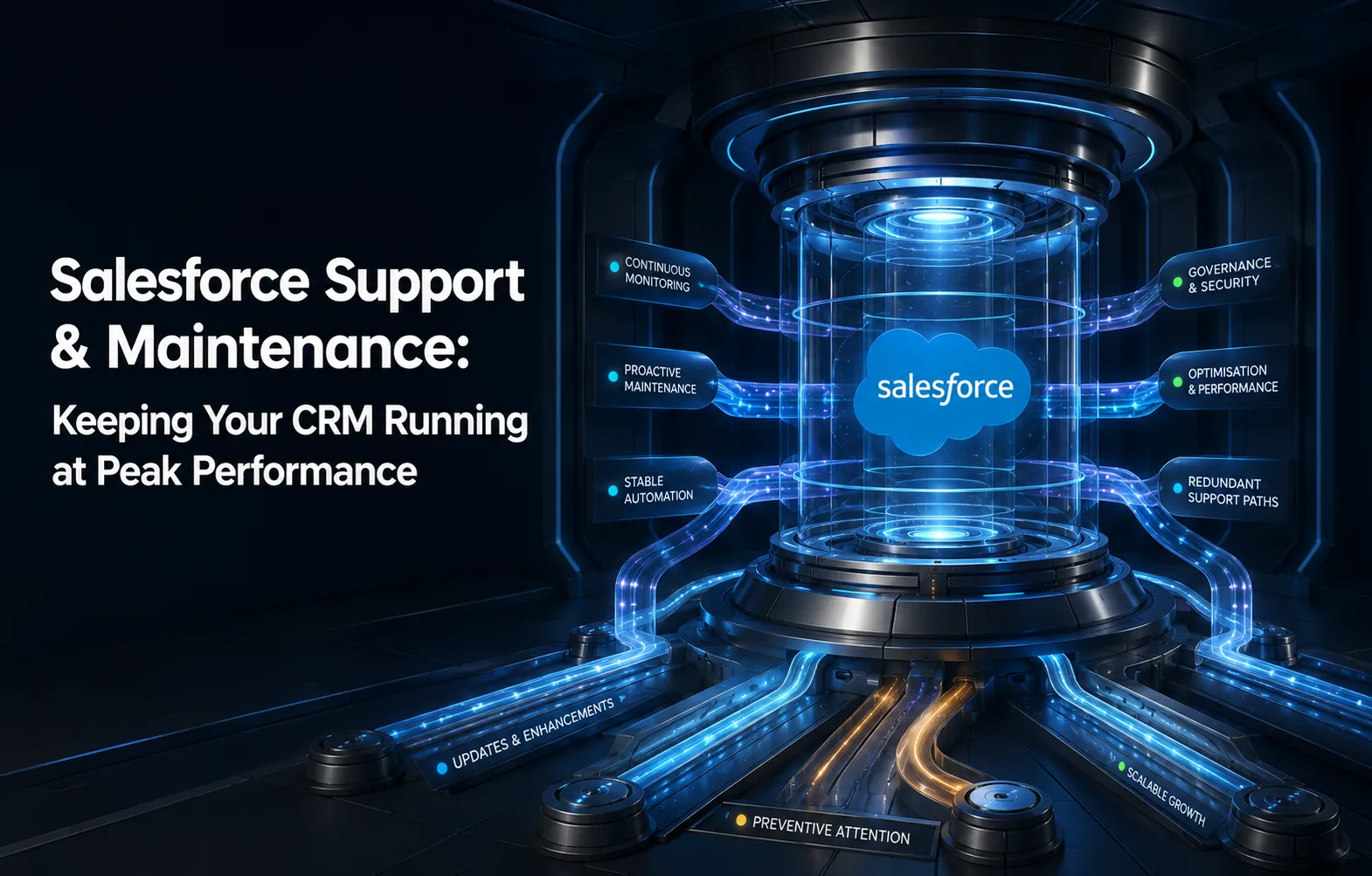
Salesforce Support & Maintenance: Keeping Your CRM Running at Peak Performance

Table of content
Quick question before we start: when was the last time anyone actually looked under the bonnet of your Salesforce org? Not logged in and used it. Looked at it. Checked what's still firing, what's quietly failing and what a departed admin left behind eighteen months ago.
If you're not sure, you're in good company. And you're also in exactly the situation that Salesforce Support & Maintenance Services exist to fix.
Nobody tells you this on go-live day. A Salesforce org is not a fridge. You don't plug it in and walk away for a decade. It's more like a garden. Leave it alone and it doesn't stay still, it drifts. Automations pile up, fields multiply, users invent their own workarounds and one Tuesday a flow that's run fine for a year silently stops, and nobody notices until a customer does.
Sound familiar? Good. Let's talk about what actually keeps a CRM running at peak performance.
Why a Salesforce Org Doesn't Stay Healthy on Its Own
Nobody sets out to build a messy org. That's worth saying, because teams get defensive the moment someone offers to "review" their Salesforce. The mess is never a decision. It's an accumulation.
Think about how it actually happens. You launch clean. Then sales asks for one more field. Marketing needs a new automation. A manager wants a custom report, so someone builds three. A new tool gets bolted on. Every single one of those made sense on the day. Nobody was wrong. But two years of sensible little changes, made by different people, none of them documented, add up to an org that even your admin doesn't fully understand anymore.
And Salesforce itself keeps moving underneath you. Three times a year it ships a major release, and features you depend on get changed, retired or replaced. If nobody's watching for that, you don't find out until something breaks. With any CRM, standing still is not an option the platform offers you.
Why "It's Live, So We're Done" Is the Most Expensive Myth in CRM
The single most expensive belief in this whole space is that implementation is the finish line. It isn't. It's the starting line.
When a project wraps, the budget attention moves on, the implementation partner rolls off and the org gets handed to whoever's around. Usually one overstretched admin juggling Salesforce alongside four other jobs. For a while it's fine. Then adoption slips because nobody's fixing the small annoyances. Data quality rots because nobody owns it. A report starts showing the wrong number and, because trust erodes quietly, people stop using Salesforce for decisions and go back to spreadsheets.
That's the real cost of skipping ongoing support. Not a dramatic outage. A slow, silent decline in the thing you spent a small fortune implementing. Peak performance isn't a state you reach. It's a state you maintain.
What Salesforce Support & Maintenance Services Actually Cover
This phrase gets thrown around a lot, so let's be specific about what a real engagement includes rather than leaving it vague.
Day-to-day admin support. The unglamorous, essential stuff: users, permissions, page layouts, the request that comes in at 4pm because someone can't see an object they need for a 9am meeting.
Bug fixing and troubleshooting. When a flow fails, an integration drops or a validation rule blocks half the sales team, someone who can diagnose it fast and actually fix it, not just log a ticket into the void.
Release management. Salesforce's three seasonal releases each year, reviewed before they land, tested in a sandbox and prepped so new features help you instead of ambushing you.
Data quality and hygiene. Duplicate management, cleanup, validation rules and the automation that keeps the database tidy instead of letting it silently degrade.
Enhancements and small builds. The steady stream of "can we just..." requests that are too small for a project but add up to real value over a year.
Monitoring and health checks. Proactively watching automations, API limits, storage and security so problems surface as alerts, not as angry customers.
That's the scope in practice. It's what separates an org that's cared for from one that's merely alive.
Reactive Support vs. Proactive Maintenance (The Difference That Costs You)
Most teams don't make this distinction until it costs them. Two completely different things hide inside the word "support."
Reactive support is waiting for something to break, then fixing it. It's necessary, and you'll always need some of it. But if it's all you have, you're permanently on the back foot, paying to put out fires that a bit of attention would have prevented.
Proactive maintenance is the opposite posture. It's reviewing the org before the release lands, catching the failing automation before month-end, spotting the API usage climbing towards its limit before it caps you mid-quarter. It costs a little every month and saves you the genuinely bad afternoons.
The best Salesforce Support & Maintenance Services do both, but they lead with the second one. A provider who only ever reacts to your tickets is selling you a fire extinguisher and hoping for fires. The one worth paying for is quietly making sure the fires don't start.
The Three Releases a Year Nobody Prepped For
Let's dwell on release management for a second, because it's the maintenance task teams most reliably ignore, and the one that bites hardest.
Salesforce ships Spring, Summer and Winter releases every year. Hundreds of changes each time. Some are gifts. Some quietly change how an existing feature behaves. Occasionally one retires something your carefully built process depends on.
If nobody owns this, the pattern is predictable. The release lands automatically. Something shifts. A week later a user reports that "the thing doesn't work anymore," and now you're debugging in production with no idea the platform changed under you. Prepped properly, it's a non-event: the release is reviewed in advance, tested in a sandbox, and the useful new features get switched on deliberately. That's not a nice-to-have. Over a year, it's the single clearest reason ongoing maintenance pays for itself.
Technical Debt: The Silent Tax on Your Org
Every shortcut, every undocumented tweak, every "we'll clean it up later" is a small loan against your future. Individually harmless. Collectively, they become technical debt, and technical debt charges interest.
It shows up as an org where nobody can safely rename a field because four hidden things depend on it. As five automations doing overlapping jobs, occasionally fighting each other. As a permissions setup so tangled that giving one person access takes an afternoon of detective work. None of it is dramatic. All of it slows you down and quietly raises the risk of the next change breaking something.
Part of proper maintenance is paying that debt down steadily, refactoring, consolidating, documenting, so the org gets easier to change over time instead of harder. An org that's been maintained for three years should be simpler to work in than it was on launch day. If yours is the opposite, that's the tax showing up on the bill.
In-House Admin, Managed Services or Both?
This is the question every growing team eventually hits, so let's be honest about the trade-offs instead of pretending there's one right answer.
A full-time in-house admin gives you someone who knows your business deeply and is there every day. The catch: one person can't be an expert in everything. Admin, development, integrations, security and every seasonal release is a lot to ask of a single hire, and when they're on holiday or they leave, you're exposed.
Managed Salesforce Support & Maintenance Services give you a team instead of a person, a spread of specialists, cover when someone's away and someone else's problem to keep skills current. The trade is that they're not sitting in your standup absorbing context by osmosis, so the relationship needs to be built deliberately.
For a lot of companies the honest answer is both. An in-house admin or accidental admin for the daily, close-to-the-business work, backed by a managed service for the specialist depth, the release cycle and the bigger builds. What matters isn't the label. It's that someone genuinely owns the health of the org, with the skills and the time to do it.
What Good Actually Looks Like: SLAs, Response Times and Reaching a Human
Not all support is equal, and the gap shows up fastest when something's actually on fire. A few things separate a real service from a logo on a contract.
Clear SLAs that match reality. A blocker stopping the whole sales team should not share a response time with a cosmetic tweak. Good providers tier by severity and tell you the numbers up front.
A named human, not a ticket portal that swallows requests. The single biggest difference in day-to-day experience is whether you can reach someone who already knows your org, versus explaining it from scratch to a stranger every time.
Proactive communication. You should hear from a good provider before the release, not after the incident. Silence is not the same as everything being fine.
Documentation you actually own. If the provider vanished tomorrow, could the next team understand your org? If the answer lives entirely in someone else's head, you don't have a service, you have a dependency.
Signs You're Overdue for Proper Support
Not sure whether this is urgent? Run through these honestly.
Your "admin" is actually a sales manager who learned Salesforce by accident. Requests for changes sit for weeks because nobody has time. You've been surprised by a Salesforce release more than once. Nobody can confidently say what every automation in the org does. Users have quietly gone back to spreadsheets for things Salesforce should handle. A report showed the wrong number and it took days to work out why.
Two or three of those, and you're already paying for the gap, just in lost productivity, bad decisions and eroded trust rather than in a support line item. That cost doesn't show up on an invoice, which is exactly why it's so easy to keep ignoring.
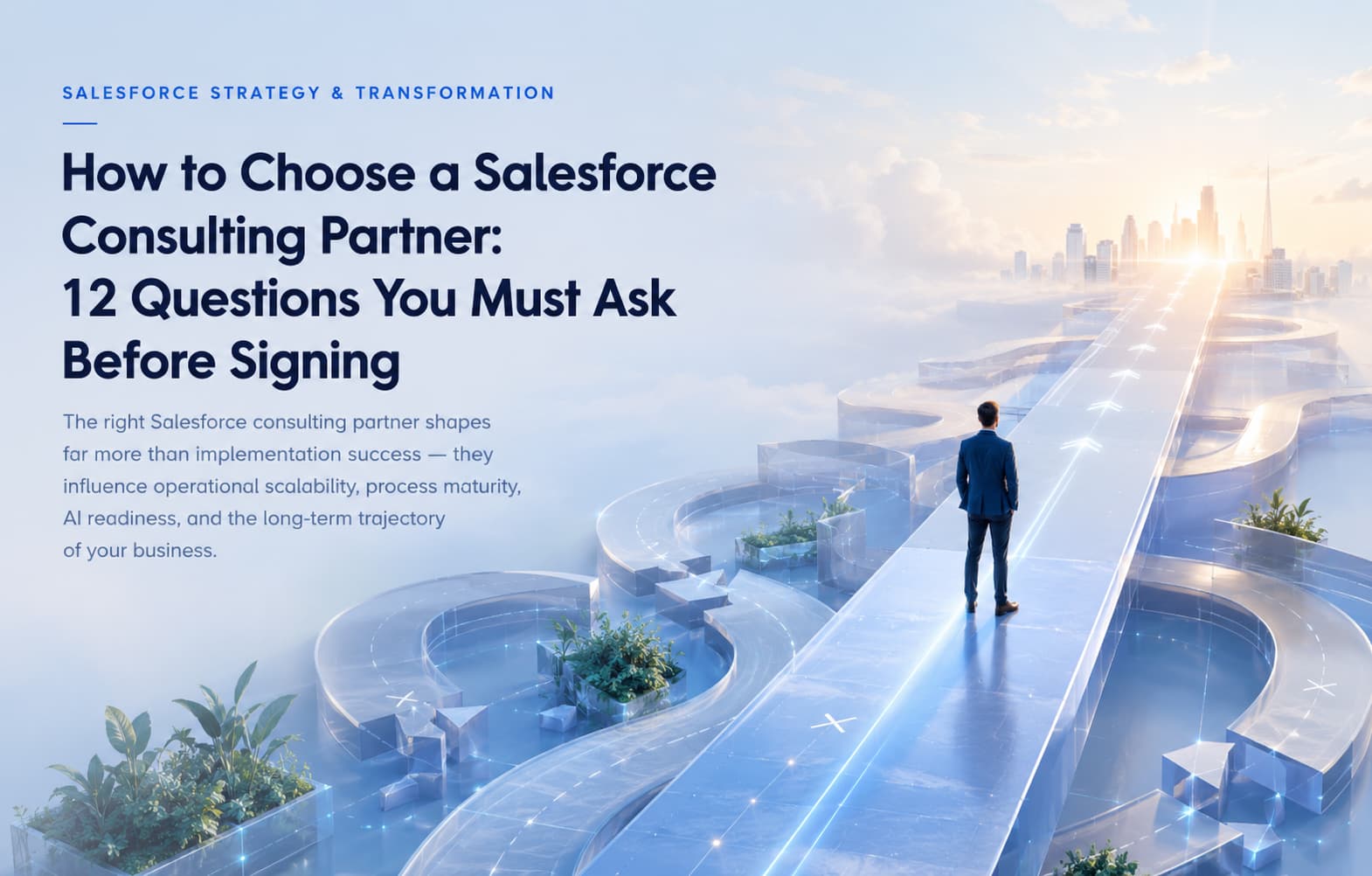
How to Choose a Salesforce Support & Maintenance Partner
If you decide to bring in help, a few things separate a provider worth keeping from one you'll be replacing in a year.
Look for genuine range. Real Salesforce Support & Maintenance Services cover admin, development, integrations and security, because your problems won't politely stay in one category. A provider who only does admin work will stall the moment you need code.
Push on proactivity. Ask how they handle the seasonal releases, what monitoring they put in place and when you'd hear from them if nothing were wrong. If the whole model is "raise a ticket and we'll respond," you're buying reaction, not care.
Insist on documentation and no lock-in. A partner confident in their work documents it and hands it over. One who keeps the knowledge hostage is protecting their retainer, not your org.
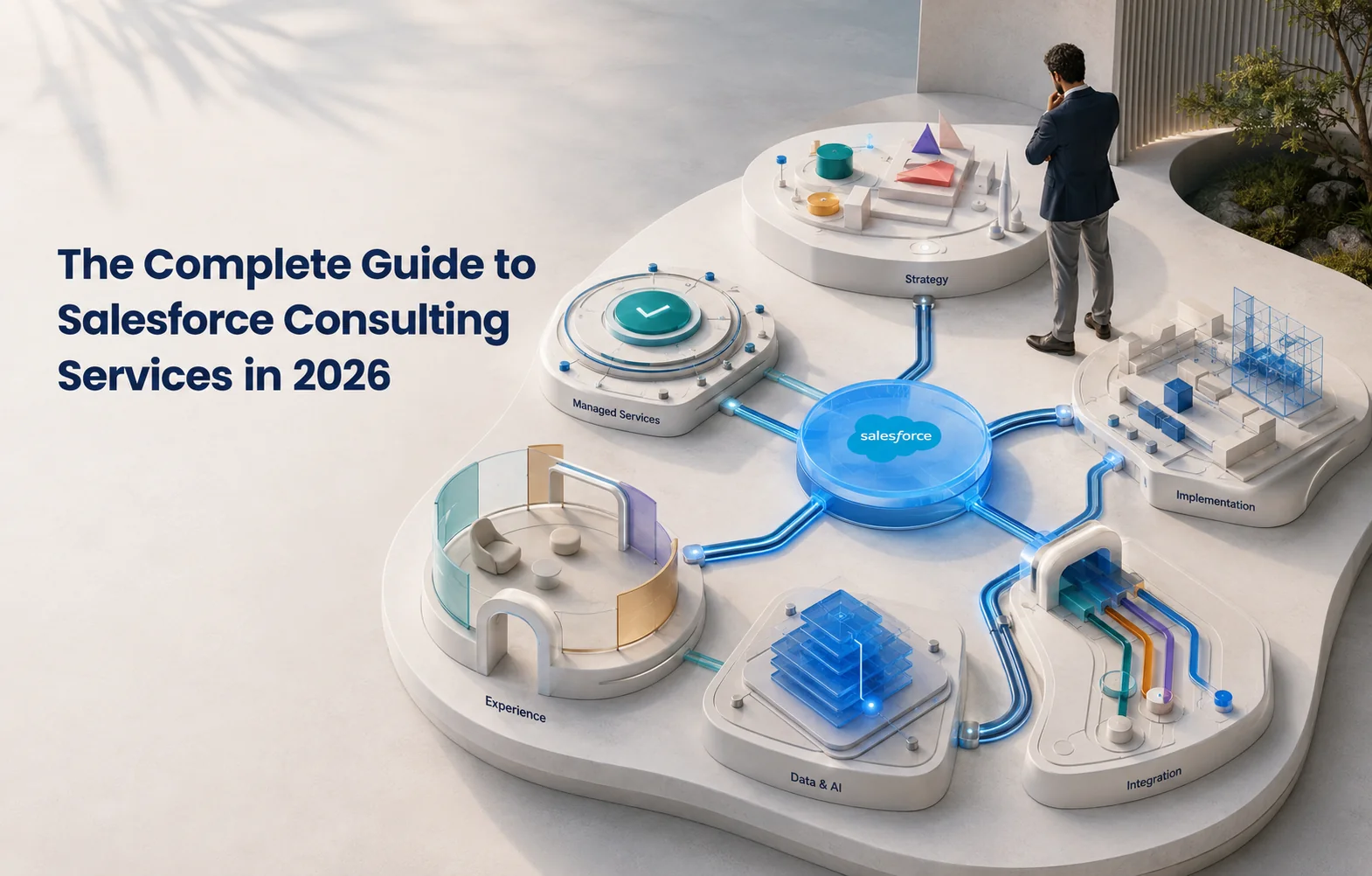
And make sure support is seen as part of a bigger picture, not a stitched-on afterthought. Ongoing maintenance works best when it's connected to the wider strategy for your org, the kind laid out in our Complete Guide to Salesforce Consulting Services. Support and strategy aren't separate purchases. The best providers treat them as one.
Frequently Asked Questions









Agentforce for Financial Services: AI-Driven Banking & Insurance Solutions








.webp)






n8n Workflow Automation: From Lead Capture to CRM in Minutes, Not Hours

%20(1).webp)