Salesforce for Every Industry: Tailored CRM Solutions That Drive Real Growth

Table of content
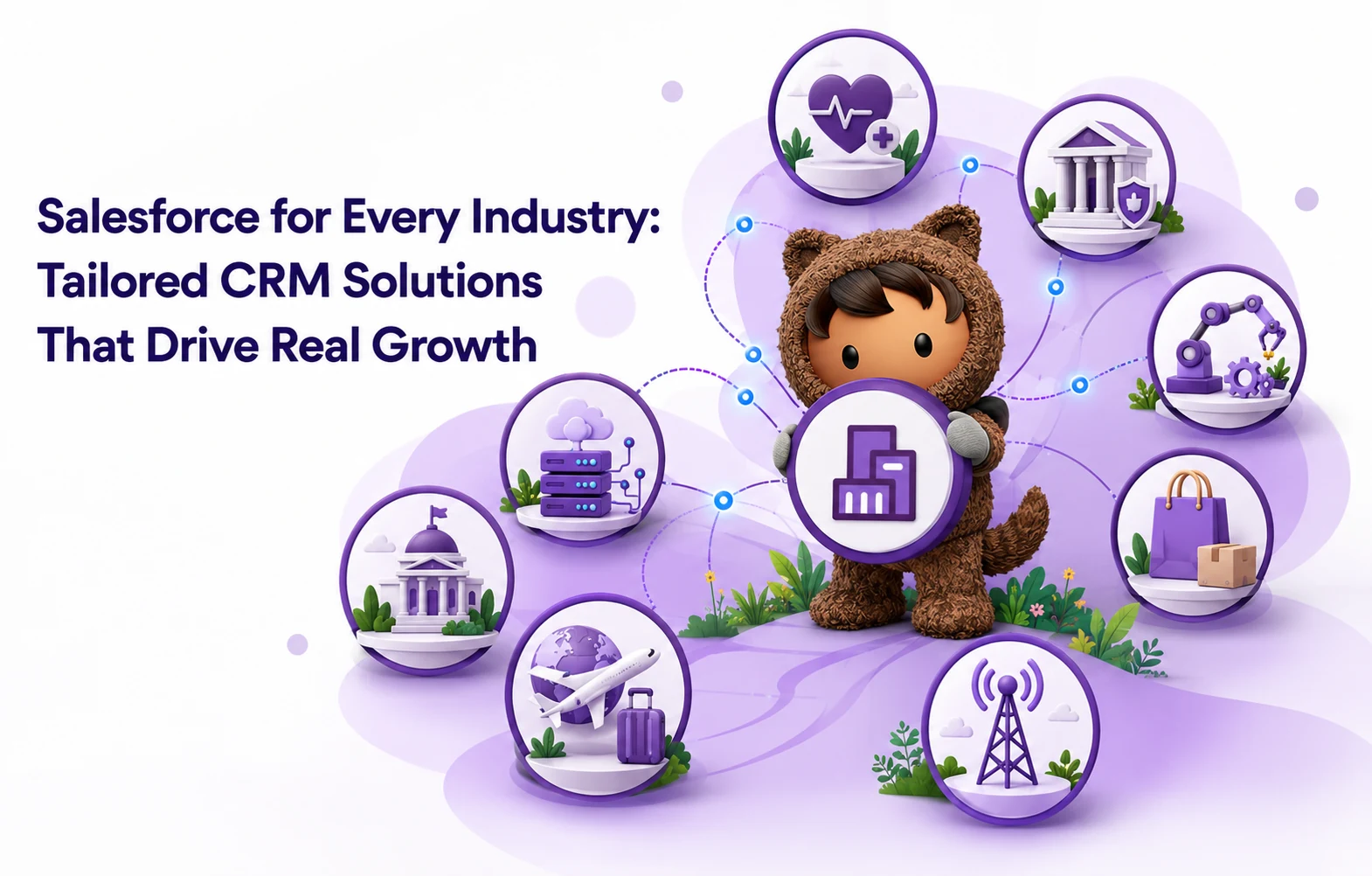
A generic CRM configuration can only take a business so far. A hospital system's data model, compliance requirements and workflows look nothing like a manufacturer's. Trying to force both into the same out-of-the-box Sales Cloud setup means months of custom build work just to reach parity with what a purpose-built solution already includes. That's the gap Salesforce industry solutions are built to close.
In 2026, industry-specific clouds have moved from a niche add-on to one of Salesforce's fastest-growing product categories, with pre-built data models, workflows and compliance features tailored to specific sectors. Here's what's available and how to know if your business needs one.
Financial Services Cloud
Built for banks, wealth managers and insurers, Financial Services Cloud centers on a unified client financial profile: accounts, policies and relationships in one view instead of scattered across systems. In 2026, adoption is concentrated around three use cases: loan origination workflows, holistic client financial profiles for advisors and regulatory compliance tracking that keeps audit trails intact as AI agents get involved in servicing.
For a wealth management or lending business, this typically replaces months of custom object modeling that a generic Sales Cloud build would otherwise require.
Health Cloud
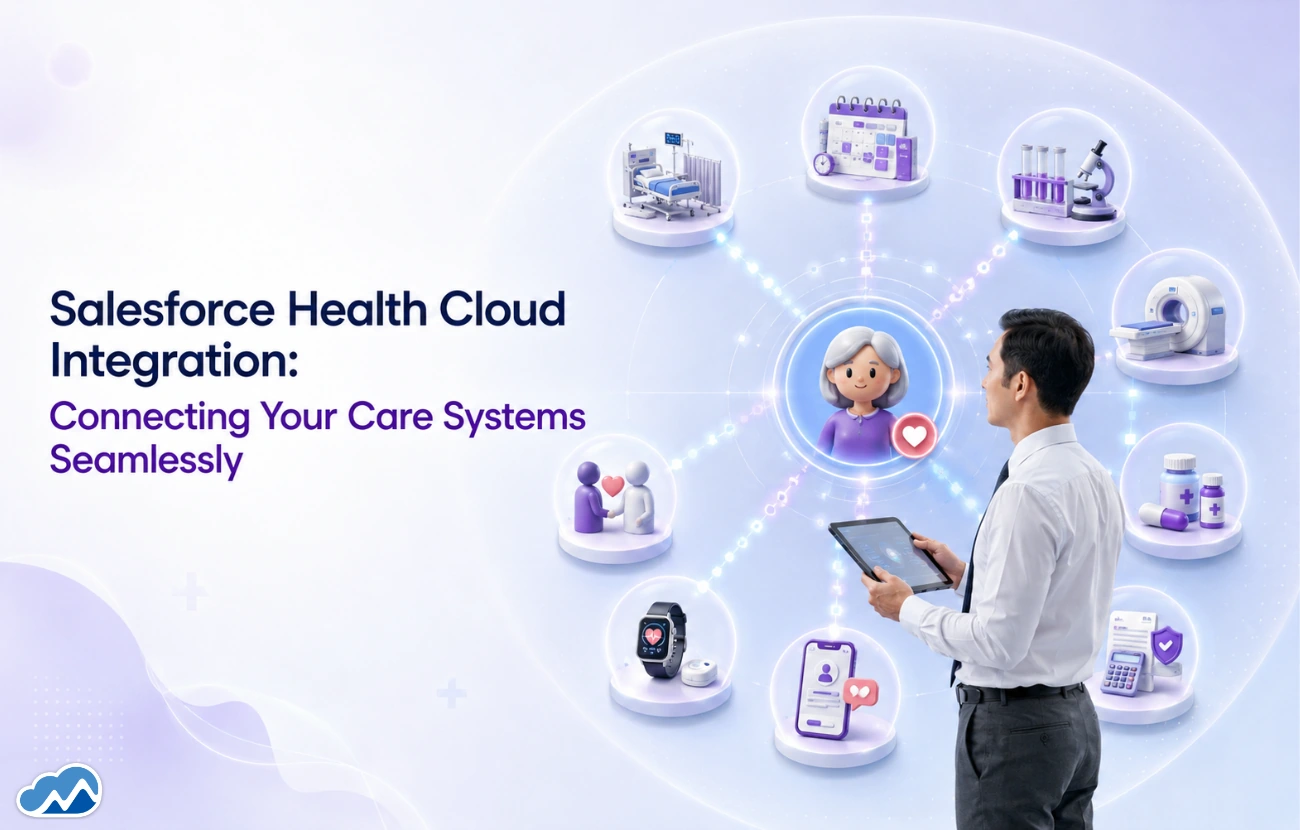
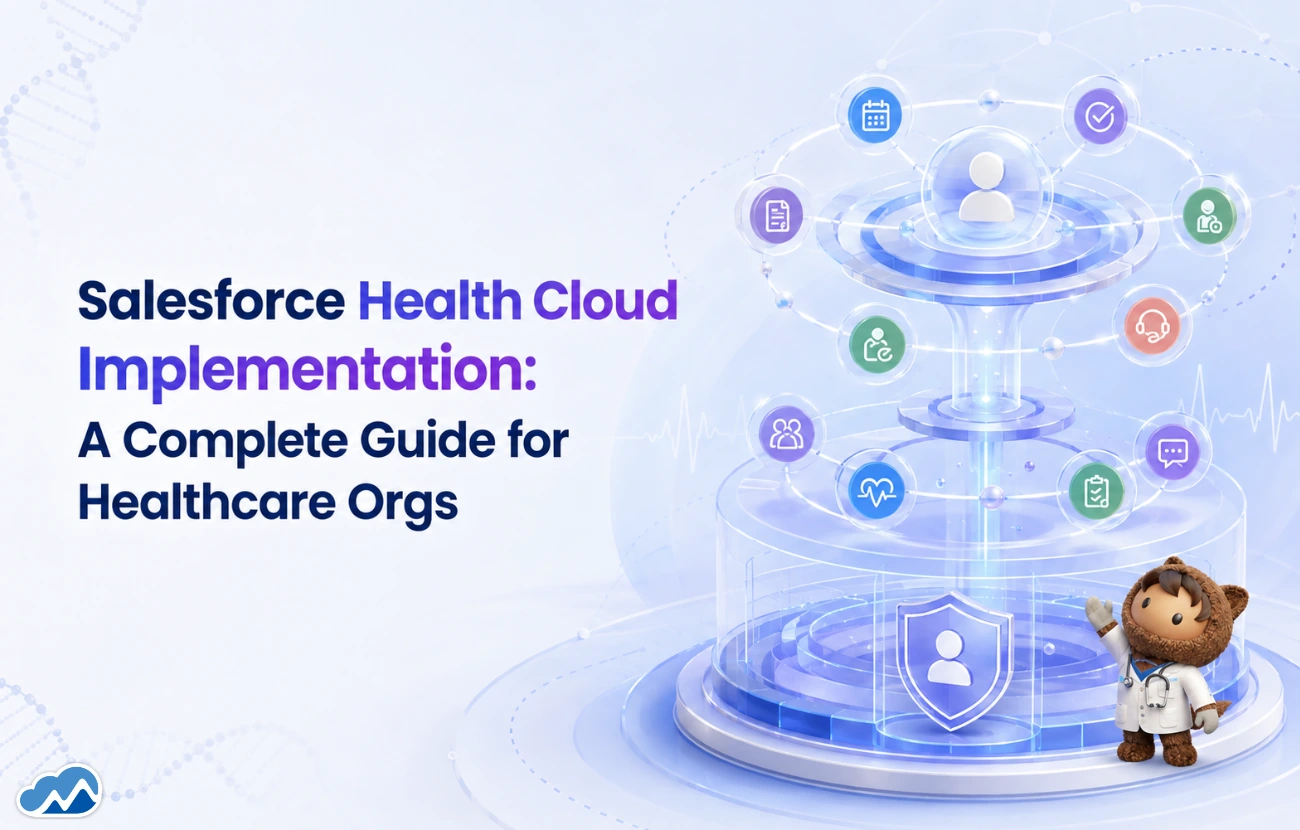
Health Cloud is designed for care coordination, not just patient contact management. It includes patient engagement tools, a patient portal and mobile app and integrations with electronic health records (EHRs), all built around HIPAA compliance requirements from the ground up. The 2026 additions lean heavily into AI-enhanced care coordination, including clinical agents that help optimize care plans, always within the compliance guardrails the platform enforces by default.
Healthcare organizations evaluating Salesforce should treat HIPAA-ready architecture as a baseline requirement, not a customization request, which is exactly what Health Cloud is built to provide out of the box.
Manufacturing Cloud
Manufacturing businesses run on B2B relationships that don't map cleanly to a standard sales pipeline: long contracts, demand forecasts and account-based planning across distributors and direct customers. Manufacturing Cloud aligns sales agreements with demand forecasts, adds predictive account-based forecasting and integrates with ERP systems so sales and operations data isn't split across disconnected platforms.
Other Industry Clouds Worth Knowing
Salesforce's industry portfolio now extends well beyond these three, with dedicated clouds for communications and media, energy and utilities, education, automotive, public sector and nonprofit organizations, each with data models and workflows shaped around how that sector actually operates. If your business sits in one of these categories, it's worth checking whether a purpose-built cloud already exists before commissioning a custom build.
Why Industry Clouds Matter More With Agentforce
AI agents are only as good as the data model and guardrails underneath them. Salesforce's own framing is that AI in 2026 isn't a feature you switch on. It's an operating model you have to design and govern. Industry clouds do a meaningful share of that governance work automatically: compliance rules, data structures and permitted workflows are already encoded for that sector, so an AI agent built on Health Cloud, for instance, operates inside HIPAA-aware guardrails rather than requiring your team to build that logic from scratch.
This is a big part of why "just configure standard Sales Cloud for us" is increasingly the wrong ask for regulated or complex industries. It recreates work Salesforce has already done and does worse.
Choosing the Right Fit for Your Business
A simple filter: if your industry has specific compliance obligations (HIPAA, financial regulation, safety standards), a data model that doesn't map to generic leads/opportunities/accounts, or long-cycle B2B relationships involving contracts and forecasts, an industry cloud is very likely to be worth the incremental license cost versus a heavily customized generic build.
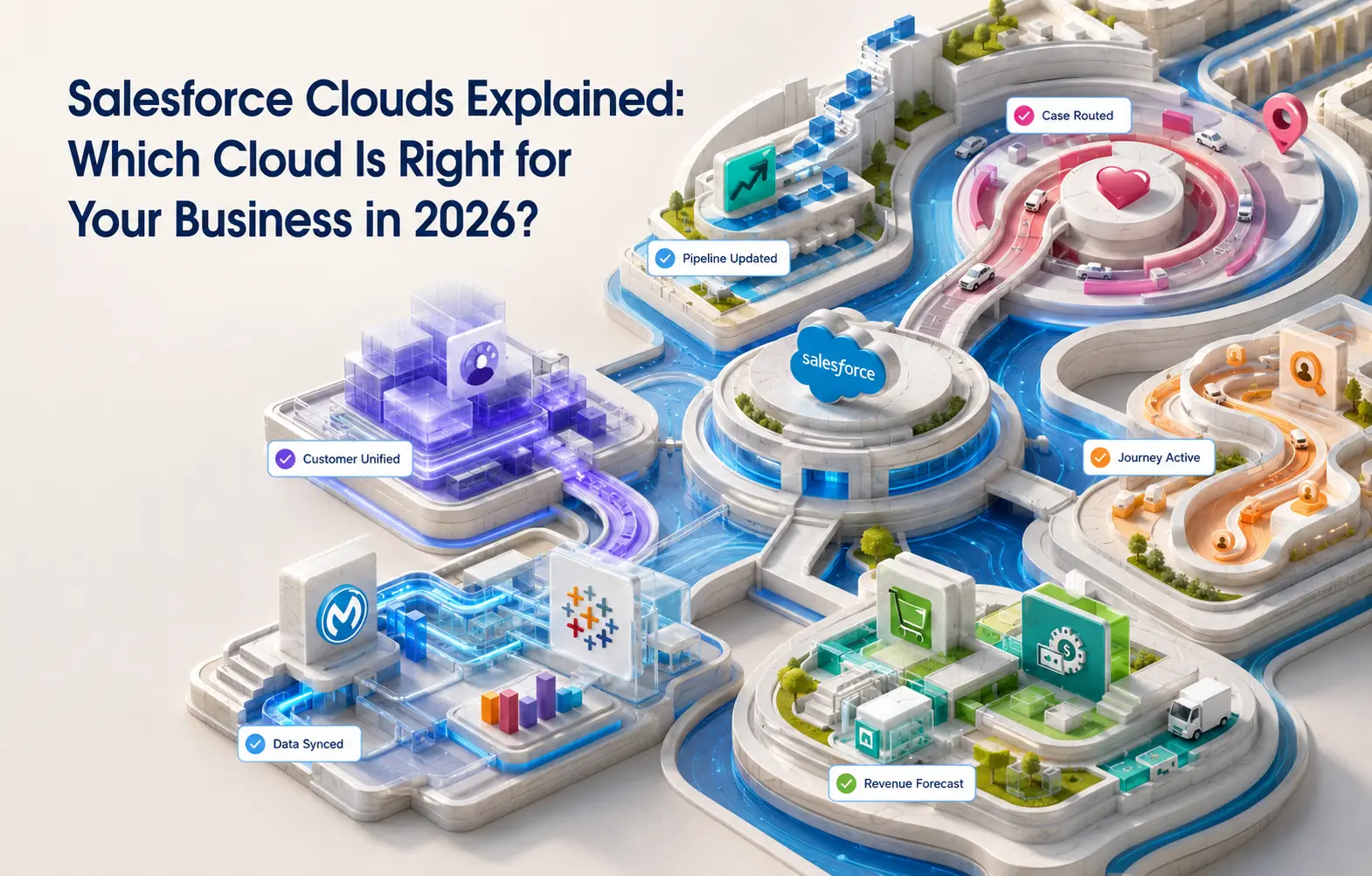
If none of that applies, a well-configured core cloud, covered in our guide to Salesforce Clouds, is usually the more cost-effective starting point.
Either way, getting the fit right at the start avoids the most expensive mistake in Salesforce implementations: building custom logic to replicate something an industry cloud already ships with. Our Salesforce Consulting Services team scopes this decision as part of discovery, before a single object gets configured.
The Bottom Line
Purpose-built beats generic when your industry has real complexity to account for. Financial Services, Health and Manufacturing Cloud aren't premium add-ons for the sake of it. They're pre-built answers to problems most businesses in those sectors would otherwise spend six figures rebuilding manually. We'll be publishing individual deep dives on each industry cloud in the coming weeks, linked from this guide as they go live.
.webp)
.webp)
















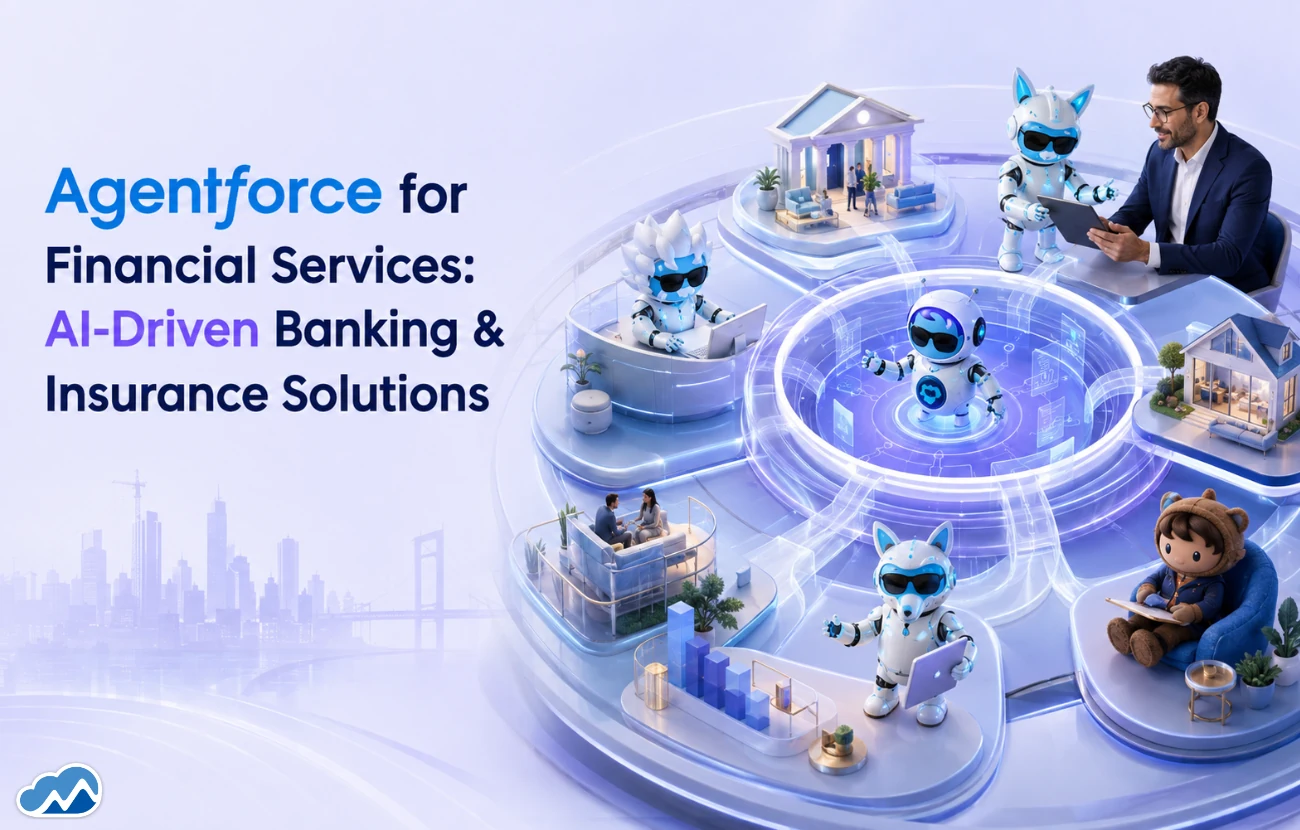
Agentforce for Financial Services: AI-Driven Banking & Insurance Solutions







.webp)





n8n Workflow Automation: From Lead Capture to CRM in Minutes, Not Hours

%20(1).webp)