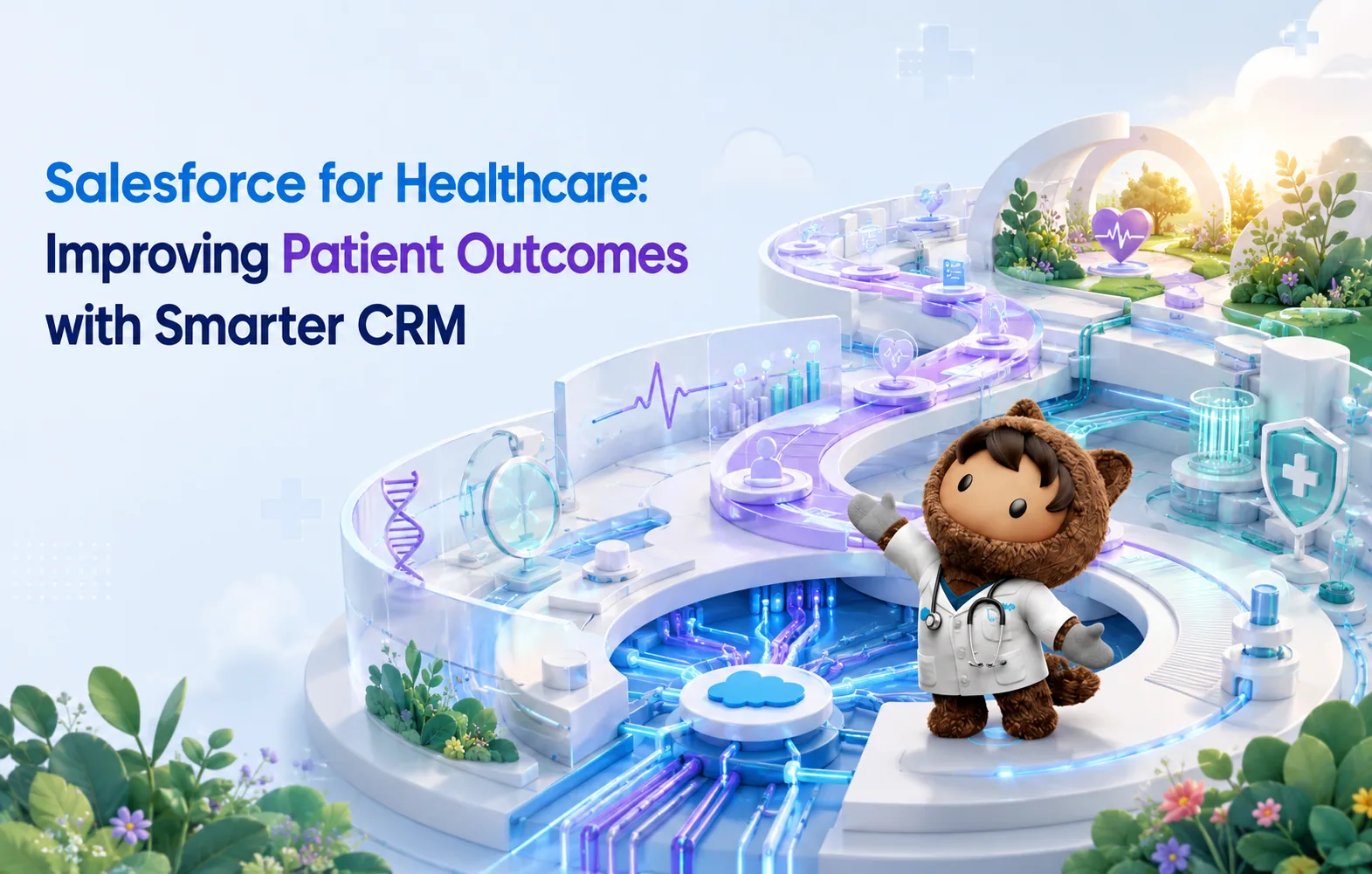
Salesforce for Healthcare: Improving Patient Outcomes with Smarter CRM

Table of content
Picture a patient who's been with the same provider for years. They call in, and the person answering has no idea about the appointment they missed last week, the referral that's stuck, or the three messages they've already sent. So the patient explains it all again, from the top, for the fourth time. It's exhausting for them and it's expensive for the organisation, and it happens constantly.
That disconnect, the right hand not knowing what the left is doing, is one of healthcare's most stubborn and costly problems. And it's exactly the kind of thing Salesforce for the Healthcare Industry is built to fix. Not with clinical software, but by joining up the relationship, communication and coordination around each patient so people stop falling through the cracks.
Healthcare is not an industry where generic tools cut it. The stakes are higher, the rules are stricter and the workflows are their own animal. So let's look at what a purpose-built approach actually changes.
What "Salesforce for the Healthcare Industry" Actually Means
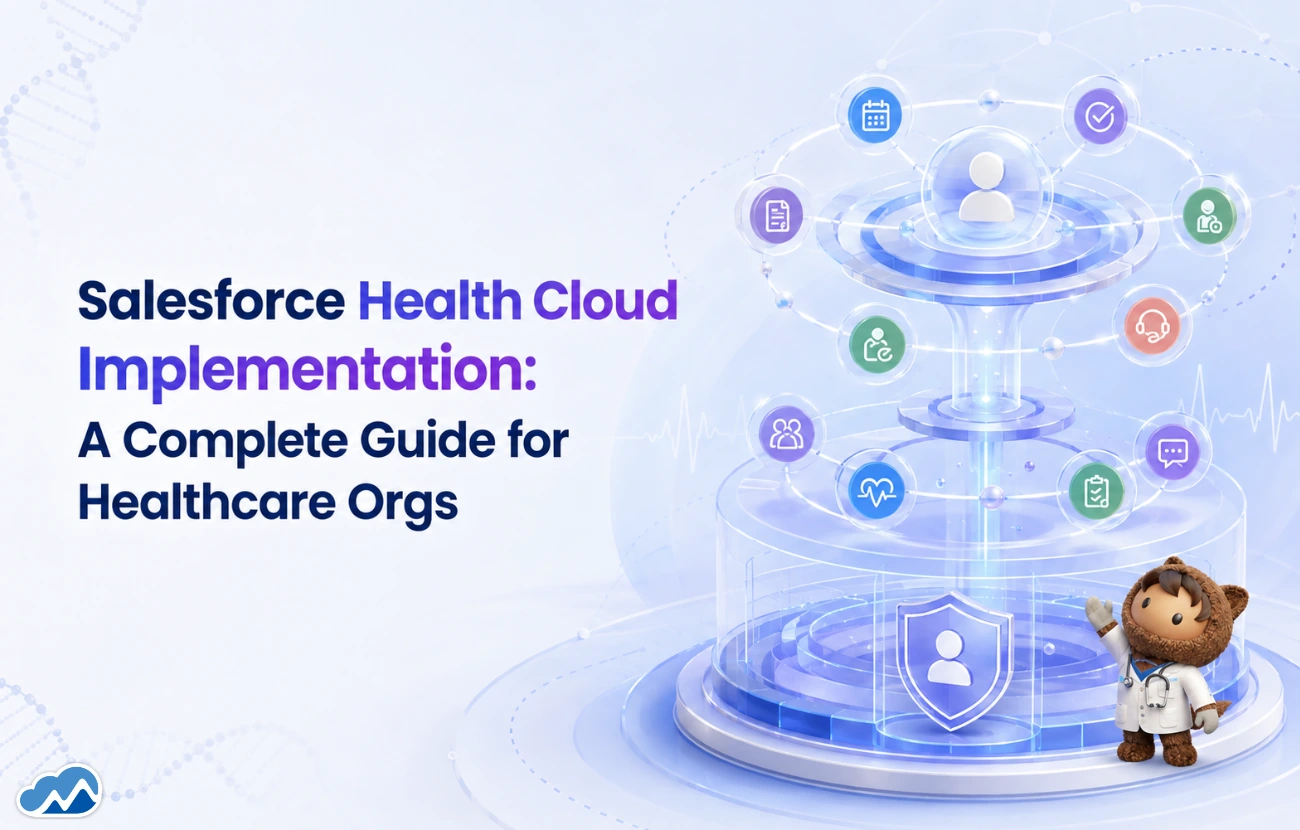
This isn't a standard CRM with a stethoscope drawn on it. Salesforce for the Healthcare Industry centres on Health Cloud, a version built around the realities of care: a complete view of the patient, their history, their interactions, their care team and their journey, rather than just a sales contact record.
The difference matters. A generic CRM tracks deals. Health Cloud tracks people and the care around them, coordinating tasks between providers, surfacing the full picture when someone gets in touch, and automating the endless administrative work that pulls clinical staff away from patients. It's the operational and relationship layer that a modern health organisation runs on, sitting alongside, not replacing, the clinical systems.
Healthcare is one of many sectors Salesforce is tailored for. To see how the industry approach works more broadly, our Salesforce Industry Solutions guide covers the wider picture. This one is specifically about healthcare.
The Problems Healthcare Actually Has
A few pain points come up in almost every health organisation we talk to.
Fragmented patient information. Records and interactions scattered across systems mean nobody has the full picture, and patients pay for it by repeating themselves.
No-shows and poor follow-up. Missed appointments and dropped follow-ups cost money and hurt outcomes, usually because reminders and coordination are manual or non-existent.
Weak patient engagement. Communication is one-way, generic and easy to ignore, so patients disengage from their own care.
Administrative overload. Clinical and support staff drown in manual admin, time that should go to patients instead goes to chasing paperwork between systems.
How Salesforce Helps
A well-built Salesforce for the Healthcare Industry setup goes after those problems directly. A unified patient view means anyone who interacts with a patient sees the whole story, no more starting from scratch. Care coordination tools route tasks and hand-offs between team members so referrals and follow-ups don't get lost. Automated, personalised communication, reminders, check-ins, education, keeps patients engaged without adding to staff workload. And automating the routine admin frees clinical time to go where it matters.
The throughline is simple: connect the information and the communication around each patient, and both the experience and the efficiency improve at once. That's the practical promise of Salesforce for the Healthcare Industry.
Compliance Comes First, Not Last
In healthcare this isn't optional, and it can't be an afterthought. Patient data is among the most sensitive there is, and any serious implementation has to be built around HIPAA and the relevant privacy rules from day one, not bolted on before launch.
That means proper security architecture, controlled access so people see only what they should, clear consent handling and full audit trails. Salesforce provides the tools to do this well, but they have to be configured correctly, which is a large part of why healthcare implementations reward genuine expertise. A partner who treats compliance as a box to tick at the end is a partner to avoid in this sector specifically.
Where AI Fits, Carefully
AI has real value here, provided it's kept in its lane. The safe, high-value uses are operational and administrative rather than clinical: predicting which patients are at risk of missing appointments so outreach can focus there, summarising interaction history so staff aren't reading through pages before a call, and Agentforce agents handling routine admin like scheduling, reminders and answering common questions, freeing humans for the work that needs a human.
The caveat is firm. In healthcare, AI should support staff and streamline operations, with people firmly in the loop, and it should never wander into clinical decisions it isn't fit to make. Deployed with that discipline, and on well-governed data, it's a genuine help. Deployed carelessly, it's a risk not worth taking. Any credible Salesforce for the Healthcare Industry engagement understands that line clearly.
Patient Engagement and Better Outcomes
Here's the honest connection between CRM and outcomes. Better engagement doesn't treat anyone, but it does keep people connected to their care, attending appointments, following through on plans, staying in touch. And patients who stay engaged tend to do better than those who quietly drop off the radar.
So when Salesforce for the Healthcare Industry makes communication timely, personal and consistent, and makes sure no one slips through an administrative gap, it's supporting outcomes in the way an operational system legitimately can, by making sure the right contact happens at the right time. That's a realistic, valuable role, and it's a big part of why health organisations invest in getting this right.
Getting the Implementation Right
The value is in the design, not just the deployment. A sound implementation starts by mapping how care and communication actually flow through your organisation, where patients get lost and where staff waste time. Then it builds the patient view, the coordination workflows and the engagement journeys around those realities, with compliance engineered in throughout. And, as always, adoption is the make-or-break: a system clinical and admin staff won't use is a failed project regardless of how elegant it is.
Mistakes We See, and Signs You Need This
The common mistakes are predictable: treating a healthcare build like a generic CRM rollout, leaving compliance until the end, ignoring how busy clinical staff actually work, and reaching for AI before the data and governance are ready.
As for whether you need it, run through these honestly. Patients regularly repeat information they've already given. No-shows and dropped follow-ups are a known, unmanaged cost. Your teams work from disconnected systems with no shared patient view. Staff spend more time on admin than feels right. Two or three of those, and a purpose-built approach isn't a luxury, it's overdue.
Choosing a Healthcare Salesforce Partner
A few things separate a partner worth keeping in this sector. They understand healthcare workflows and compliance deeply, not as an afterthought. They design around clinical and admin reality, so the system actually gets used. They keep AI safely operational, with humans in the loop. And they build for the long term, because healthcare processes and regulations keep evolving and the org has to keep pace.
Frequently Asked Questions
















Agentforce for Financial Services: AI-Driven Banking & Insurance Solutions











.webp)










n8n Workflow Automation: From Lead Capture to CRM in Minutes, Not Hours




%20(1).webp)