Salesforce Consulting UAE: Accelerating Digital Transformation in the Gulf

Table of content
%20(1).webp)
Few places are transforming as fast as the UAE. Government-led digital ambition, a flood of new business and a race to modernise have made it one of the most dynamic markets in the world, and one where Salesforce adoption is climbing quickly. That energy also makes choosing a partner tricky, because the market is young, fast-moving and full of firms of wildly varying depth.
For businesses here, choosing among salesforce consulting companies in UAE is about finding a partner who can match the pace of the region while genuinely understanding how business works in the Gulf. Get it right and Salesforce accelerates your transformation. Get it wrong and you've added complexity at exactly the moment you needed speed. Let's talk about how to choose well.
Why the Right Partner Matters More Than the Software
The point that catches businesses out is that Salesforce is the same powerful, empty platform for everyone. Success is decided by the implementation, and the implementation is only ever as good as the partner behind it. The best software, poorly implemented, fails. A sensible setup, implemented well, transforms how you operate, which in a fast-moving market is exactly the edge you want.
So the choice among salesforce consulting companies in UAE is the most important decision in the project. A strong partner asks the right questions, designs around how your business actually works in the Gulf and delivers something people adopt. A weak one configures features and leaves you carrying complexity you can't afford when speed matters.
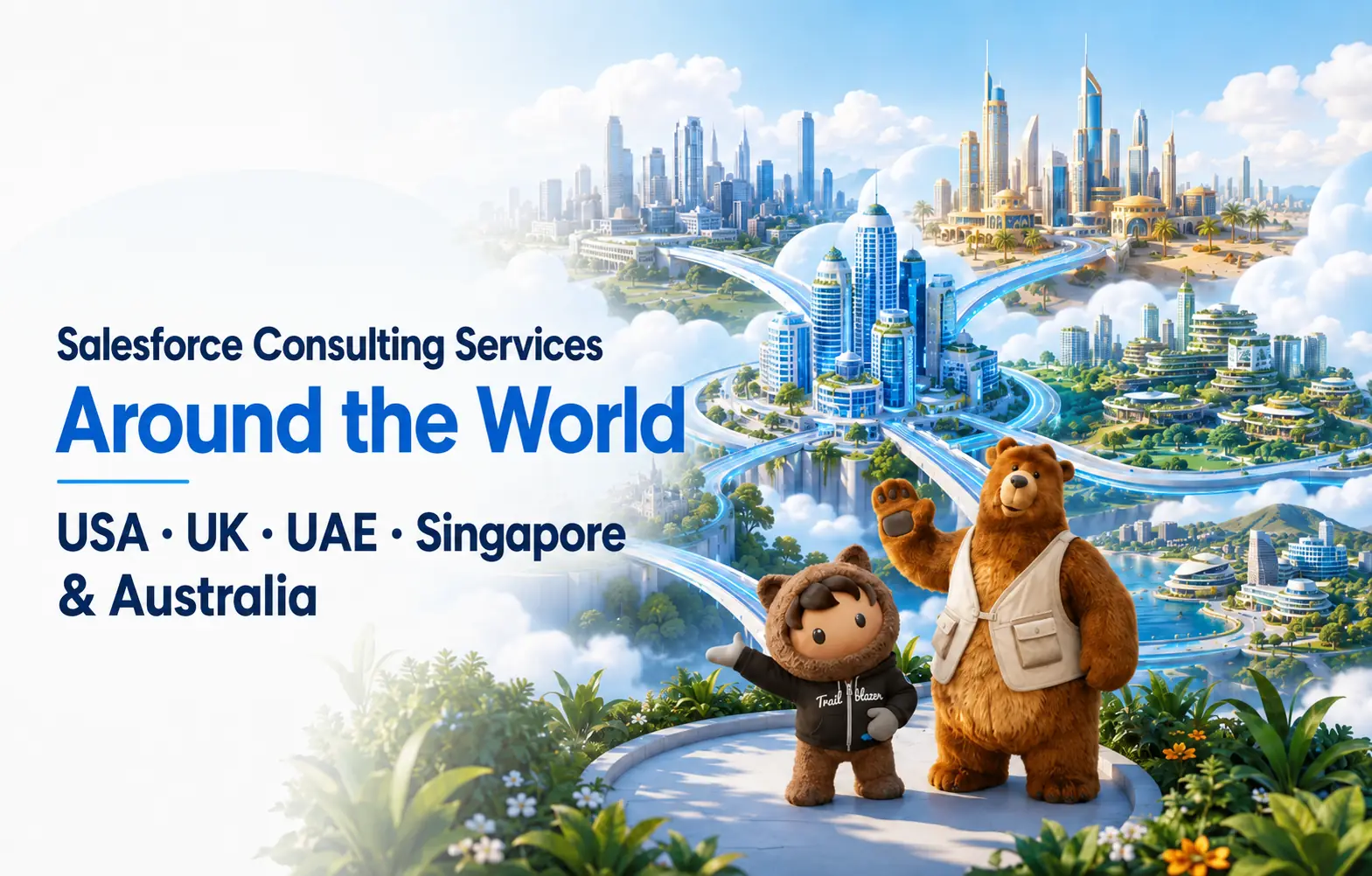
The UAE is one of several markets where partner selection has its own character. For the global view, our Salesforce Consulting Worldwide guide covers how it varies across regions. This one is specifically about the UAE.
What Makes the UAE Market Different
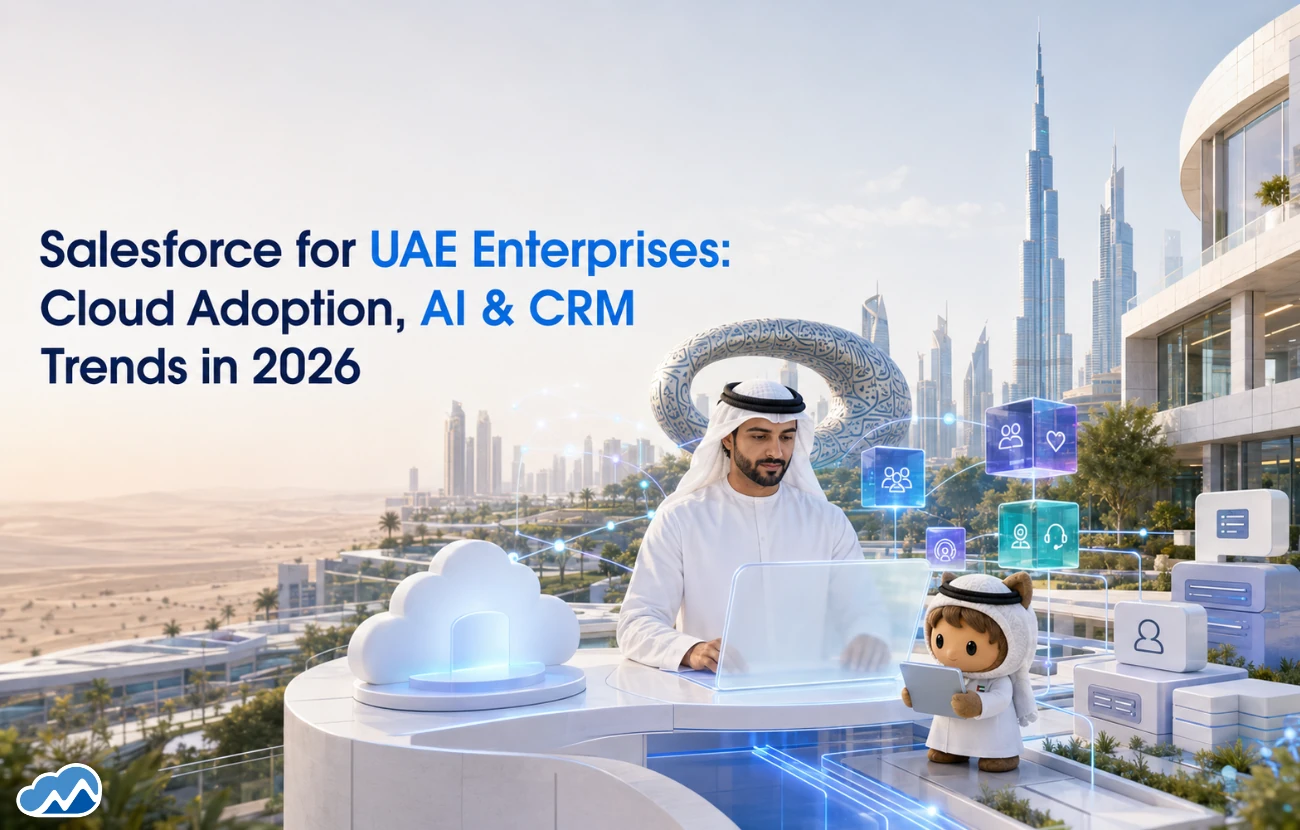
The UAE's Salesforce market has a character all its own. Digital transformation is moving at remarkable speed, driven by national visions and government initiatives, so partners here are used to ambitious timelines and high expectations. The business community is strikingly international, a mix of local enterprises, regional players and global firms, and a good partner navigates that diversity comfortably, often working across Arabic and English.
Data residency and local regulation are increasingly important, so a partner needs to understand the UAE's evolving data rules, not just global best practice. And because the market is younger than the US or UK, the depth of firms varies widely, which makes due diligence especially important. The best salesforce consulting companies in UAE combine genuine Salesforce depth with real understanding of how business is done across Dubai, Abu Dhabi and the wider Gulf.
What to Look For in Salesforce consulting companies in UAE
Once you accept that the partner matters more than the licence, the question becomes how to tell a good one from a confident one. A few things separate the salesforce consulting companies in UAE worth your time.
Real, certified expertise. Salesforce certifications aren't everything, but they're a baseline, and a serious firm will have genuine, current ones across admin, development and the specific clouds you need, not one certificate from three years ago.
Relevant experience, not just any experience. A partner who has solved problems like yours, in your industry and at your size, will move faster and make fewer expensive assumptions than a generalist learning on your project.
A process-first mindset. The best salesforce consulting companies in UAE ask about how your business actually works before they talk configuration. A firm that only wants to discuss features is one that will build you something technically fine that nobody's workflow fits.
Documentation and no lock-in. A confident partner documents what they build and hands it over. One that keeps the knowledge in their heads is protecting their retainer, not your interests.
A point of view on AI. Agentforce and Einstein are real now, and a modern partner should be able to tell you sensibly where AI helps and where it doesn't, rather than either ignoring it or overselling it.
Local, Offshore or Hybrid? The Honest Answer
This is where a lot of firms get evasive, so let's be direct. A fully local partner gives you Gulf and regional context, easy timezone overlap and face-to-face where it matters, usually at a higher rate. A purely offshore team is cheaper but can struggle with context, hours and communication. A hybrid model, local strategy and relationship with delivery support elsewhere, often gives the best balance of value and understanding.
There's no universally right answer, only the one that fits your project. What matters is that the partner is honest about how they work and that someone who genuinely understands your market is close to your project, not just an account manager relaying messages to a team you never speak to.
Red Flags to Watch
A few warning signs come up again and again. A partner who only talks technology and never asks about your business. Vague answers on certifications or references. A rush to build before the process is agreed. No clear plan for documentation or handover. And anyone promising to solve everything with AI before your data and foundations are anywhere near ready. Any one of those is a reason to slow down and ask harder questions.
Questions to Ask Before You Sign
Before committing, get honest answers to a handful of things. Can you show me relevant work with businesses like ours? Who exactly will be on my project, and where are they based? How do you approach discovery before building? What happens after go-live, and how do you hand over? And where do you think AI genuinely fits for a business like mine? The quality of those answers tells you more than any pitch deck.
Where AI Fits in a Modern UAE Salesforce Project
The UAE's forward-looking mindset makes it enthusiastic about AI, and Agentforce and Einstein are part of ambitious transformation plans. A good partner will be specific about where AI genuinely helps, scoring leads, predicting churn, resolving routine service across a diverse customer base, deployed on clean data with human oversight and an eye on local data rules. Given the pace here, it's easy to be swept up in AI hype, so a partner who is sober and specific about it, rather than promising the moon, is the one to trust.
Salesforce Doesn't Live Alone: The Integration Question
The part of UAE Salesforce projects that quietly consumes the most time is rarely the CRM itself. It's everything around it. A Dubai group with a retail arm, a property arm and a logistics arm doesn't have one system of record; it has eight, plus a finance platform nobody wants to touch and three spreadsheets that somehow run the month-end. Salesforce becomes valuable in that environment only when it is connected to the rest of it, and a partner who has never had to think past the CRM boundary will hand you a beautifully configured island.
So ask early how a prospective partner handles integration. Not whether they can do it, everyone says yes, but what they actually reach for. Middleware and iPaaS tooling has become considerably cheaper and faster than custom API work for most mid-market cases, and a partner who defaults to bespoke code for every handoff is either unaware of the alternatives or invested in the billable hours. Our guide to n8n automation services covers where that kind of workflow tooling fits and where it doesn't, which is useful context before you accept an integration estimate.
The other question worth asking is whether Salesforce should own everything. Plenty of UAE businesses run Salesforce for enterprise sales and something lighter for marketing automation or SMB motions, and that is a perfectly defensible architecture when the boundaries are drawn deliberately. If marketing is part of the conversation, our HubSpot services guide sets out what that platform does well, which makes the comparison a lot less abstract. A partner who insists everything must be a Salesforce object regardless of fit is selling scope, not architecture.
Where this ends up, for most growing businesses in the region, is a connected revenue stack rather than a single monolith: a CRM as the source of truth, automation tooling moving data between systems and AI layered on top of clean records. We've written about how those pieces fit together in practice in our guide to building one connected revenue stack, and it's a useful sanity check on any implementation plan you're handed.
AI Beyond the Salesforce Licence
Agentforce and Einstein are the obvious AI answer inside a Salesforce project, and for scoring, forecasting and routine case resolution they are usually the right one. But they are not the only tools available to a UAE business, and a partner who talks as though they are is describing a licence rather than a strategy. A large amount of the AI value in a mid-market operation sits in work that never touches a CRM record: drafting proposals in two languages, summarising long RFP documents from a government tender, turning inconsistent supplier data into something structured enough to import, or standing up an internal assistant that answers policy questions so your ops team stops answering them by hand.
That kind of work is often better served by a general-purpose model wired into your workflows than by a CRM feature. Our practical guide to Claude AI for business covers how that plays out with chatbots, automation and structured outputs, and it's worth reading before you assume AI in your project means whatever your Salesforce partner has a licence to resell. The honest framing is that Agentforce and a general model are complementary: one operates on your CRM data inside Salesforce, the other handles the messier language work around it.
Whichever route you take, the sequence matters more in the UAE than almost anywhere, precisely because the pace is so high. AI on messy data produces confident nonsense faster than a human ever could, and in a market where you may be handling personal data across several jurisdictions, an ungoverned pilot is a compliance problem waiting to be discovered. Clean the data, agree who reviews the output and then automate. A partner who suggests that order, rather than leading with a demo, is telling you something useful about how they work.
Frequently Asked Questions
.webp)










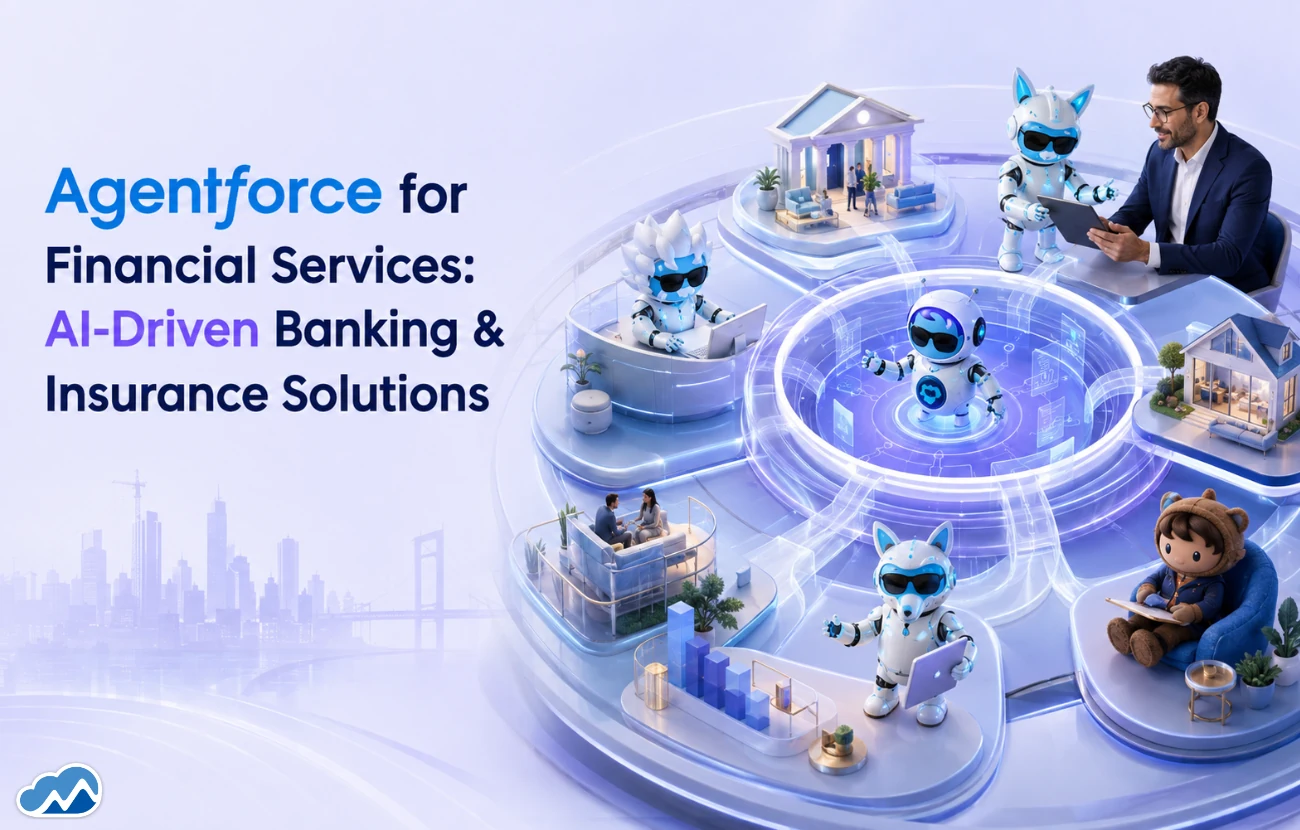
Agentforce for Financial Services: AI-Driven Banking & Insurance Solutions







.webp)




n8n Workflow Automation: From Lead Capture to CRM in Minutes, Not Hours