Salesforce Clouds Explained: Which Cloud Is Right for Your Business in 2026?

Table of content
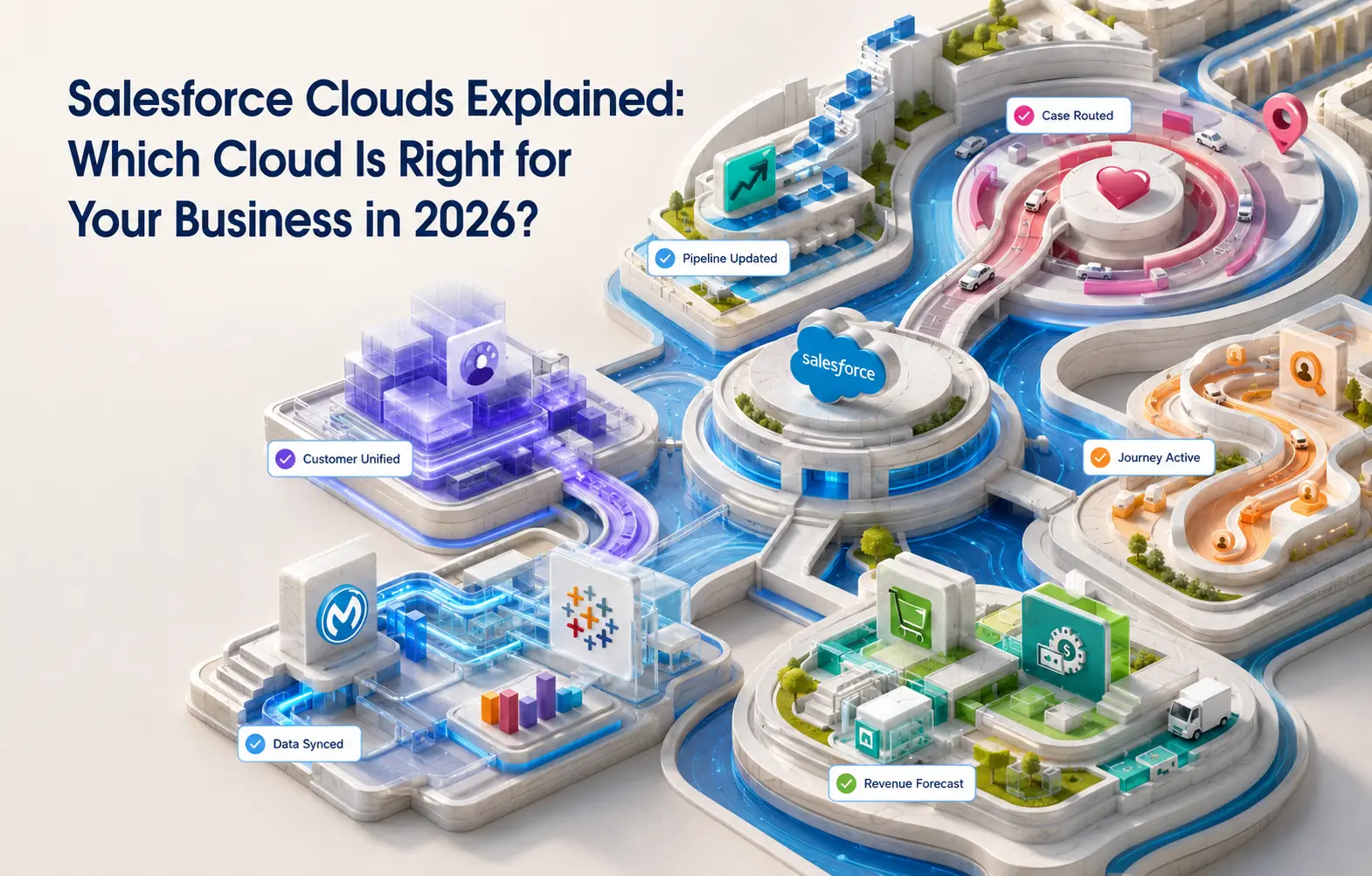
Salesforce now sells more than 20 distinct "clouds," and the naming alone has gotten more confusing, not less. Sales Cloud is now branded Agentforce Sales, Service Cloud is Agentforce Service and there's a growing list of industry-specific clouds layered on top. If you're evaluating Salesforce multi-cloud solutions for the first time, it's easy to end up buying more than you need or, worse, missing the one product that would have solved your actual problem.
Here's what each core cloud does, what's new in 2026 and how to think about which combination is right for your business.
The Core Salesforce Clouds
Sales Cloud (Agentforce Sales). The flagship product: lead and opportunity management, pipeline forecasting and now a layer of AI agents that can prospect, research accounts and update records on a rep's behalf. This is usually the starting point for B2B sales organizations.
Service Cloud (Agentforce Service). Case management, omnichannel support and a knowledge base, with Agentforce Self-Service now handling first-line customer queries autonomously before escalating to a human agent.
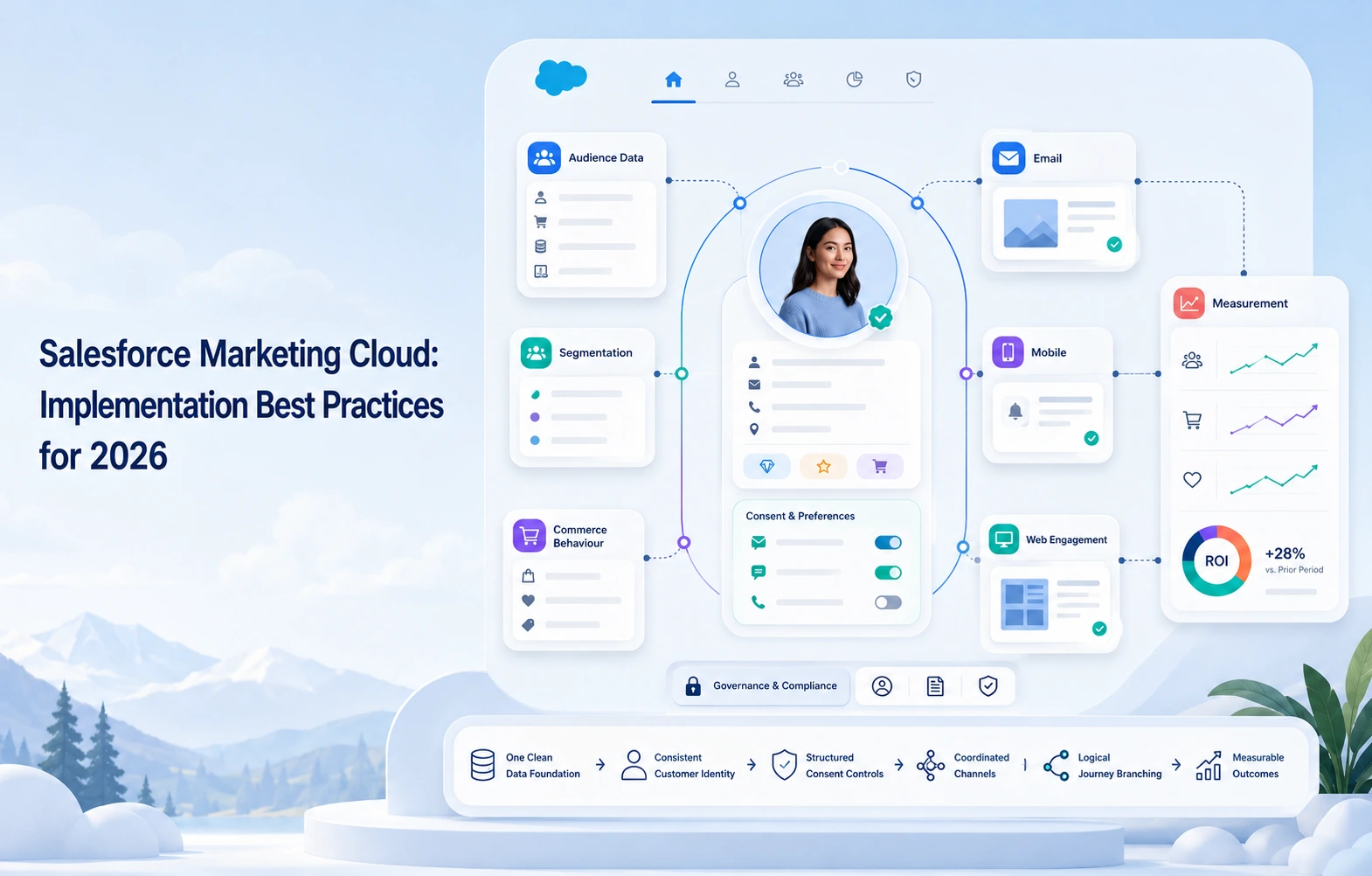
Marketing Cloud. Multi-channel campaign management across email, SMS, ads and journeys, all built to work off the same customer data as Sales and Service rather than a separate silo.
Commerce Cloud. Storefront and order management for B2B and B2C digital commerce, with out-of-the-box tools for catalogs, checkout and payments.
Experience Cloud. Branded portals and communities for customers, partners, or employees, previously known as Community Cloud.
CRM Analytics. Dashboards, reporting and predictive analytics layered across whichever clouds you run (formerly Einstein Analytics).
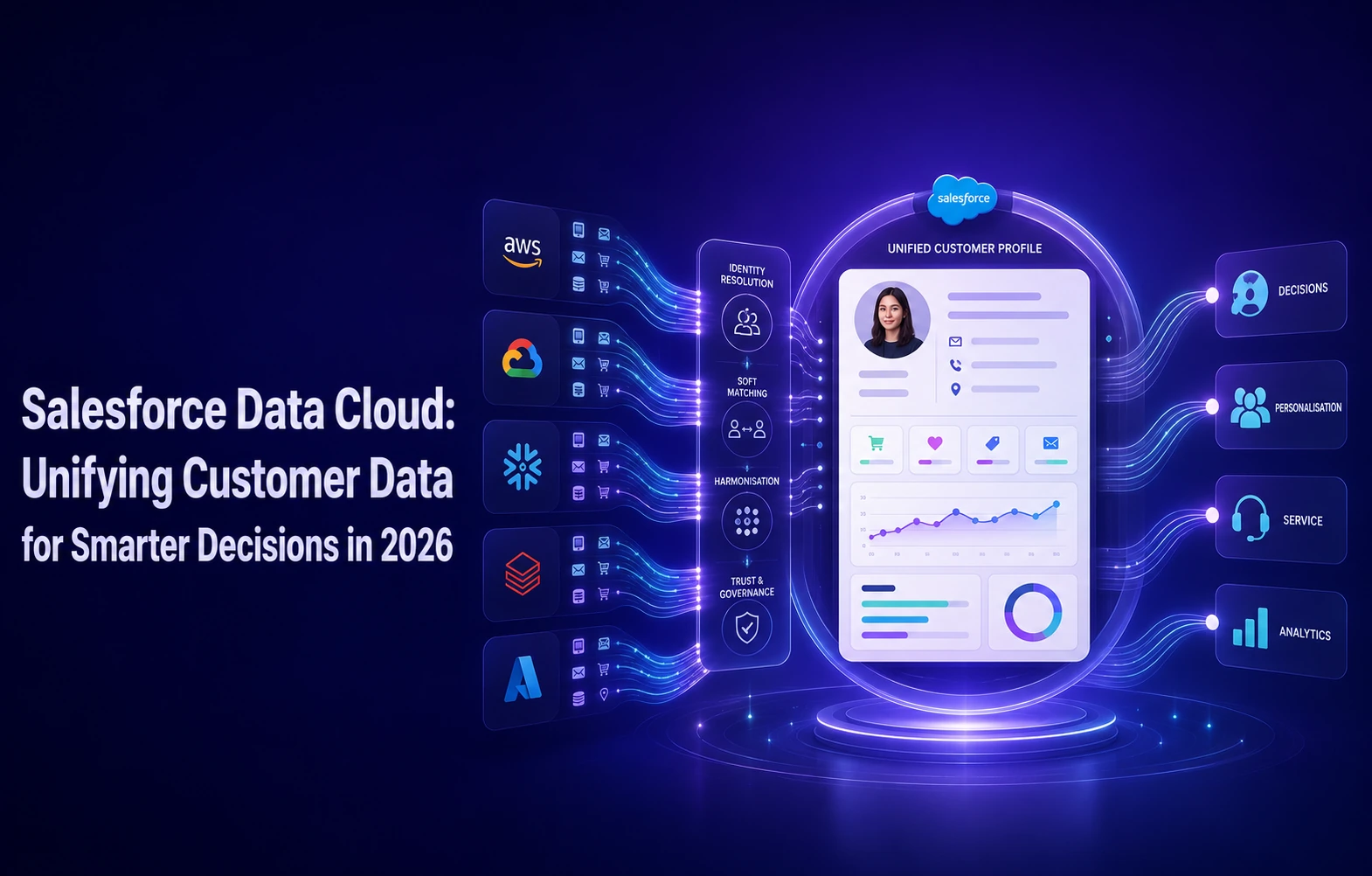
Data Cloud. The most important shift in the current lineup. Data Cloud unifies customer data from every source (CRM, e-commerce, support tickets, external systems) into a single real-time profile. As of the last two releases, it's also a mandatory foundation for Agentforce: AI agents can't act reliably on data that's fragmented or stale.
Why "Multi-Cloud" Is the Default Now, Not the Exception
Ten years ago, plenty of companies ran Sales Cloud alone and called it done. That's less common in 2026. The reason is straightforward: Agentforce's multi-agent orchestration, introduced in the Summer '26 release, lets agents hand off work across sales, service and even Slack in a single workflow. An agent that only sees Sales Cloud data can't intelligently resolve a support-driven upsell opportunity. It needs Service Cloud context too.
Not every business needs every cloud, of course. But start from your customer journey, not from a product catalog.
How to Decide Which Clouds You Actually Need
A few practical filters:
Start from your revenue-generating process. If your business is B2B with a defined sales cycle, Sales Cloud is close to non-negotiable. If support volume and retention matter more than net-new sales, Service Cloud often delivers faster ROI.
Check whether you're already running fragmented customer data. If your sales, support and marketing teams each have their own "source of truth," Data Cloud stops being optional. It's what makes every other cloud work together at all.
Look at your industry before buying a generic cloud. Financial services, healthcare and manufacturing all have Salesforce industry clouds with pre-built compliance and data models that a generic Sales Cloud implementation would take months to replicate manually. We cover this in detail in our guide to Salesforce industry solutions.
Resist buying agent capability before you have clean data. Agentforce is powerful, but Salesforce's own guidance is blunt about this: AI agents built on ungoverned data create bad outcomes faster than no automation at all.
Licensing and Rollout Considerations
Multi-cloud doesn't have to mean "buy everything on day one." Most successful rollouts sequence clouds: typically Sales or Service first, Data Cloud early as the connective layer, then Marketing, Commerce, or industry clouds once the core is stable. Trying to stand up five clouds simultaneously is one of the most common reasons multi-cloud projects run over budget and timeline.
This is where scoped consulting help pays for itself: a partner who's done this sequencing before can tell you which cloud actually solves your bottleneck versus which one just looks good in a demo. Our Salesforce Consulting Services team scopes cloud selection as part of every engagement, rather than assuming you already know what you need. See our full breakdown in the Salesforce Services Guide.
The Bottom Line
The Salesforce cloud lineup in 2026 is far more capable than it was even two years ago, largely because Data Cloud and Agentforce now tie the individual products together instead of leaving them as separate purchases. So don't start by asking "which clouds does Salesforce sell." Start by asking "where is our customer data fragmented and which cloud fixes that first." We'll be publishing dedicated deep dives on each core cloud in the coming weeks, linked from this guide as they go live.
.webp)
.webp)











Agentforce for Financial Services: AI-Driven Banking & Insurance Solutions






.webp)




n8n Workflow Automation: From Lead Capture to CRM in Minutes, Not Hours

%20(1).webp)