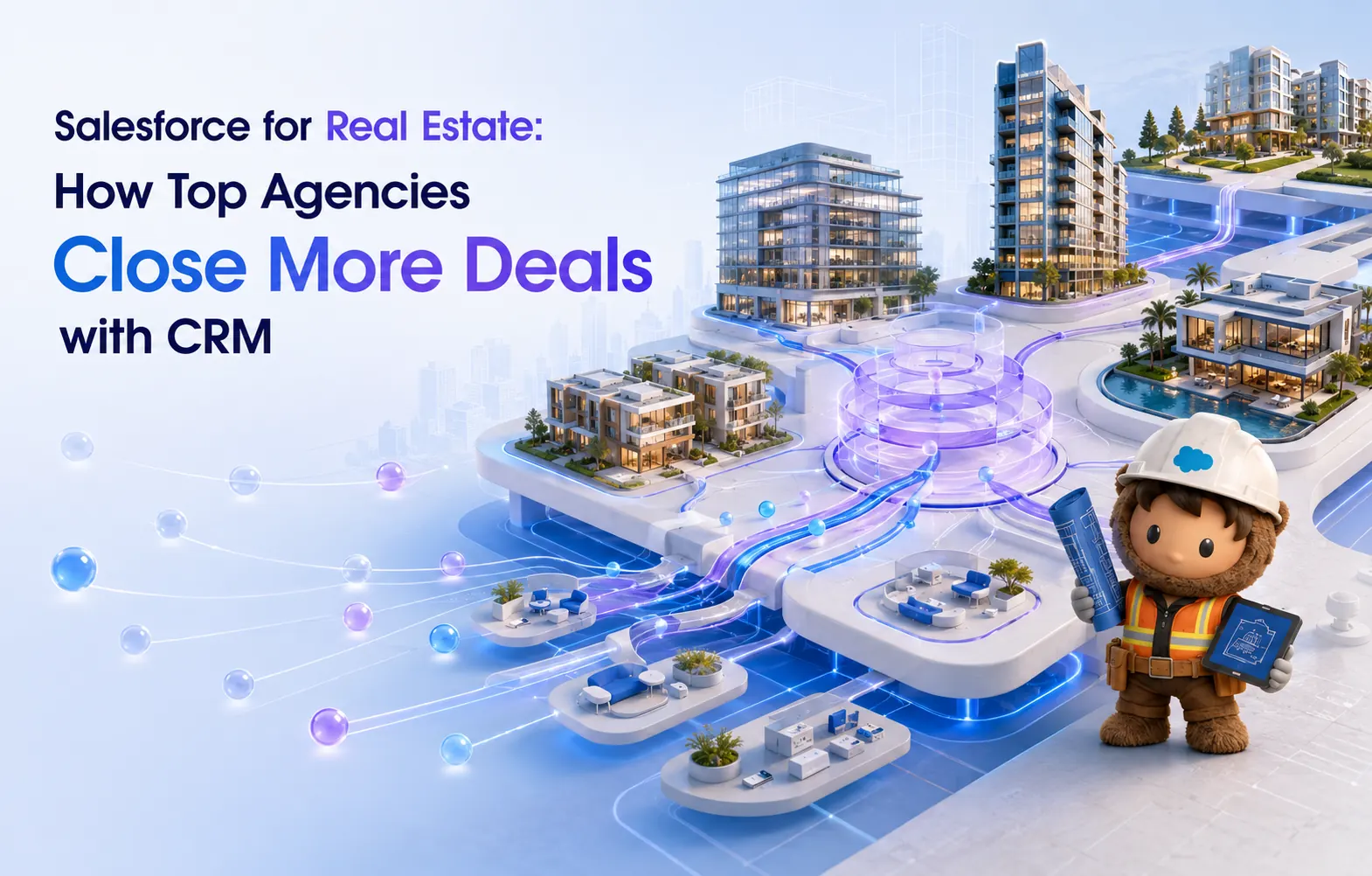
Salesforce for Real Estate: How Top Agencies Close More Deals with CRM

Table of content
In real estate, speed isn't a nice-to-have, it's the whole game. A lead that comes in at 9am and gets a call at 9:05 is a live opportunity. The same lead, called back at 4pm the next day, has usually already spoken to three other agents and half-forgotten they enquired. The deal was there. The follow-up wasn't.
That's the quiet way agencies lose money: not from bad leads, but from good leads going cold while everyone's busy. A proper Salesforce CRM for real estate exists to stop exactly that, by making sure every lead is captured, routed and followed up before it drifts to a competitor.
Because the truth is that top-performing agencies rarely have better leads than everyone else. They have better systems for acting on them. Let's talk about what that looks like.
What a Salesforce CRM for Real Estate Really Does
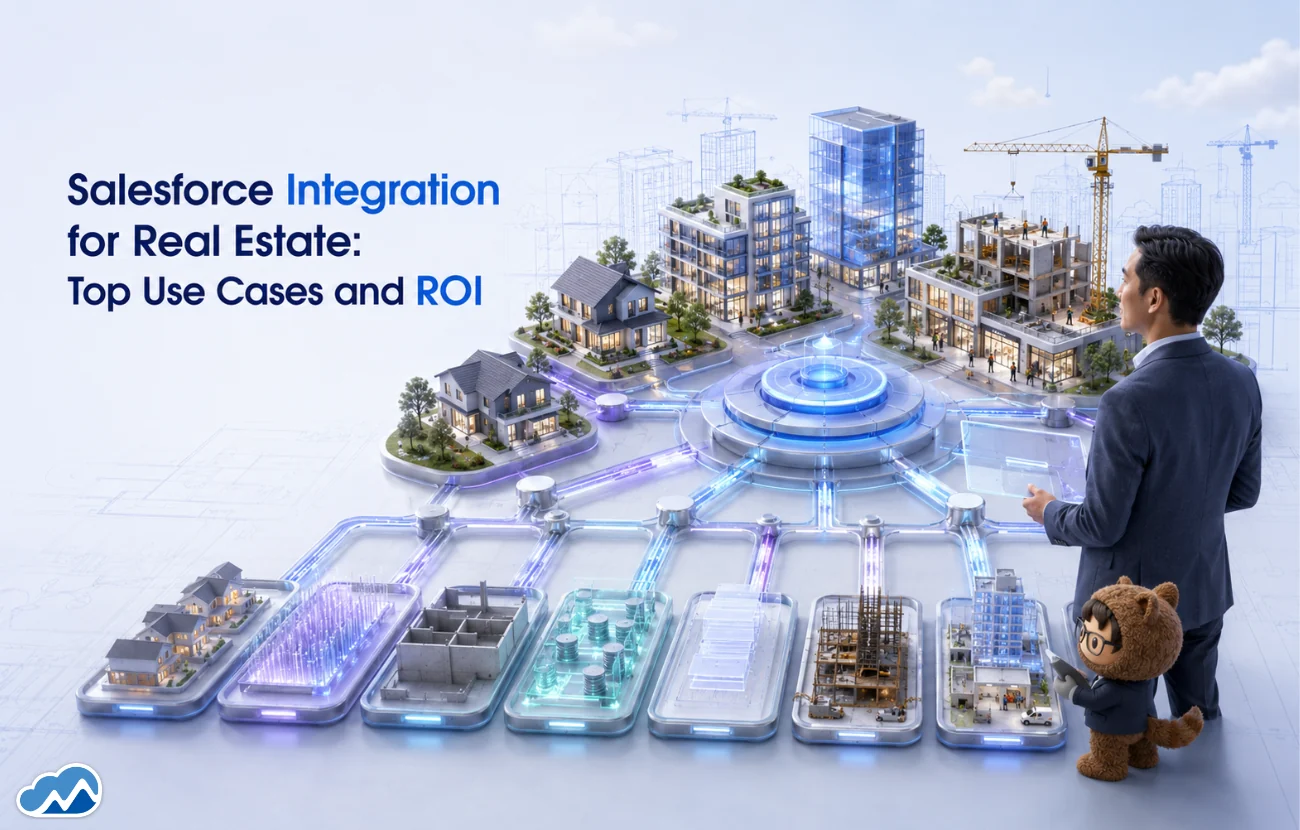
Strip it back and a Salesforce CRM for real estate is the system that makes sure no opportunity slips. Leads from every source, your website, portals, ads, referrals, land in one place, get routed to the right agent instantly, and get followed up automatically until someone actually connects. Every property, buyer, seller and conversation lives in one view instead of scattered across inboxes, spreadsheets and someone's memory.
The point isn't to add admin. It's the opposite: to take the manual chasing off the agent's plate so they spend their time with clients, not updating trackers. When it's built well, the CRM does the remembering so the agent can do the selling.
Real estate is one of many sectors Salesforce is tailored for. For the broader picture, our Salesforce Industry Solutions guide covers how the industry approach works. This one is specifically about real estate.
The Problems Agencies Actually Have
A few pain points show up in nearly every agency.
Slow lead response. The single biggest deal-killer. Leads go cold in hours, and manual processes can't keep up with the speed the market demands.
Lost follow-ups. A buyer isn't ready today but will be in three months, and by then the agent has forgotten and the lead has moved on. Long-cycle follow-up is where most opportunities quietly die.
No pipeline visibility. Managers can't see what's really happening, deals live in agents' heads, and forecasting is guesswork.
Scattered data. Properties in one place, contacts in another, conversations in an inbox. Nobody has the full picture when it matters.
How Salesforce Fixes It
A good Salesforce CRM for real estate goes straight at those problems. Instant lead capture and routing means an enquiry reaches the right agent in seconds, not hours. Automated nurture keeps every lead warm with timely, relevant follow-up, including the long-cycle buyers who'd otherwise be forgotten. A clear pipeline gives managers real visibility into every deal and a forecast they can trust. And with properties, contacts and conversations in one view, agents walk into every call already knowing the story.
Add mobile access, so an agent can update a deal from a viewing rather than at their desk hours later, and the system starts working at the speed the industry actually moves.
Speed-to-Lead: The Deal-Maker
It's worth dwelling on this, because it's the metric that separates the agencies that win from the ones that wonder why. The odds of connecting with and converting a lead drop steeply with every hour that passes. First contact within minutes routinely beats a slower, more polished response the next day.
A Salesforce CRM for real estate is, at its core, a speed-to-lead machine. Automated routing and instant alerts mean the right agent knows the moment a lead arrives, and automated first-touch can even begin the conversation before a human picks it up. In a market where everyone's chasing the same buyers, being first is often the entire advantage.
Where AI Fits
AI earns its place here in practical ways. Lead scoring helps agents focus on the enquiries most likely to convert rather than treating every lead the same. Automated, personalised follow-up drafting keeps communication consistent without eating the agent's day. And Agentforce agents can handle routine enquiries, qualifying questions, viewing requests, common questions, instantly, at any hour, handing over to a human when it counts.
As everywhere, the value depends on clean data underneath, but for an industry that lives and dies on fast, consistent follow-up, AI that never forgets and never sleeps is a natural fit.
Mistakes We See, and Signs You Need This
The common mistakes are familiar: forcing agents to enter so much data they stop bothering, building for management reports instead of for agents who need to sell, and treating the CRM as a database rather than an active follow-up engine.
As for whether you need it, be honest. Leads regularly go cold before anyone calls them. Your "pipeline" lives in inboxes and agents' heads. Follow-up depends on someone remembering. You can't see which deals are real and which are hopeful. Two or three of those, and a Salesforce CRM for real estate isn't overkill, it's the fix for money you're already losing.
Choosing a Real Estate Salesforce Partner
A few things separate a partner worth keeping. They design for agents and speed, not just management dashboards. They automate follow-up properly, because that's where the deals are won and lost. They keep data entry light, so agents actually use the system. And they build for the long term, so the CRM evolves with your agency instead of ageing into shelfware.
Frequently Asked Questions



















Agentforce for Financial Services: AI-Driven Banking & Insurance Solutions













.webp)













n8n Workflow Automation: From Lead Capture to CRM in Minutes, Not Hours




%20(1).webp)