Zapier vs n8n: Why Growing Businesses Are Switching in 2026

Table of content

There's a specific moment a lot of growing teams hit: the monthly Zapier bill jumps again, not because the team grew, but because task volume did. Every automated step counts against a task limit, and once a business is running dozens of workflows across sales, support and ops, that limit gets expensive fast. This is usually the point teams start looking seriously at a Zapier to n8n migration, and it's worth understanding what actually changes, what doesn't and whether it's the right move for where your business is right now.
Does This Sound Like Where You're At?
A quick check before the comparison. See how many of these are true for your team.
- Your Zapier bill has grown faster than your team or your customer base has.
- You've hit task limits mid-month more than once and had to upgrade a tier just to keep workflows running.
- You're building increasingly complex multi-step Zaps that feel like they're fighting the tool rather than working with it.
- Data privacy or compliance requirements make you uneasy about everything routing through a third-party cloud by default.
If two or more of those are true, the rest of this is worth reading before you renew.
The Core Difference: How You Pay and Where It Runs
Zapier bills by task, every individual action inside a Zap counts, and that cost scales directly with volume. n8n flips that model. Self-hosted, you pay for your own server and nothing per task, so a workflow processing ten thousand records costs the same to run as one processing ten. n8n Cloud, the managed option, still isn't priced the same way Zapier is, and either path removes the volume tax that makes Zapier expensive at scale. The second difference is where things run. Zapier is cloud-only, full stop. n8n can run entirely on your own infrastructure, which matters if data residency or compliance is part of your decision, not just cost.
Where Zapier Still Wins
Worth saying plainly, because a fair comparison has to cut both ways. Zapier is easier to start with. Its app catalogue is the widest in the market, its interface asks less technical fluency of whoever's building the workflow, and for a small number of simple, low-volume automations, it's still a fine choice. If you're automating three triggers a month for a two-person team, a Zapier to n8n migration probably isn't worth the effort yet, and the hours spent setting up self-hosting would outweigh whatever you'd save on task fees at that volume. This guide is for teams that have outgrown that stage, not a blanket argument that n8n is better in every situation.
Where n8n Pulls Ahead
Once volume and complexity climb, the picture shifts. n8n's node library supports custom code directly inside a workflow, so logic that would require a workaround or a third-party add-on in Zapier is often just a function node in n8n. Error handling is more granular, workflows can be built to retry, branch, or alert differently depending on exactly what failed, rather than a generic notification. And because workflows export as readable JSON, moving a workflow between environments or handing it off to another team member is far more transparent than exporting a Zap. None of this makes n8n easier on day one. It makes it more capable once your automation needs outgrow what a simpler tool was built for. It also opens up builds that a per-task tool makes painful, like a full n8n lead capture to CRM workflow running end to end.
Side by Side, Honestly
There's no single “better” answer here, so this is where each tool stands on the things that matter most.
- Ease of setup: Zapier wins clearly here. Its interface is built for non-technical users, and a simple workflow can be live in minutes.
- App catalogue breadth: Zapier's library is the widest available. n8n covers the major platforms well and fills gaps through its HTTP request node, but it takes a bit more work for less common tools.
- Custom logic and code: n8n wins, and not narrowly. Function nodes let you write real logic inline, where Zapier often needs a workaround or a paid add-on.
- Pricing at scale: n8n wins for any team running meaningful volume, since a flat or self-hosted cost stops climbing as tasks grow.
- Hosting and data control: n8n wins if data residency or compliance matters, since self-hosting keeps everything on your own infrastructure.
- Support and documentation: Zapier wins here too. Its support resources and user base are larger, while n8n leans more on community forums, though that gap has been closing.
Neither tool is strictly better. They're built for different points in a company's growth, and the honest answer to “which one” depends entirely on where your business actually sits on that curve right now.
A Worked Example: What Migration Actually Looks Like
Seeing this as a sequence makes it more concrete than a feature comparison does.
- Audit: list every active Zap, what triggers it, what it does and roughly how much volume runs through it, so nothing gets missed in the move.
- Prioritise: start with the highest-volume or highest-cost Zaps first, since that's where the savings and the risk both concentrate.
- Rebuild: recreate each workflow in n8n, which is usually a chance to fix logic that was awkwardly bolted together in Zapier's more limited step structure.
- Run in parallel: keep both versions live briefly and compare outputs before fully cutting over, so a subtle difference in behaviour gets caught before it matters.
- Cut over: turn off the Zapier version once the n8n equivalent has proven itself, and only then, not before.
- Monitor: watch the first few weeks closely. New workflows, even faithful rebuilds, sometimes surface an edge case the original never hit.
Skipping the parallel-run step is the most common mistake teams make when they're excited to finish the project. It's also the step most likely to catch a problem while it's still cheap to fix.
Where Migrations Go Wrong
A few patterns show up repeatedly in migrations that don't go smoothly.
- Underestimating custom logic: Zaps that lean on third-party add-ons or filters can hide complexity that's easy to miss during the audit and painful to discover mid-rebuild.
- Skipping the parallel test: cutting over immediately means any behavioural difference shows up in production instead of in testing, where it's safe to fix.
- No one owns hosting: self-hosted n8n needs someone responsible for updates, backups and uptime. Skipping that conversation before migrating leaves a gap nobody planned for.
- Migrating everything at once: trying to move dozens of Zaps in a single push increases risk for no real benefit. Prioritised, staged migration is safer and easier to troubleshoot.
A properly planned Zapier to n8n migration accounts for all four of these before the first workflow gets rebuilt, not after something breaks in production.
Picture This
A 25-person e-commerce operations team was running about 40 Zaps across order processing, customer service and inventory sync, and their Zapier bill had crept up three times in a year without headcount growing at all. Order volume had simply outpaced what a per-task model was ever going to handle affordably. After migrating their highest-volume workflows first, order sync and customer notifications, to n8n, those two workflows alone accounted for most of what had been driving the bill up. The lower-volume Zaps, a handful of internal notifications and reporting tasks, stayed on Zapier for months afterwards because migrating them wasn't worth the effort yet. That's usually how a sensible migration goes: targeted, not total, starting with whatever's costing the most.
What Changes in the Numbers
Cost is the number most teams track first, and it's usually the most dramatic. Teams running high task volumes commonly see their monthly automation spend drop steeply after moving to a flat-cost or self-hosted model, though the exact number depends entirely on your volume and hosting choice. The second number worth watching is reliability: workflows with proper error handling and retry logic tend to show fewer silent failures than Zaps that quietly stop and wait for someone to notice. A third, less obvious number is time to build. Simple workflows often take slightly longer to stand up in n8n than in Zapier at first, since there's more to configure, but that gap tends to close once someone on the team gets comfortable with the platform, and it reverses entirely for anything with real branching logic. Neither number moves on its own. All three depend on the migration being done carefully rather than rushed.
Data Privacy and Compliance Considerations
For teams in healthcare, finance, or anywhere else handling regulated data, the hosting question isn't just a cost decision, it's a compliance one. Running workflows through a third-party cloud, however secure, means customer data passes through infrastructure you don't control, which some compliance frameworks make difficult or impossible to accept. Self-hosted n8n keeps that data inside your own environment from trigger to output, which makes a lot of those conversations much simpler. This isn't a reason to migrate on its own if compliance isn't a live issue for your business, but for teams where it is, it often matters more than the cost savings that usually get top billing in this conversation. Worth checking early: which specific regulations or client contracts actually govern your data, since the answer shapes whether self-hosting is a nice-to-have or a genuine requirement before you can sign new business at all.
Build It Yourself, or Bring in Help?
A small, simple migration is reasonable to handle in-house, especially if someone on the team already has some technical comfort. Where it gets harder is exactly what's covered above: catching hidden complexity during the audit, setting up hosting properly, and running a genuine parallel test rather than a quick glance before cutover. If you're weighing that decision, look closely at how a provider actually handles a Zapier to n8n Migration project day to day, not just whether it's listed as a service. Ask how they audit existing Zaps for hidden logic. Ask about their parallel-testing process. Ask who owns hosting and maintenance after the migration is done.
How This Fits Into the Bigger Picture
Migrating off Zapier is often the first serious n8n project a growing team takes on, but it tends to open the door to automations that weren't practical on a per-task pricing model at all. Teams that migrate their highest-volume workflows first often come back within a few months to move more, once they've seen the cost and reliability difference firsthand rather than just read about it. If you want the fuller picture of what n8n can do once you're past the migration itself, our n8n Automation Services Guide covers the platform more broadly, including where AI fits into the workflows you build next.
A Zapier to n8n migration isn't really about switching tools for the sake of it. It's about the point where a per-task bill stops making sense for how much your business actually runs through automation. Get the audit right, test in parallel and cut over deliberately, and the switch itself becomes the boring part, exactly what a good migration should be.
Frequently Asked Questions
.webp)




















Agentforce for Financial Services: AI-Driven Banking & Insurance Solutions














.webp)
















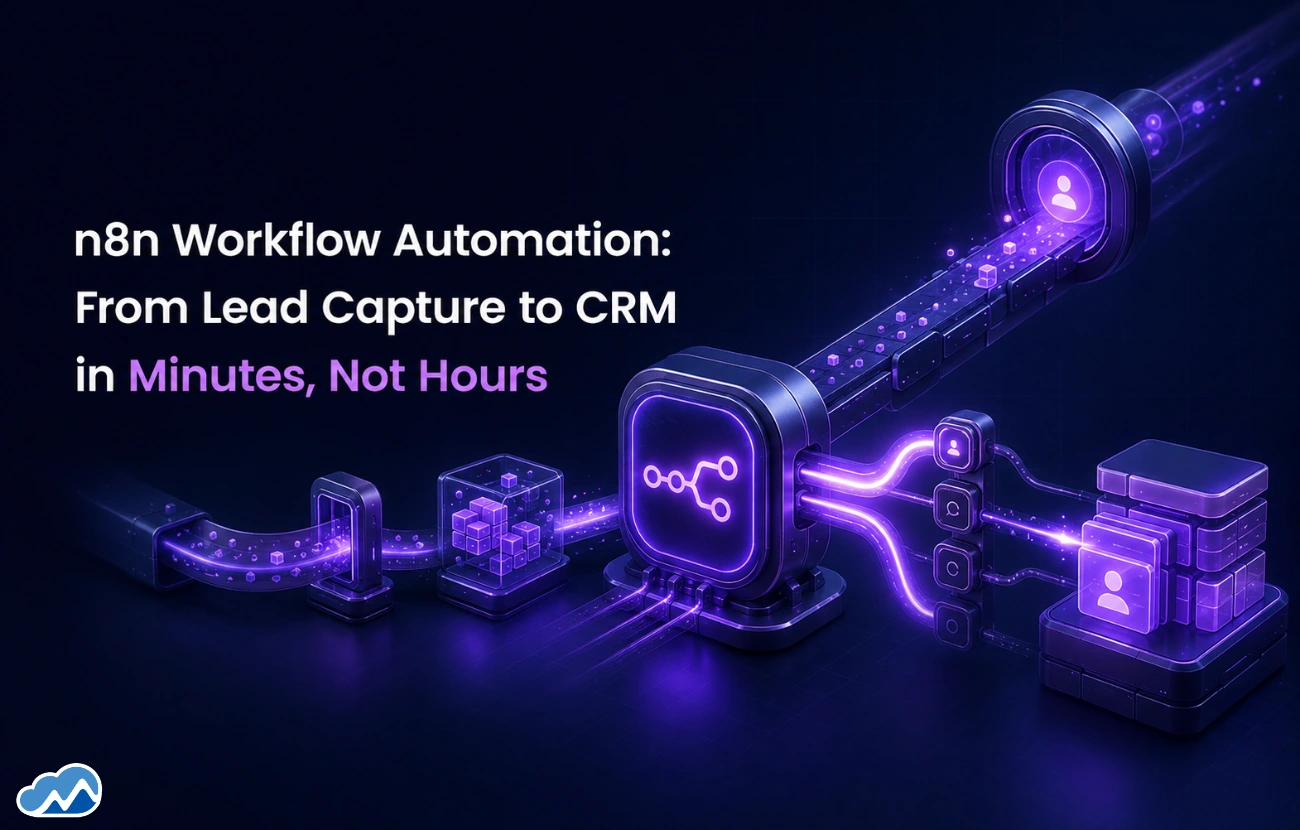
n8n Workflow Automation: From Lead Capture to CRM in Minutes, Not Hours






%20(1).webp)