Multi-Agent AI in Salesforce: How Agentforce Is Building the AI Workforce

Table of content
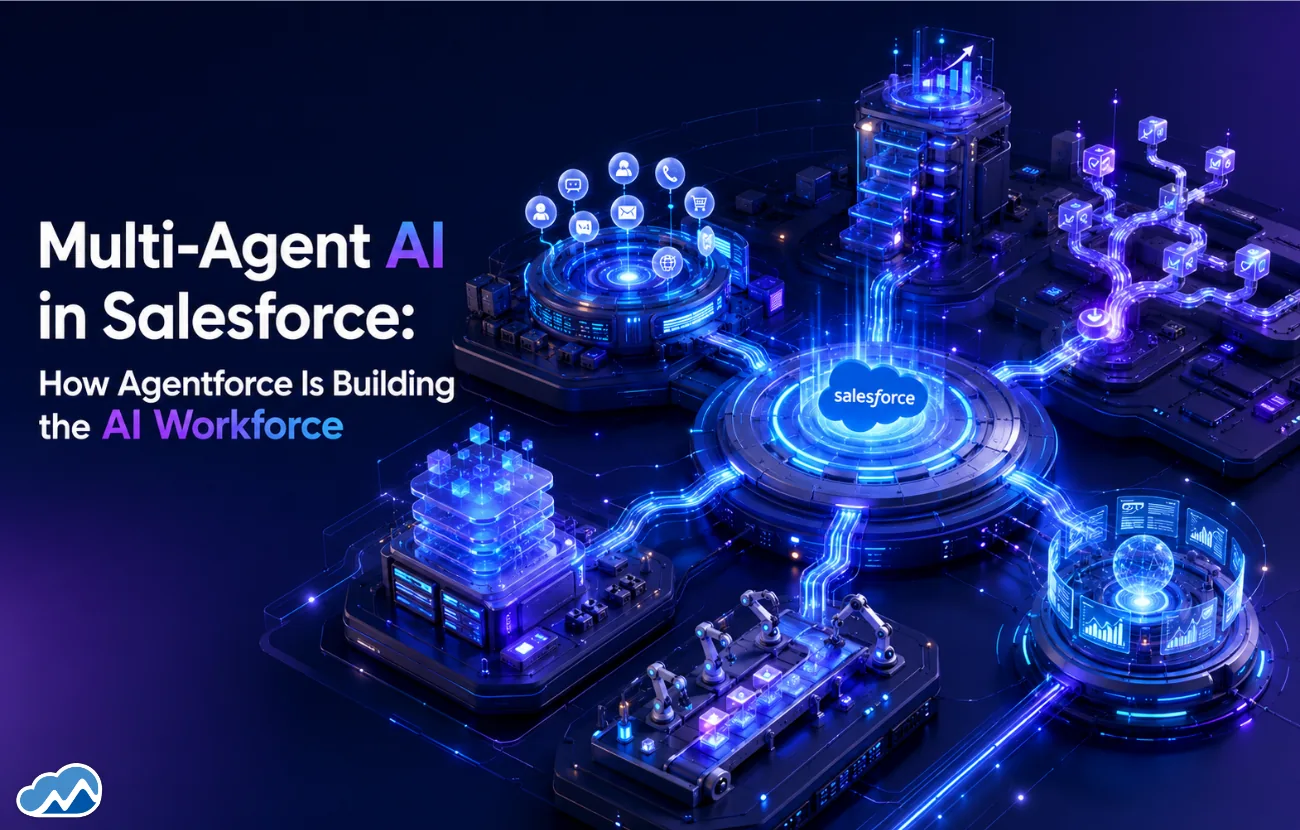
One AI agent handling your routine support tickets is useful. The more interesting question is what happens when you have several agents, each good at a different job, working together on the same customer and handing off to each other like a well-drilled team. That is the shift from a clever tool to something that starts to look like an actual workforce, and it's exactly what multi-agent AI in Salesforce is about.
Agentforce began by proving a single AI agent could do real work. The next chapter, the one unfolding now, is about agents collaborating. Multi-agent AI Salesforce capabilities let specialised agents coordinate on tasks too complex for any one of them alone. Here is what that means in practice, and why it matters for how businesses operate.
What Multi-Agent AI Actually Means
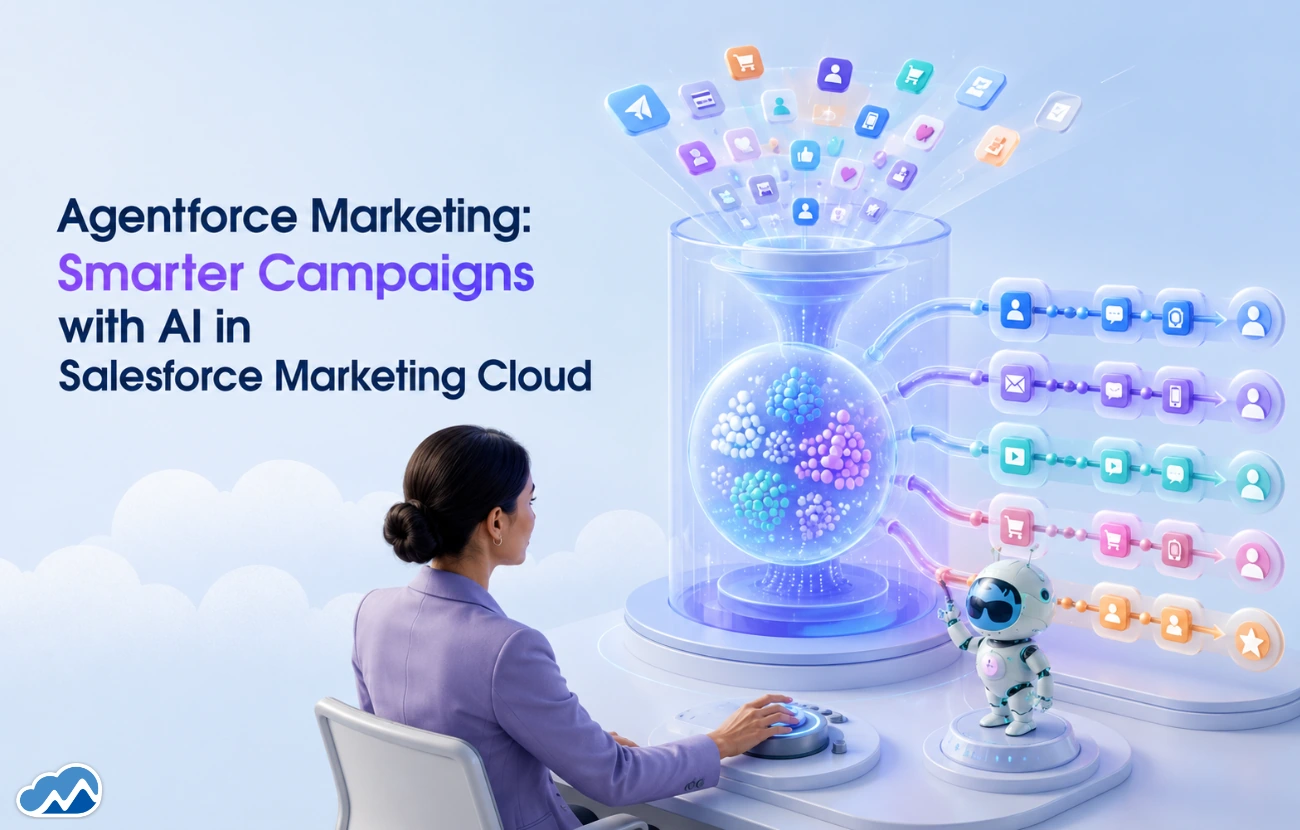
Multi-agent AI is the idea that instead of one do-everything agent, you have several specialised ones that collaborate. Think of it like a human team: you don't hire one person to do sales, service, research and operations all at once, you hire specialists and let them work together. Multi-agent AI Salesforce applies the same logic to digital labour, with each agent focused on what it does best and an orchestration layer coordinating them.
In Salesforce terms, this is delivered through multi-agent orchestration, where agents can hand off to one another and coordinate to complete a workflow. One agent might qualify a lead, another handle the service history, another pull together the data, all coordinating on the same customer. That is the core of multi-agent AI Salesforce, and it is a meaningfully different model from a single agent working in isolation. It also means the model behind each agent becomes a design choice rather than a default. Agentforce lets you point an agent at a specific large language model, and Anthropic's Claude sits among the options teams reach for when an agent has to reason carefully over messy customer context rather than just fetch a field.
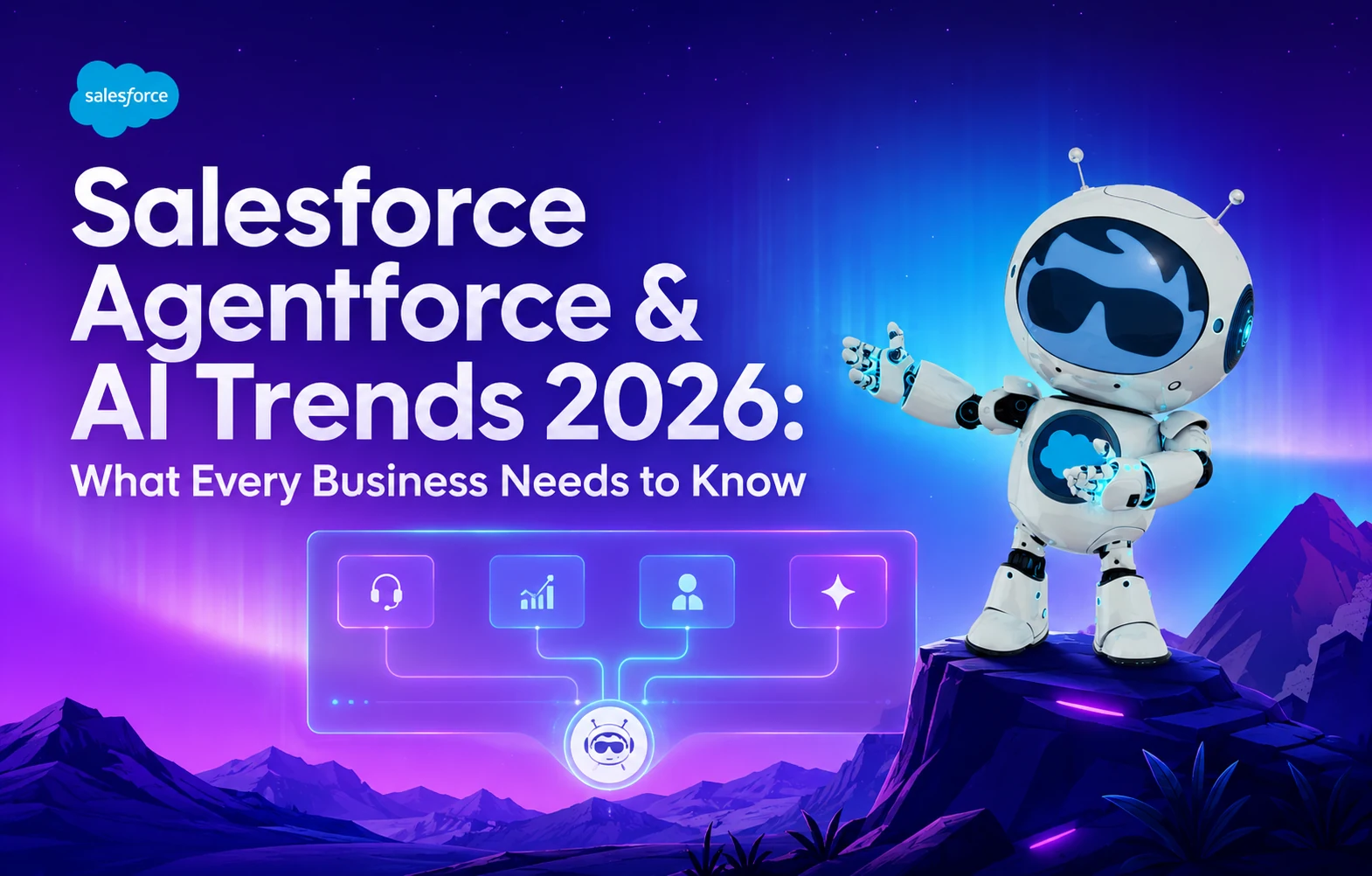
Multi-agent AI is one of the defining trends in enterprise AI right now. For the wider picture, see our Agentforce & AI Trends Master guide. This one focuses specifically on multi-agent AI in Salesforce.
Why One Agent Isn't Enough
A single agent is great for a contained, well-defined job. But real business processes are rarely that tidy. A customer issue might touch sales history, a service case, billing data and an operational system, and cramming all of that into one agent makes it a jack of all trades and master of none, harder to build, harder to govern and more likely to get things wrong.
Specialisation solves that. With multi-agent AI Salesforce, each agent has a clear remit, clear data and clear guardrails, which makes each one more reliable and easier to control. The complexity moves into the orchestration between them, coordinated deliberately, rather than being crammed into a single overloaded agent. It's the same reason businesses are built from teams of specialists rather than one person doing everything.
How Agentforce Orchestrates Agents
The mechanism that makes this work is orchestration, the layer that decides which agent handles what and manages the hand-offs between them. Rather than agents bumping into each other, orchestration coordinates them towards a shared outcome, a bit like a supervisor directing a team, so a complex task flows smoothly from one specialist to the next.
The important business point is that this stays controllable. Multi-agent AI Salesforce isn't a swarm you set loose; it's a coordinated system where you define each agent's remit, the hand-offs and the human checkpoints. As agents take on more, that structured coordination is what keeps the whole thing reliable rather than chaotic. It is also worth being clear about where orchestration stops. Agentforce coordinates agents inside Salesforce. The moment a workflow has to touch a marketing platform such as HubSpot, a billing system or an internal tool, something has to carry the step across, and that is usually a workflow automation layer like n8n rather than the agent itself.
Where HubSpot, n8n and Claude Fit In
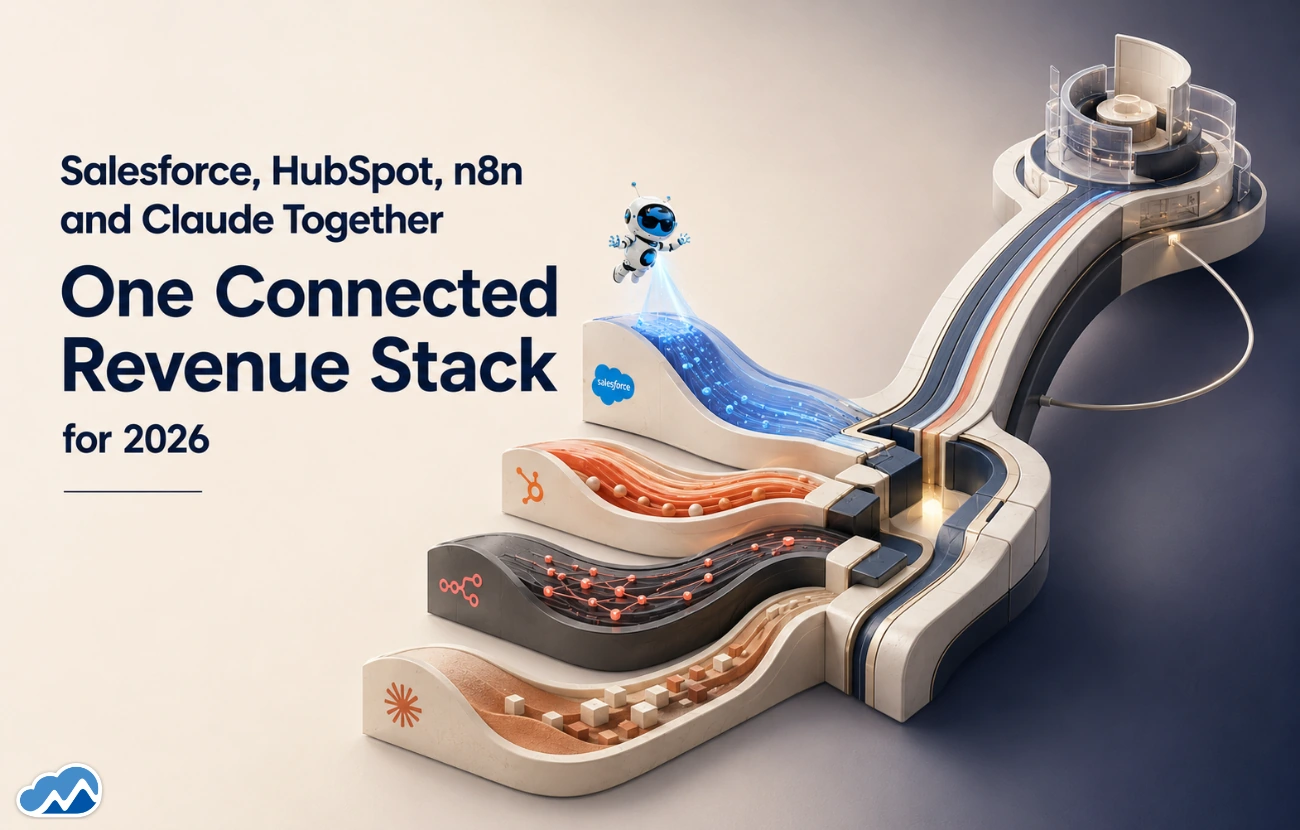
Very few businesses run everything inside one platform. Marketing often lives in HubSpot, the glue between systems runs through an automation tool like n8n and the reasoning inside an agent comes from a model such as Claude. Multi-agent AI Salesforce works better when the design accounts for that reality instead of assuming a single vendor owns every step of the journey.
HubSpot is frequently where the early part of the relationship sits: forms, email sequences, lifecycle stages and campaign engagement. A sales-focused Agentforce agent that can read that context qualifies a lead with far more to work from than CRM fields alone. The requirement is a clean, predictable sync in both directions. If an agent updates a record in Salesforce and the HubSpot view still shows the old picture, your agents and your marketers are working from different versions of the same customer, and the agent's confident summary becomes a liability.
n8n covers the connective work neither platform wants to own. It can trigger an Agentforce action when a HubSpot lifecycle stage changes, push an agent's output into a ticketing or billing system, pause a sequence until a human approves the next step, or retry a failed call without anyone noticing. The division of labour is useful to keep straight: orchestration inside Agentforce decides which agent handles what, and n8n decides what happens once the workflow leaves the CRM. Blurring those two is how teams end up rebuilding one inside the other.
Claude sits at a different layer again. Because Agentforce lets you choose the model behind an agent, different agents can reasonably run on different models. A retrieval agent that summarises a case history needs speed and predictable cost. An agent drafting a reply to an unhappy enterprise customer needs care, nuance and a model that handles ambiguity without inventing detail, which is the kind of work Claude tends to be picked for. Treating model choice per agent rather than per organisation is one of the quieter advantages of the multi-agent approach.
The practical takeaway is to treat these as one decision rather than three projects. Data sources such as Salesforce and HubSpot, connective automation such as n8n and the reasoning model such as Claude are the three layers your orchestration depends on. Get them right and coordination has something solid to work with. Get them wrong and orchestration simply distributes the problem faster.
The "AI Workforce" Idea
Put specialised agents, orchestration and your human team together and you get what's increasingly called an AI workforce, digital labour working alongside people. The agents handle the high-volume, repeatable work across functions; the humans handle judgement, relationships and the genuinely complex cases. This is not humans versus AI. It is humans plus a coordinated team of agents.
That's the real ambition behind multi-agent AI Salesforce: not a single clever bot, but a scalable layer of digital labour that grows your capacity without a matching growth in headcount. For businesses facing rising volume, that is a different way to think about scale, provided it is built responsibly.
What It Looks Like in Practice
Picture a single customer journey. A prospect enquires, and a sales-focused agent qualifies them and gathers context. They become a customer and later hit a problem; a service agent resolves the routine parts, pulling history from a data-focused agent working behind the scenes. Anything genuinely complex escalates to a human, with all the context the agents have assembled already attached.
No single agent did all of that. They collaborated, each doing its part, coordinated by orchestration. That is multi-agent AI Salesforce in action, and it is why the model is more powerful than any one agent alone: it mirrors how effective teams work.
Widen the lens slightly and the supporting cast appears. The enquiry may have arrived through a HubSpot form and been scored there before Salesforce ever saw it. An n8n workflow may have created the record, attached the marketing history and notified the account owner. The service agent's reply may have been drafted by a Claude-powered agent working from the case history the data agent assembled. None of that is visible to the customer, which is the point. What they experience is one coherent response instead of four disconnected systems.
The Honest Caveats
More agents means more power, and also more to govern. Every additional agent is another thing that needs clean data, clear guardrails and monitoring, and the orchestration between them adds its own complexity. Deploy multi-agent AI Salesforce on shaky data or without proper oversight and you don't get a workforce, you get coordinated confusion, at scale.
So the caveat is the familiar one, amplified. The businesses that win with this get their data foundation right, scope each agent carefully, keep humans in the loop and treat governance as first-class. Multi-agent AI is genuinely powerful, but it rewards discipline and punishes shortcuts even more than a single agent does.
If an AI workforce sounds compelling but you're not sure where to start, that's exactly the conversation worth having. Explore our Salesforce Consulting Services, read the wider Agentforce & AI Trends Master guide, or book a 30-minute call and we'll help you find a sensible first step. That conversation is usually shorter than people expect.
Frequently Asked Questions
.webp)




Agentforce for Financial Services: AI-Driven Banking & Insurance Solutions





.webp)



n8n Workflow Automation: From Lead Capture to CRM in Minutes, Not Hours
%20(1).webp)