HubSpot Marketing Automation: Turning Website Visitors into Booked Meetings

Table of content
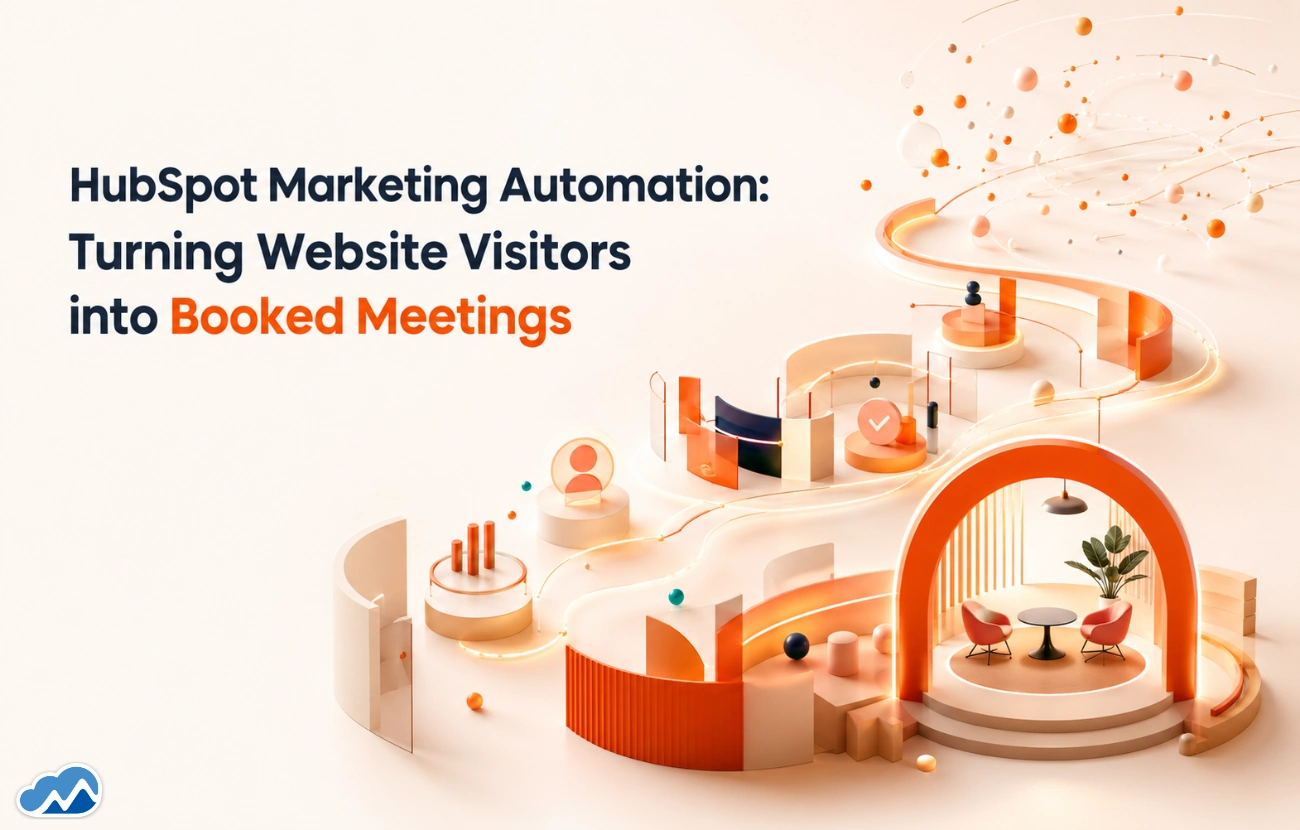
A visitor lands on your site, reads two pages, and leaves. Nothing happens next. No email, no follow-up, no record that they were ever there beyond a number in an analytics dashboard nobody checks daily. That silence is the exact gap HubSpot marketing automation is meant to close, turning an anonymous page view into a tracked, nurtured lead who eventually books a meeting, without a marketer manually watching for every visitor and deciding what to do about them one at a time.
Does This Sound Like Your Website Right Now?
A quick check before we get into the mechanics.
- Website visitors who don't fill out a form leave without a single follow-up touchpoint, even if they read several pages.
- Leads that do convert sit in a generic list, with no logic sorting hot prospects from casual browsers.
- Your team sends the same email to everyone regardless of what page or offer originally brought them in.
- Booking a meeting still depends on someone manually noticing a lead and reaching out, rather than a workflow doing it automatically.
If two or more of those are true, the rest of this is worth the ten minutes it takes to read.
What “Turning Visitors into Meetings” Takes
The phrase sounds like a marketing slogan until you break down what has to happen. A visitor needs to be tracked well enough that HubSpot knows who they are and what they've looked at, not just that a page view occurred somewhere. That behavior needs to translate into a lifecycle stage, moving someone from anonymous visitor to known lead to marketing qualified lead based on real signals, not a guess. And the nurture that follows needs to be relevant to what that specific person showed interest in, not a single generic sequence blasted at everyone who ever filled out a form. Skip any one of those three pieces and the system either doesn't know who to nurture, doesn't know when to escalate, or nurtures everyone the same way regardless of what they want.
The Building Blocks, In Order
HubSpot marketing automation isn't one feature, it's a handful of pieces working together in sequence.
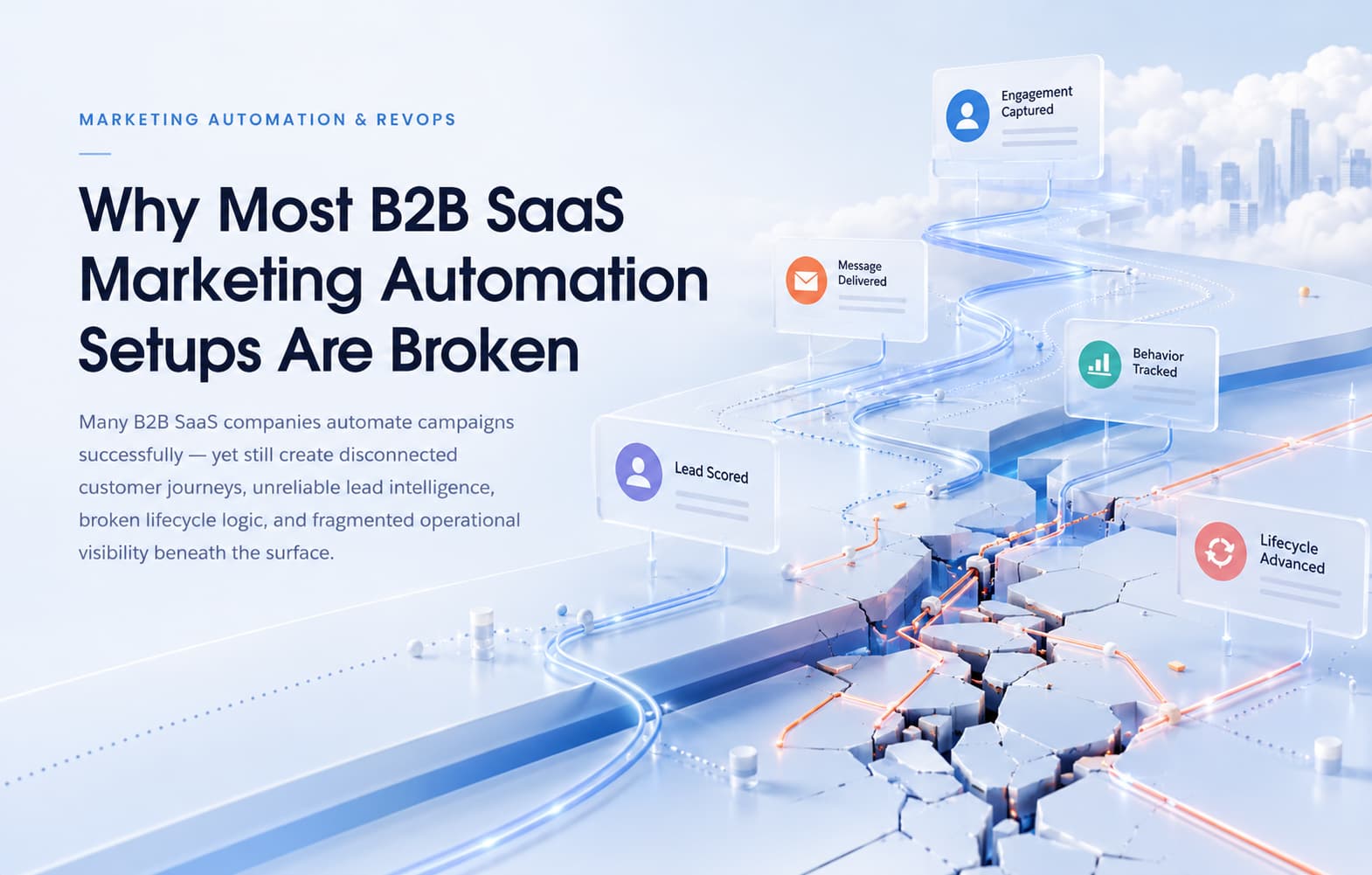
- Tracking and identification: HubSpot's tracking code captures anonymous page views, and a form fill, chat conversation, or email click converts that anonymous visitor into a known contact with a real history attached.
- Lifecycle stages: contacts move through defined stages, subscriber, lead, marketing qualified lead, sales qualified lead, based on behavior and properties you define, not just time passing.
- Lead scoring: points get assigned for meaningful actions, visiting a pricing page, opening several emails, attending a webinar, so the system can tell an interested lead from someone who clicked one link by accident.
- Workflows and nurture sequences: once a lead crosses a scoring threshold or takes a specific action, an automated sequence of emails, tasks, or notifications kicks in without a marketer manually triggering each one.
- Sales handoff: when a lead is ready, the workflow notifies a rep or books a meeting directly, rather than the lead sitting in a queue waiting for someone to check the list.
Each piece depends on the one before it. Scoring without good lifecycle stages misfires constantly. Workflows without decent scoring nurture everyone identically. Getting the sequence right matters more than any single clever automation inside it.
A Worked Example: From Anonymous Visitor to Booked Meeting
Seeing this as an actual sequence makes it concrete.
- A visitor reads three blog posts about a specific problem your product solves, all tracked anonymously by HubSpot's code.
- They fill out a form to download a related guide, converting from anonymous visitor to known lead with a real contact record.
- HubSpot assigns lead score points based on the pages they viewed and the guide they downloaded, reflecting genuine topical interest.
- An automated nurture sequence begins once their score crosses a defined threshold, sending content relevant to the specific problem they were researching.
- Their score climbs further if they open several emails and revisit the pricing page, triggering a sales notification instead of another automated email.
- A rep reaches out with context on exactly what this person has been researching, and a meeting gets booked directly through a scheduling link embedded in the outreach.
Nobody manually watched this visitor's journey from step one to step six. The system did, and a person only stepped in once the lead was ready for a conversation. The entire sequence, from that first anonymous blog visit to a booked meeting, can happen in under a week for a highly engaged visitor, or unfold over a couple of months for someone doing slower, more considered research, and the automation adapts to either pace without a marketer having to babysit the timeline.
Picture This
A B2B software company was getting a steady stream of blog traffic but converting almost none of it into anything trackable. Visitors read content and left, and the only leads reaching sales came from a handful of demo request forms scattered across the site. After building out lifecycle stages, lead scoring tied to content engagement, and a nurture sequence triggered by specific page combinations, the same traffic started producing a measurable stream of marketing qualified leads each month, most of whom sales had never manually chased down. The traffic hadn't changed. What changed was that the system finally noticed when someone was interested and did something about it.
Where This Usually Goes Wrong
A few patterns show up consistently in HubSpot marketing automation setups that don't perform.
- Scoring that doesn't reflect real intent: awarding equal points for opening a newsletter and visiting the pricing page treats very different behaviors as identical, which makes the resulting score meaningless.
- Nurture sequences that never stop: a lead who's already booked a meeting still receiving generic nurture emails looks careless and undermines trust right when it matters most.
- No exit criteria: workflows that don't remove someone once they've converted or gone cold keep sending irrelevant messages indefinitely, damaging deliverability and reputation.
- Sales notified too early or too late: a threshold set too low floods reps with unqualified leads they learn to ignore. Set too high, and ready leads sit in a queue nobody's watching.
Getting HubSpot marketing automation right means tuning all four of these deliberately, not setting them once at launch and assuming they'll stay accurate as your business changes.
Segmentation Beyond Basic Demographics
Job title and company size are the easy segmentation criteria, and they're rarely the ones that predict who converts. Behavioral segmentation, what someone looked at, downloaded, or clicked, tends to be a far stronger signal of genuine intent than firmographic data alone. A visitor who reads pricing and case studies is behaving differently than one who reads a single top-of-funnel blog post, even if their job titles look identical on paper. Building segments around that behavior, rather than defaulting to whatever fields happen to sit on the contact record, is what makes a nurture sequence feel relevant instead of generic. It's worth revisiting these segments periodically too, since the behaviors that predicted a good lead a year ago can shift as your product, market, and content mix all change around them.
Measuring What Matters
It's easy to track vanity metrics, email open rates, workflow enrollment counts, and feel like automation is working without checking whether it's producing anything sales cares about. The numbers worth watching are further down the funnel: how many marketing qualified leads convert to sales qualified, how many of those book a meeting, and how long that whole journey takes from first anonymous visit to booked call. A workflow with a great open rate that never produces a qualified lead isn't succeeding, it's just generating activity. Tying marketing automation reporting to the same numbers sales cares about, meetings booked and pipeline generated, rather than engagement metrics that stop at the marketing team's door, is what keeps both teams looking at the same picture instead of two different stories about the same leads.
Where AI Fits Into the Nurture Now
HubSpot's Breeze AI layer has started doing real work inside marketing automation, not just drafting subject lines. A Prospecting Agent can research and suggest which contacts are worth a nurture push based on signals a person might miss scanning a list manually, and content tools can draft first-pass email copy tailored to what a specific segment has shown interest in, ready for a marketer to edit rather than write from scratch. HubSpot bills some of these AI features by outcome rather than by seat, so it's worth keeping an eye on usage as adoption grows, the same way you'd watch any cost that scales with volume. The judgment about what content to send and when still belongs to your marketing team. AI is speeding up the drafting and the research behind it, not replacing the strategy.
Build It Yourself, or Bring in Help?
A basic nurture sequence is reasonable to build in-house, especially with a small contact list and a single clear customer journey. Where it gets harder is exactly what's covered above: scoring models that reflect intent, workflows with proper exit criteria, and a lifecycle stage structure that holds up as marketing and sales both rely on it. If you're weighing that decision, look at how a provider approaches HubSpot Marketing Automation projects day to day, not just whether it's a line item on their services page. Ask how they design lead scoring around your specific buyer signals. Ask how workflows handle a lead who's gone cold. Ask whether marketing and sales get the same definitions for what a qualified lead means, since disagreement there undermines everything built on top of it.
For a broader look at how CRM setup underpins everything described here, our HubSpot CRM Setup guide covers the pipeline and data-model work that marketing automation depends on to function properly in the first place.
How This Fits Into the Bigger Picture
Marketing automation is one piece of a broader HubSpot engagement that also covers CRM setup and, eventually, aligning marketing, sales, and service around shared numbers. If you want the fuller picture of what HubSpot covers across a business, our HubSpot Consulting Services Guide walks through the platform more broadly, including where Breeze AI fits into the picture and what to check before choosing a solution provider.
The honest measure of whether HubSpot marketing automation is working isn't how clever the workflow diagram looks. It's whether a visitor who used to leave silently now shows up on a rep's calendar a few weeks later, with context attached, ready for a conversation that matters. Go back to that visitor from the start of this guide, the one who read two pages and left without a trace. With the right system in place, that visit becomes the first data point in a story that ends with a meeting on someone's calendar, not a number that disappears into an analytics dashboard nobody opens.
Frequently Asked Questions
.webp)















Agentforce for Financial Services: AI-Driven Banking & Insurance Solutions













.webp)











n8n Workflow Automation: From Lead Capture to CRM in Minutes, Not Hours


%20(1).webp)