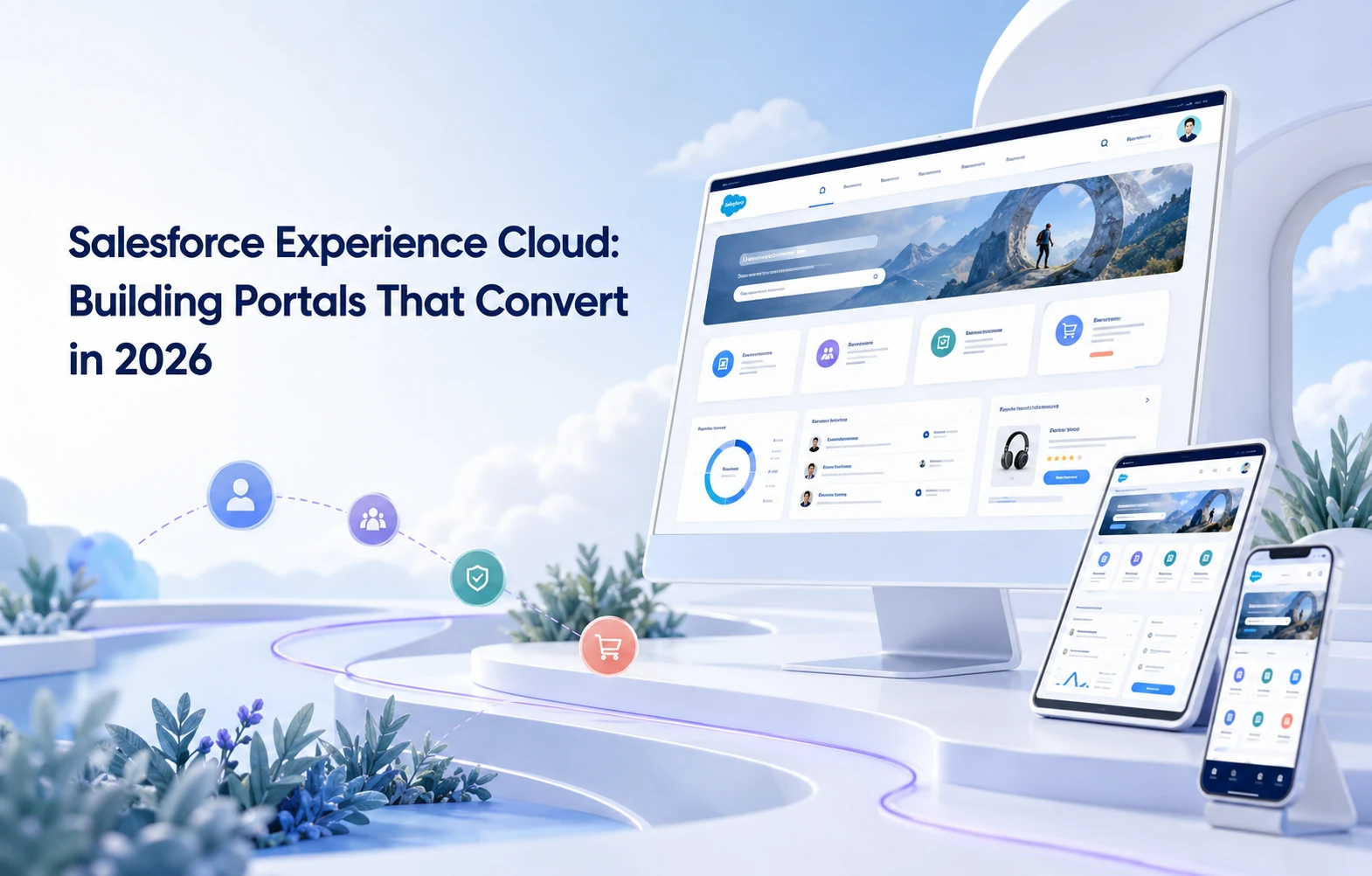
Salesforce Experience Cloud: Building Portals That Convert in 2026

Table of content
Somewhere out there is a customer portal that cost a fortune to build and that almost nobody uses. A login page, a couple of static pages behind it, and a slow trickle of users who click in once, find nothing useful and never come back. It's a digital ghost town with a Salesforce licence attached.
If that stings a little, you're not alone. Portals are one of the easiest things to build badly, because "we launched a portal" feels like success while "anyone actually uses it" is the part that quietly doesn't happen. That gap, between a portal that exists and a portal that converts, is exactly what good Salesforce Experience Cloud services are meant to close.
Because Experience Cloud can absolutely deliver portals, communities and help centres that customers genuinely rely on. It just doesn't happen by accident. So let's talk about what separates the portals that work from the ones collecting digital dust.
What Experience Cloud Actually Is
Experience Cloud is Salesforce's platform for building external-facing digital experiences: customer portals, self-service help centres, partner communities, account portals and branded sites, all sitting on top of your Salesforce data. The crucial word there is data. Unlike a standalone website, an Experience Cloud site can show each user their own live information, their cases, their orders, their account, pulled straight from your CRM.
That's the whole point, and it's what makes Salesforce Experience Cloud services different from just building another website. A normal site shows everyone the same static pages. An Experience Cloud portal shows a logged-in customer their reality, updated in real time, and lets them act on it. Get that right and it stops being a brochure and starts being a tool people come back to.
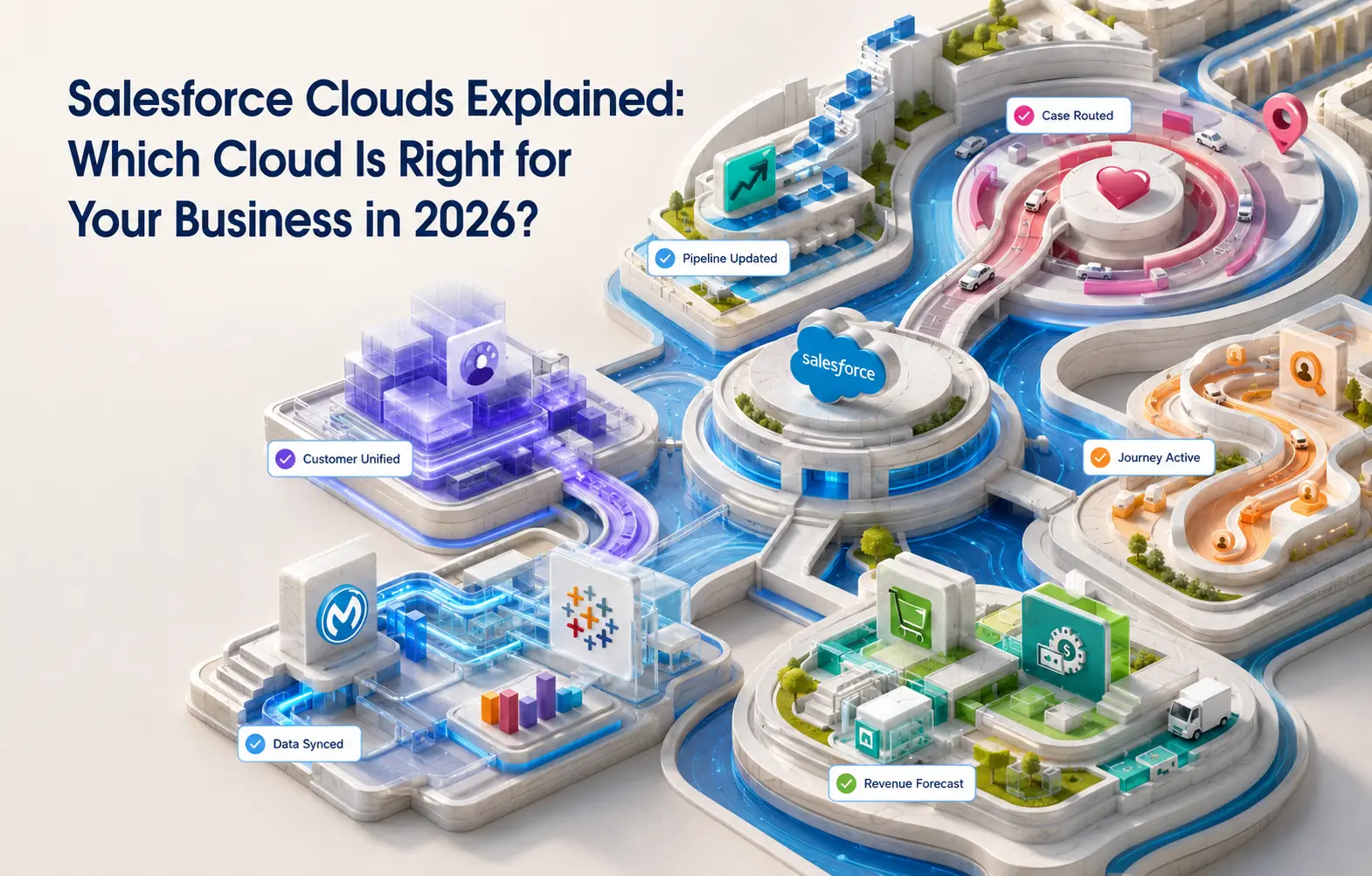
Experience Cloud is one of several Salesforce clouds. If you're still deciding which ones your business actually needs, our Salesforce Clouds Overview walks through how they fit together. This guide is about building an Experience Cloud portal that earns its keep.
Why "Portals That Convert" Is the Whole Point
Here's the trap. Building a portal is easy. Building one people use is hard, and the two get confused all the time. A portal that converts is one where customers actually log in, find what they need, complete the thing they came to do, whether that's raising a case, checking an order, paying an invoice or renewing, and leave satisfied rather than frustrated.
That word "convert" doesn't just mean sales. It means the portal successfully does its job: deflecting a support call, closing a self-service request, moving a partner deal forward. When it works, it lifts satisfaction and takes real load off your team. When it doesn't, you've spent money building somewhere customers avoid. Good Salesforce Experience Cloud services are judged on that outcome, not on whether the site went live.
The Portals People Actually Build
A few patterns come up again and again, and knowing which one you're building shapes everything else.
Customer self-service portals. The most common. Customers log in to raise and track cases, read knowledge articles, check their account and solve problems without phoning anyone. Done well, this is a support-cost reducer and a satisfaction lifter at the same time.
Partner portals. For channel and reseller relationships, giving partners deal registration, resources, leads and the tools to sell on your behalf without living in your inbox.
Help and knowledge centres. Public or gated libraries of articles and answers that deflect the routine questions before they ever become tickets.
Account and customer hubs. Branded spaces where customers see their orders, invoices, subscriptions and history, and act on them, turning your CRM data into something the customer can actually use themselves.
What Makes a Portal Convert, Not Collect Dust
The difference between the two almost always comes down to the same handful of things.
A clear purpose. A portal trying to do ten things does none of them well. The ones that convert are built around a specific job the customer needs done, and they make that job effortless.
Live CRM data, not static pages. If your portal just shows the same content to everyone, you've built a website with extra steps. The magic of Salesforce Experience Cloud services is showing each user their own real, current information and letting them act on it.
Genuinely good UX. Customers compare your portal to every slick app they use daily, not to your old one. If it's confusing or ugly, they'll phone your support line instead, which defeats the entire purpose.
Mobile that actually works. A large share of users will hit your portal on a phone. If it's painful on mobile, it's failing most of the people it's meant to serve.
Findability. If customers can't quickly find what they came for, they leave. Search, structure and navigation aren't polish, they're the difference between deflection and a support call.
Connect It to the Rest of Your Salesforce
This is where Experience Cloud pulls ahead of any standalone portal builder. Because it sits on your Salesforce data, a case a customer raises in the portal lands straight in your support team's queue. An order they check reflects the real, current status. A profile they update writes back to the CRM. No syncing, no duplicate systems, no stale information.
That live connection is the core of what good Salesforce Experience Cloud services deliver, and it's why planning the portal around your data model, rather than treating it as a separate website project, matters so much. A portal disconnected from your CRM is just another silo. A portal wired into it becomes a genuine extension of how you serve customers.
Personalisation and AI in 2026
Modern Experience Cloud portals don't have to show everyone the same thing. You can personalise what each user sees based on who they are, what they've bought and how they behave, and increasingly layer in AI, Einstein recommendations and Agentforce agents that can answer questions and resolve routine requests right inside the portal.
Used well, that turns a static self-service site into something closer to a personal assistant: it surfaces the article this customer needs, answers their question without a human, and hands off cleanly when it can't. The honest caveat is the familiar one, all of it depends on clean data and a solid build underneath. AI in a portal amplifies whatever's behind it, so the groundwork comes first and the clever features second.
Design and Adoption: Build It for Customers, Not for IT
The quiet killer of portals is building them for the wrong audience. A portal designed to satisfy an internal checklist, rather than to help a real customer get something done, gets launched and then avoided. Adoption isn't something you bolt on at the end; it's a design requirement from the first conversation.
That means designing around real customer journeys, testing with actual users, and making the valuable actions obvious and easy. The best Salesforce Experience Cloud services treat adoption as the goal and the build as the means, because a beautiful portal nobody uses is just an expensive way to have a login page.
Mistakes We See in Experience Cloud Projects
A few patterns show up so often they're almost predictable.
Building a website, not a portal. If it doesn't show live, personalised CRM data, you've missed the entire advantage of the platform.
Trying to do everything at once. A focused portal that does one job brilliantly beats a sprawling one that does five jobs badly.
Ignoring mobile. A huge share of your users are on phones, and a desktop-only mindset fails them.
Treating adoption as an afterthought. A portal built for internal sign-off rather than customer need is a portal customers won't use.
No owner after launch. Portals need maintenance, new content, new features, fixes, and one left to rot stops converting fast.
Signs Your Portal Needs a Rethink
Not sure whether yours is pulling its weight? Run through these honestly.
Your login numbers are embarrassing and nobody talks about them. Customers still phone or email for things the portal was meant to handle. The content behind the login is static and rarely updated. It's painful to use on a phone. It doesn't actually show customers their own live data. Two or three of those, and you don't have a platform problem, you have a portal that was built but never made to convert, and proper Salesforce Experience Cloud services can turn that around.
Choosing an Experience Cloud Partner
If you bring in help, a few things separate a partner worth keeping from one you'll be redoing the work after.
They start with the customer journey, not the theme. If the first conversation is all about branding and none about what customers actually need to do, be wary.
They design for adoption and mobile from day one, because those are the two things that decide whether a portal converts.
They plan the CRM data connection properly, since that live link is the whole reason to use Experience Cloud rather than a generic site builder.
They build for maintenance. Ask what happens after launch. Good Salesforce Experience Cloud services include keeping the portal fresh, not just shipping it and leaving.
Frequently Asked Questions





Agentforce for Financial Services: AI-Driven Banking & Insurance Solutions




.webp)



n8n Workflow Automation: From Lead Capture to CRM in Minutes, Not Hours
%20(1).webp)