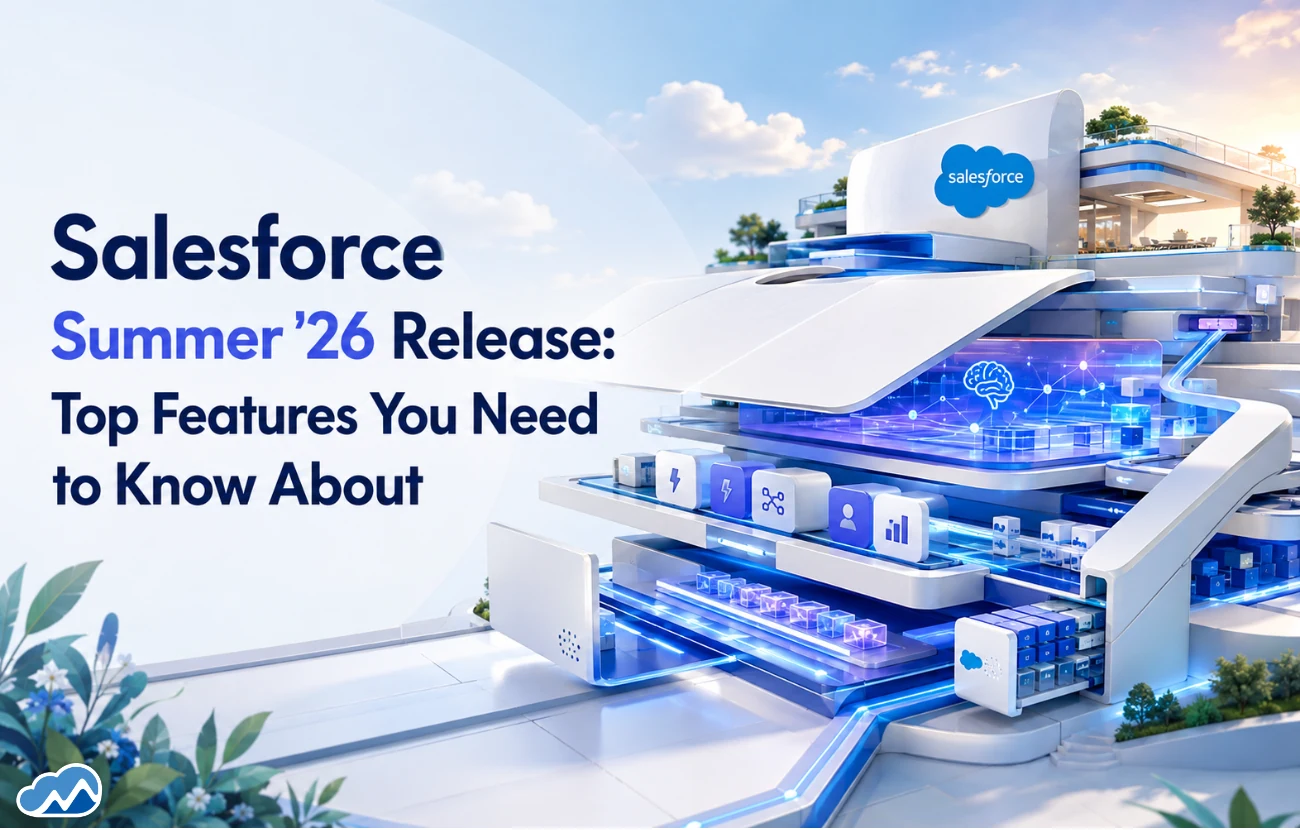
Salesforce Summer '26 Release: Top Features You Need to Know About

Table of content
Salesforce releases land three times a year, and they land whether you're ready or not. That's the part that catches teams out: the update applies automatically, so the only real choice you have is whether you meet it prepared or get surprised by it in production. The Salesforce Summer '26 release features are worth meeting prepared, because this is one of the more significant updates in a while.
In short, Summer '26 is the release where Agentforce stops being a separate thing you go to and starts being woven into the tools your team already uses every day. If last year was about introducing AI agents, this release is about making them part of the furniture. Below is what matters most, and what to test first.
The Big Theme: The Agentic Enterprise
Every Salesforce release has a story, and the story of Summer '26 is what Salesforce calls the agentic enterprise, the idea of humans and AI agents working side by side across the business rather than AI sitting in its own corner. That's not just marketing framing; it shapes most of the headline Salesforce Summer '26 release features, which are largely about pushing Agentforce into the everyday surfaces where work actually happens.
For business leaders, the takeaway is direction of travel. Salesforce is betting heavily that agents become a normal part of how teams operate, and this release moves that from vision to something sitting in your Sales Cloud views, your service console and your marketing tools.
Agentforce, Now Woven Into Daily Work
The standout among the Salesforce Summer '26 release features is that Agentforce is no longer a standalone layer you switch to. It now shows up directly inside the daily surfaces, in Sales Cloud record views, in marketing authoring tools, in service console workflows, so agents are available in the flow of work rather than as a separate destination. With over 12,000 customers already deployed, Salesforce is clearly pushing agents into the mainstream.
Practically, that lowers the barrier to actually using agents. When AI assistance is right there in the console your service team already lives in, adoption gets a lot easier than when it's a separate tool people have to remember to open.
Multi-Agent Orchestration
One of the most significant Salesforce Summer '26 release features is Multi-Agent Orchestration, the ability for multiple AI agents to collaborate on a single, complex task rather than each working alone. Instead of one agent trying to do everything, specialised agents can hand off to one another, coordinating to handle workflows too involved for a single agent.
This is a real step towards the idea of an AI workforce, several agents, each good at something, working together like a team. For complex customer journeys that span sales, service and data, that coordination is where a lot of the future value sits, and Summer '26 is where it becomes tangible.
Setup With Agentforce: AI for Admins
Not all the news is customer-facing. Among the more quietly useful Salesforce Summer '26 release features is Setup with Agentforce, which brings AI assistance directly into Salesforce Setup. Admins can configure, troubleshoot and manage their org using natural-language prompts, describing what they want rather than clicking through every screen.
For teams whose admin is stretched thin, and that's most teams, this is a genuine time-saver. It won't replace admin expertise, but it lowers the effort of routine configuration and troubleshooting, which adds up over a year.
Better Tools for Building Agents
For the technical crowd, Summer '26 brings more mature tooling for building and scaling agents, including the Agentforce DX MCP Server and the Agentforce Vibe IDE, plus extensions that make developing and customising agents more predictable. If Agentforce's first act was about proving agents could work, these Salesforce Summer '26 release features are about making them properly buildable and maintainable at scale.
The business implication is reliability. Better developer tooling means agents that are easier to build well, test properly and maintain over time, which matters enormously once you're depending on them in production.
Governance Gets First-Class Treatment
This is the one seasoned teams will appreciate most. Summer '26 gives Agentforce permission sets, audit exposure and monitoring controls proper, first-class attention. As agents take on more real work, being able to control exactly what they can do, see what they've done and monitor them closely stops being optional.
That is a sign of maturity. The Salesforce Summer '26 release features aren't just about giving agents more power, they're about giving you more control over that power, which is precisely what a responsible business needs before leaning on AI in production.
Data Cloud and Platform Improvements
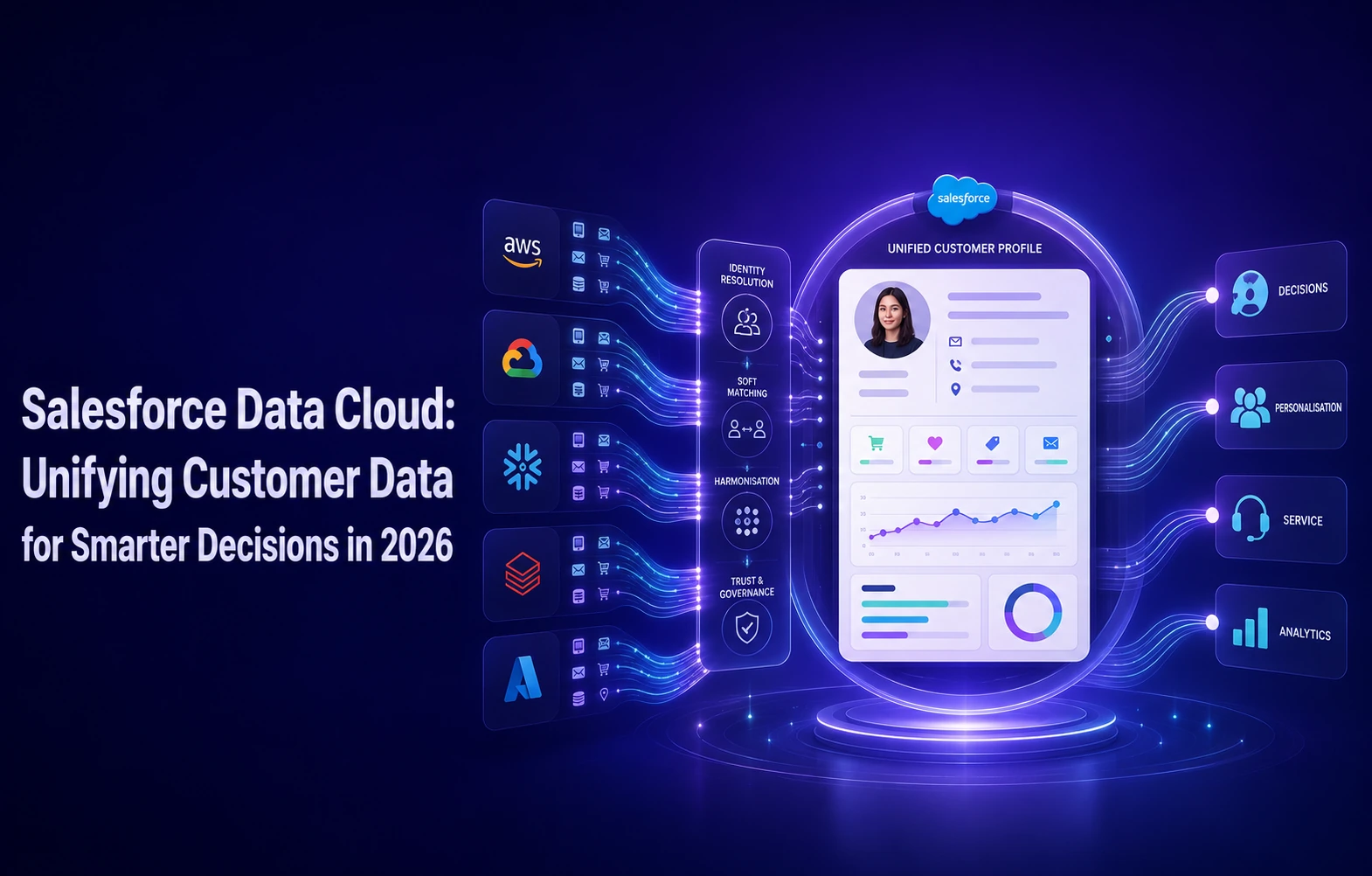
Underneath the AI headlines, the release also strengthens the foundations. There are improvements across Data Cloud, plus Lightning Experience, Flow, Apex and Lightning Web Components, and stronger integration through MuleSoft and Data Cloud. This matters more than it sounds, because agents are only as good as the data beneath them, so better data and integration capability directly improves what your AI can do.
How Summer '26 Fits With HubSpot, n8n and Claude
Most teams do not run Salesforce on its own. Marketing may sit in HubSpot, routine automations may run through n8n and a fair share of the AI work in the business may already go through Claude. Summer '26 does not change that picture, but it does make the joins matter more, because agents acting on your records need clean data and predictable handoffs across every one of those tools.
If HubSpot holds marketing and top-of-funnel data while Salesforce holds the pipeline, decide which system owns which field before you let agents act on either. Duplicate contacts and stale lifecycle stages were an annoyance when only humans were reading them. They turn into a real problem when an Agentforce agent uses them to draft an email or update a record. The Data Cloud improvements in this release help here, but only if the HubSpot to Salesforce sync is mapped deliberately rather than left on defaults.
On the automation layer, n8n is a common way to move records between Salesforce and everything else without building each integration by hand. Two things are worth checking after the release. First, any n8n workflow that calls the Salesforce API against objects affected by the Flow and Apex changes. Second, whether an n8n workflow and an Agentforce agent could act on the same record at the same time. Give agents and external automations separate lanes, or set the order of operations explicitly so one is not undoing the other.
On the model side, plenty of teams already use Claude for drafting, summarising and internal document work alongside Agentforce inside the CRM. Summer '26 makes that split easier to keep honest: Agentforce handles what sits inside Salesforce under Salesforce permissions and audit, while Claude handles the work outside it. The new permission sets and audit exposure make it much easier to show which system touched which record, which is the first question anyone asks when the topic of AI and customer data comes up. Where you do want Claude output landing back in Salesforce, n8n is a reasonable path for it, provided that route is logged like any other integration.
What to Test First
With any release, the smart move is to review it in a sandbox before it hits production and decide deliberately what to switch on. For Summer '26, prioritise the Agentforce changes if you're using agents, the new governance controls, and anything touching automations you rely on, Flow especially. Extend that check to the systems either side of Salesforce as well: your HubSpot sync mappings, any n8n workflows hitting the Salesforce API and the boundary between what Agentforce does inside the CRM and what you run through Claude outside it. The Salesforce Summer '26 release features are substantial, so a considered review beats discovering the changes when a user reports something behaving differently.
If you want help reviewing what the release means for your specific org, or getting the Agentforce features working properly, explore our Salesforce Consulting Services, read the wider Agentforce & AI Trends Master guide, or book a 30-minute call and we'll walk you through what to test first. That conversation is usually shorter than people expect.
Frequently Asked Questions
.webp)












Agentforce for Financial Services: AI-Driven Banking & Insurance Solutions







.webp)




n8n Workflow Automation: From Lead Capture to CRM in Minutes, Not Hours

%20(1).webp)