Claude AI for Business: A Practical 2026 Guide to Chatbots, Automation and Structured AI Outputs

Table of content

Most businesses don’t have an AI problem so much as an AI-adoption problem. The tools look impressive in a demo, but turning one into something that reliably reads a support ticket, drafts a reply and writes it back into the CRM is a very different job. Claude, the family of AI models built by Anthropic, has become one of the more trusted options for that kind of work, and Claude AI services have grown up around actually putting it to use. This guide walks through what those services deliver, how Claude compares to the alternatives and what to check before you build anything.
What Claude Is (and Why It's Different)
Claude is a family of large language models made by Anthropic. You can chat with it directly, but for business the interesting part is using it as a reasoning layer inside your own systems. It reads documents, classifies messages, drafts responses and calls your tools to get things done. That sounds like any AI model until you look at how it behaves. Two things stand out. Claude is built with a strong emphasis on safety and following instructions closely, which matters a lot when it’s touching real customer data. And it’s designed to plug into your systems through open standards like the Model Context Protocol, so it can read and write to Salesforce, HubSpot and your databases instead of living in a separate chat window. For teams that want AI doing real work rather than sitting in a sidebar, that’s the whole draw.
Why Businesses Are Choosing Claude in 2026
Adoption keeps climbing, and the reasons are practical. Claude comes in tiers, from the deep-reasoning models down to the fast, cheap ones, so you can match each task to the right balance of quality and cost rather than paying top rates for everything. It handles long documents and messy, real-world text well, which is where a lot of business work actually lives. And it can be deployed through the Anthropic API, AWS Bedrock or Google Vertex, so procurement and data-residency requirements have an answer. There’s a catch, though. The value comes from governed, well-scoped deployment, not from bolting a chatbot onto your website and hoping. That’s exactly where a proper implementation earns its money.
What Claude AI Services Cover
A good Claude engagement is a lot more than writing a few clever prompts. It usually starts with an AI-readiness assessment: finding the use cases worth doing, auditing your data and processes and projecting the return before anyone builds. From there it covers the build itself, whether that’s a chatbot, document processing, message classification and routing, or retrieval-augmented generation over your own knowledge base so answers stay grounded in your content. The better solution providers wire Claude into your stack through tool use and MCP so it can query and update records, add structured outputs so writes into the CRM stay clean, and put guardrails around the whole thing: human-in-the-loop approval, PII redaction and audit logging. Then they document it and hand it over, so your team isn’t dependent on them for every change.
Claude vs. ChatGPT and the Other Models
The honest version isn’t complicated. All the leading models are capable, and the gap between them narrows every year. Claude’s strengths are careful instruction-following, long-document work, strong drafting and coding, and a safety-first posture that suits regulated or sensitive data. Other models have their own edges, and for some tasks they’ll be the better pick. The point is that for business workflows touching customer data, reliability and governance matter far more than who wins this month’s benchmark. Plenty of teams use more than one model and route each task to whichever fits best. Being model-flexible rather than locked in is usually the smarter position, and it’s one Claude supports well.
Which Claude Model Do You Actually Need?
Claude’s tiering is a strength and a trap. The most powerful models are built for the hardest reasoning, the mid-tier ones are the balanced everyday workhorse, and the fast, low-cost models handle high-volume, simple tasks like classification and tagging. You don’t have to run everything on the most expensive option, and you shouldn’t. Matching each task to the right tier is where a surprising amount of budget is saved or quietly wasted. On top of that, prompt caching and batch processing cut the cost of repetitive, high-volume work considerably. A good solution provider tiers your workloads deliberately rather than defaulting to the biggest model for everything.
How Claude Connects to Your Tools
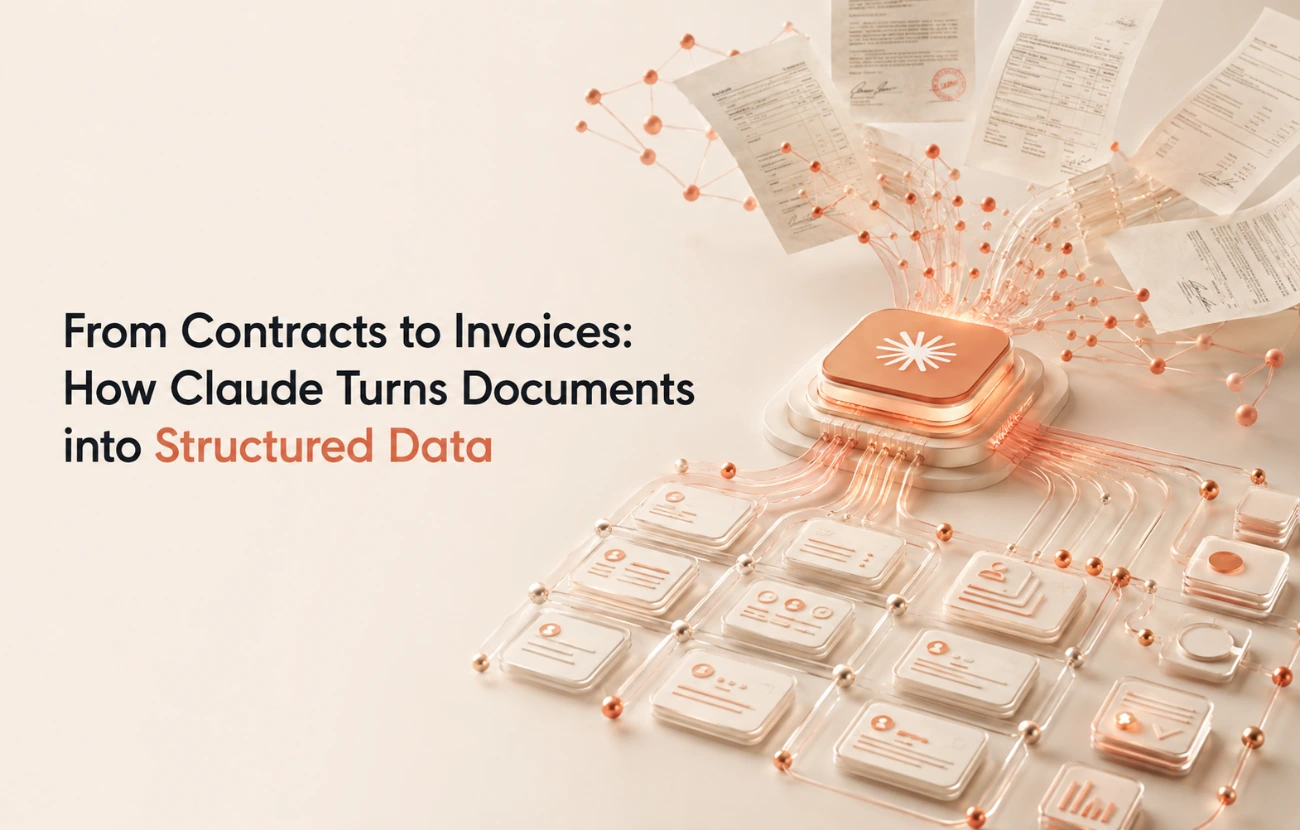
This is what separates a real deployment from a chatbot. Through the Model Context Protocol and tool use, Claude can query and update Salesforce and HubSpot records, call your internal APIs and trigger downstream actions. Structured, schema-validated outputs mean it writes into CRM fields cleanly, without free-text guesswork. Its vision capability reads scanned PDFs, invoices, IDs and screenshots into structured data. And the Agent SDK lets you build multi-step, longer-running agents that carry a task through several tools before checking back with a human. Put together, that turns Claude from a clever chat box into decision-support that lives inside the systems your team already uses.
What to Look for in a Claude AI Solution Provider
A few things separate a capable Claude solution provider from a generalist that has just discovered AI:
Real integration depth, not just prompt-writing. Getting Claude to read and write to your CRM reliably is a different skill from producing a nice demo.
A clear view on model tiering and cost control. A solution provider who runs everything on the most expensive model is spending your budget, not saving it.
Proper guardrails. Human-in-the-loop approval, PII redaction and audit logging aren’t optional when AI is touching customer data.
Grounding in your own content. Retrieval-augmented generation is what keeps answers tied to your material instead of confidently made up.
A model-flexible stance. You want someone building for the best fit, not locking you into one vendor for their own convenience.
The Problems We Usually Get Called In For
Most teams who come to Makedian have already tried an AI tool and hit a wall. It demoed well, then fell over the moment it met real data. These are the situations we’re called in to fix most often, and how we sort them out.
“The chatbot gives confident wrong answers.” A model with no grounding will happily invent things. We connect it to your own content with retrieval-augmented generation and add guardrails, so answers come from your material, not thin air.
“It works in a demo but not in production.” The gap between a nice prototype and a reliable system is real. We add structured outputs, sensible fallbacks and monitoring, so it behaves the same on a bad day as a good one.
“We don’t know where AI would actually help.” Buying AI before finding the use case is how budgets disappear. We run an AI-readiness assessment and start with the workflows that have a clear return, not the flashiest ones.
“The token bill is out of control.” Running everything on the biggest model gets expensive fast. We tier the workloads, cache repeated prompts and batch the high-volume jobs, so cost tracks value.
“We can’t put customer data into a random AI tool.” For regulated or privacy-conscious teams that’s a genuine blocker. We deploy through the Anthropic API, Bedrock or Vertex with the right data-residency setup, PII handling and audit logging, so sensitive data is handled properly.
Working With a Claude AI Solution Provider
If you’ve got a use case in mind, or you’ve tried an AI tool and it didn’t survive contact with real data, working with a specialist is usually faster and safer than learning the reliability edge cases on live customers. That’s the gap Makedian was built to close. Our Claude AI Services team handles the assessment, the build and the integration: chatbots, document processing, retrieval-augmented generation, tool use into your CRM and the guardrails that keep it all trustworthy. If any of the problems above sound familiar, get in touch and we’ll walk you through what it takes to fix them.
The Bottom Line
Claude’s appeal comes down to reliable AI doing real work: reading your documents, drafting your responses and writing back into the tools you already run, with the safety and governance to be trusted near customer data. What separates a solid deployment from a fragile one is nearly always the same handful of things. The right model for each task. Answers grounded in your own content. Guardrails rather than crossed fingers. And an integration that reaches into your CRM instead of stopping at a chat window. This is a hub guide, and we’ll be publishing deep dives on Claude chatbots, document processing, retrieval-augmented generation and MCP integrations over the coming weeks, linked from here as they go live. And if you’d rather not wait, and you’ve got an AI use case that needs to actually work in production, that’s exactly the gap Makedian closes. Get in touch and we’ll show you what reliable, governed AI looks like.











.webp)




















%20(1).webp)