What Salesforce Winter '27 Means for Your Business: Impact Beyond the Release Notes

Table of content
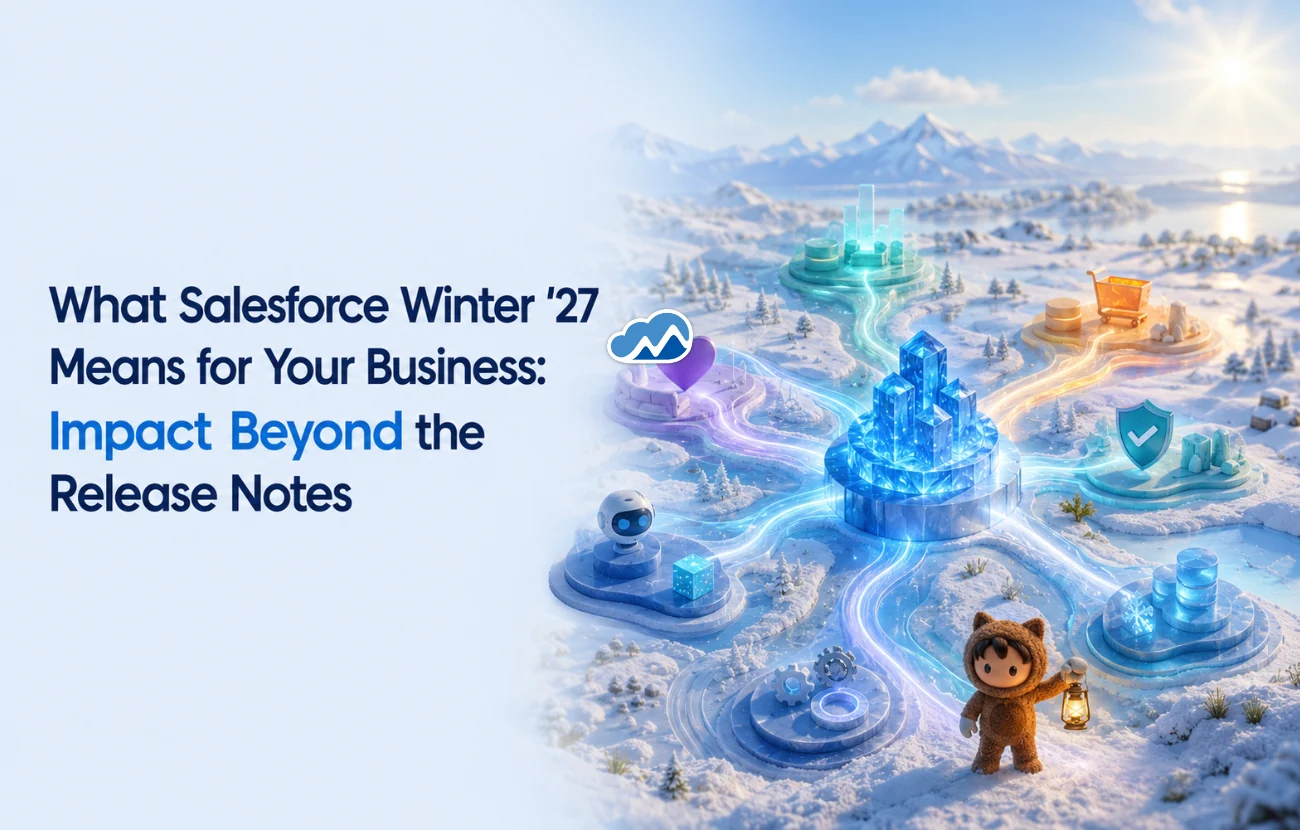
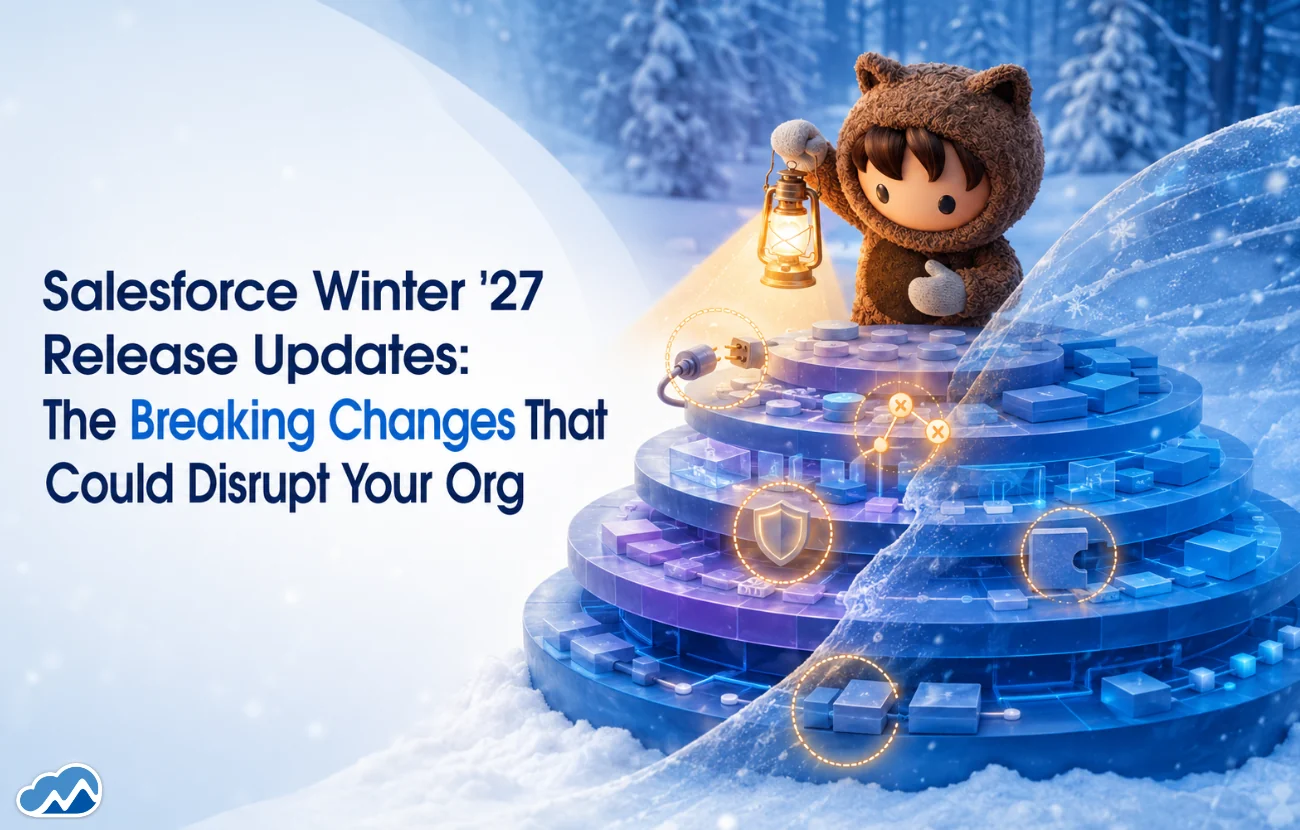
Release notes are written for admins and developers, in the language of features and enforcements. But a Salesforce release is also a business event, and the question leaders actually care about is simpler: what does this mean for us? Understanding what Salesforce Winter '27 means for your business, beyond the technical detail, is what turns a release from an IT task into a strategic moment. This guide translates it.
Here is what Salesforce Winter '27 means for your business, read past the release notes.
The Direction Matters More Than Any Single Feature
The most important thing Salesforce Winter '27 signals is direction. The continued rebranding of core products into the Agentforce family, Sales Cloud becoming Agentforce Sales and more, is not just naming. It tells you where Salesforce is betting: on an agentic, AI-driven future where your CRM does work, not just records it. For your business, the message is that AI is becoming the centre of the platform, and planning for that matters more than any one feature in this release.
The full picture of that shift is in our Salesforce Agentforce & AI Trends 2026 guide. Winter '27 is one more step along a road worth understanding, because it shapes where your investment should go next.
The Real Cost Is in Not Preparing
What Salesforce Winter '27 means for your business, practically, is a choice between preparing and being caught out. The release enforces changes whether you act or not, and some of them, particularly around authentication and data access, can quietly disrupt operations. The business cost of ignoring a release is rarely dramatic on the day; it shows up as an integration that silently stopped, a report that went wrong, or a team that lost trust in the system. Preparation is cheap compared with cleaning that up.
This is why treating releases as routine, owned work matters, the theme of our Salesforce Support & Maintenance guide. For a sense of how to approach a release in practice, our write-up of the Salesforce Summer release features shows the method a business should expect from whoever owns its org.
It Is a Prompt to Check Your Foundation
A major release is a natural moment to ask whether your Salesforce foundation is in good shape. If a release makes you nervous, that nervousness is usually telling you something: that the org has accumulated custom code nobody fully understands, integrations nobody has audited, or processes that have drifted. Winter '27 is a good excuse to address that, because a clean, well-owned org takes releases in its stride while a fragile one lurches through each one.
The Question of Who Owns It
Ultimately, what Salesforce Winter '27 means for your business depends on who is looking after your org. A business with a capable owner, in-house or a partner, experiences the release as a planned, low-drama event. A business without one experiences it as a recurring source of surprises. If Winter '27 has you unsure who would even handle it, that is the real signal to act on.
Choosing the right people for that is covered in our How to Choose the Right Salesforce Consulting Partner guide, and if you would rather hand the release cycle to a team entirely, our Salesforce Consulting Services can take it on. What Salesforce Winter '27 means for your business is, in the end, largely about who owns the answer.
Frequently Asked Questions













Agentforce for Financial Services: AI-Driven Banking & Insurance Solutions












.webp)

















n8n Workflow Automation: From Lead Capture to CRM in Minutes, Not Hours




%20(1).webp)