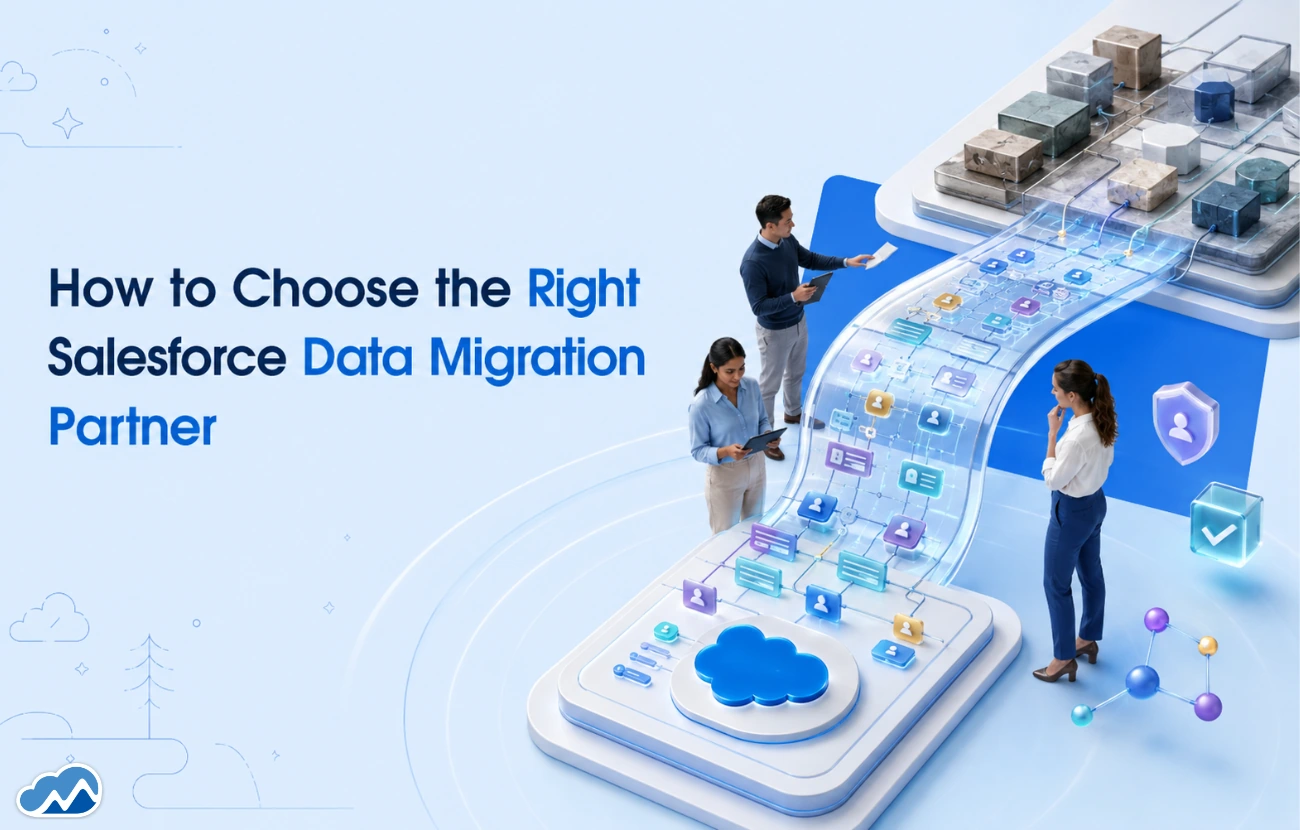
How to Choose the Right Salesforce Data Migration Partner

Table of content
A data migration is one of those projects where you only find out how good your partner is after it is too late to change your mind. Get it right and nobody notices, because everything just works in the new system. Get it wrong and you are living with duplicate records, broken reports and a team that quietly stopped trusting Salesforce, for years. That is why choosing the right Salesforce data migration partner is a decision worth slowing down for.
This is a practical guide to making that choice well. What actually matters, what to ignore, and the questions that separate a partner who will move your data safely from one who will move it and hope.
Why the Right Partner Matters More Than the Tool
There is no shortage of migration tools, and a lot of firms will happily talk to you about theirs. The tool is rarely the problem. A migration succeeds or fails on the decisions around it: what moves, how it maps, what counts as a duplicate, and how you prove the result is correct. Those are judgement calls, and judgement is what you are really hiring.
So the value of a good Salesforce data migration partner is not that they own clever software. It is that they know which questions to ask before they touch your data, and they insist on answering them properly. A partner who leads with the tool and skips the thinking is the one to be careful of.
What Makes Data Migration Different
Migration has a specific kind of risk that ordinary Salesforce work does not. It is often a one-shot event with a hard cutover, it touches every record your business runs on, and mistakes made during the move are painful to unpick afterwards. A half-finished automation you can fix next week. A botched migration that merged the wrong customers is a different kind of headache.
That is why the right Salesforce data migration partner treats the work with more caution than a normal build. They plan the cutover, they test before they commit, and they assume something will go wrong and prepare for it. Respect for that risk is one of the first things worth looking for.
What to Look For in a Salesforce Data Migration Partner
A few things separate a safe pair of hands from a risky one.
A mapping-first approach. A strong partner agrees the field mapping in detail before moving anything, which field goes where, in which direction, and what happens to data that has no clean home in Salesforce. If they want to start moving records before that is agreed, that is a warning sign.
Real data cleaning and de-duplication. Migration is your best chance to clean house, and a good partner treats it that way rather than carrying your mess into the new system. Ask how they handle duplicates and conflicting records, and whether they have clear rules for what wins.
Sandbox testing as standard. Any competent Salesforce data migration partner runs the migration in a sandbox first, checks the results, and only then runs it for real. If testing in production is on the table, walk away.
Validation you can see. Moving the data is half the job. Proving it moved correctly is the other half. Look for a partner who validates record counts, spot-checks key fields, confirms relationships held, and reconciles against the source, then shows you the evidence.
Security and compliance awareness. Your data is sensitive, and a serious partner handles it carefully throughout the move, with attention to access, storage and any regulations you operate under.
Documentation and handover. When it is done, you should own a clear record of what was moved and how, so your team is not dependent on the partner forever. A partner who documents nothing is protecting their retainer, not you.
If you want the full end-to-end process these criteria sit inside, our Salesforce Data Migration Guide walks through the whole thing step by step. This piece is about picking the right people to run it.
Red Flags to Walk Away From
A few warning signs come up again and again. A partner who talks about their tool but never asks about your data. A rush to start moving records before mapping and cleaning are agreed. No mention of sandbox testing or validation. Vague answers on how duplicates and conflicts are handled. And no clear plan for the cutover or for what happens if something fails midway. Any one of these is a reason to keep looking.
Questions to Ask Before You Sign
Before committing, get honest answers to a handful of things. How do you agree the field mapping before starting? How do you handle duplicates and conflicting records? Do you test the migration in a sandbox first, and how do you validate the result? What is the cutover plan, and what happens if the migration fails partway through? And what documentation do we own at the end? The quality of those answers tells you almost everything you need to know about a Salesforce data migration partner.
Frequently Asked Questions
.webp)
.webp)
.webp)












Agentforce for Financial Services: AI-Driven Banking & Insurance Solutions











.webp)







n8n Workflow Automation: From Lead Capture to CRM in Minutes, Not Hours


%20(1).webp)