HubSpot Attribution Reporting: Proving Which Campaigns Actually Drive Revenue

Table of content
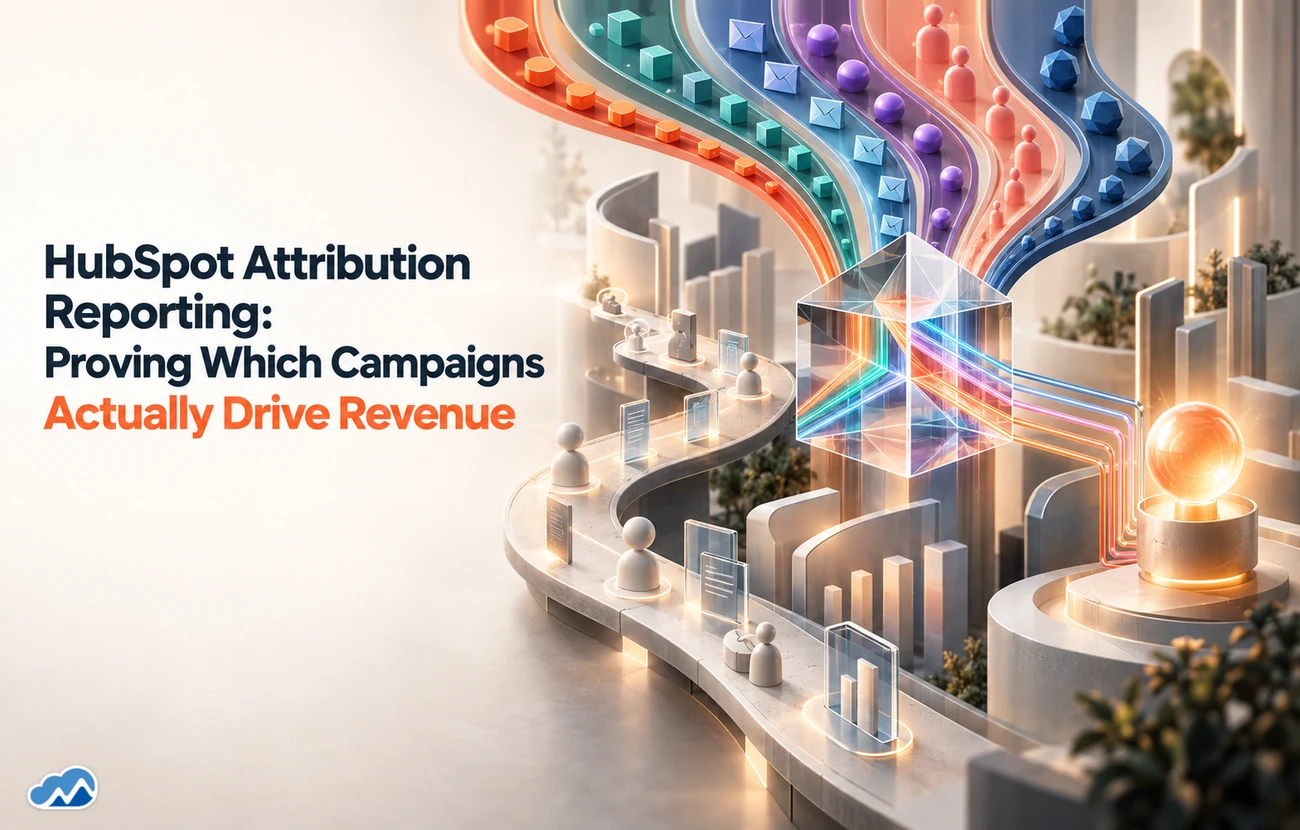
Every marketing team eventually faces the same question from leadership: which of this actually drives revenue? It is a fair question and a hard one, because the path from first click to closed deal usually runs through many touchpoints, and giving credit to the right ones is not obvious. HubSpot attribution reporting is how you answer it with evidence rather than a hunch, showing which campaigns and channels genuinely contribute to revenue. This guide explains how it works and how to use it well.
Here is how HubSpot attributionreporting proves which campaigns actually drive revenue, and how to set it upso the answers are trustworthy.
What HubSpot Attribution Reporting Is
HubSpot attribution reportingconnects revenue back to the marketing touchpoints that helped create it, soyou can see which campaigns, channels and content actually contribute to dealsrather than just generate clicks. Instead of reporting on activity, how manyemails were sent, how many visits a page got, it reports on impact, whichmarketing actually moved the needle on revenue. That shift from activity toimpact is the whole point.
Attribution is the proof behindthe demand generation covered in our guide on HubSpot marketing automation. This piece focuses on measuring which of thatactivity genuinely pays off.
Why It Matters
Without attribution, marketingbudgets get allocated on gut feel and the loudest opinion, and good campaignsget cut while weak ones survive because nobody could prove otherwise. HubSpotattribution reporting changes that by tying spend to results. It lets youdouble down on what works, stop funding what does not, and, just asimportantly, show leadership the revenue marketing actually influences. In aworld where every budget is scrutinised, being able to prove impact is whatprotects and grows a marketing team's investment.
Understanding Attribution Models
The trickiest part of HubSpotattribution reporting is deciding how to share the credit, because a dealusually has many touchpoints. Different models split it differently.First-touch attribution gives all the credit to the first interaction, usefulfor understanding what creates awareness. Last-touch gives it to the finalinteraction before the deal, useful for what closes. Multi-touch models spreadthe credit across the whole journey, which is usually the fairest picture ofhow marketing really contributes.
There is no single right model;each answers a different question. The key is choosing the model that matcheswhat you are trying to learn, and understanding that HubSpot attributionreporting is showing you a perspective on the truth, not a single objectivenumber.
How to Set It Up Well
Good attribution depends on goodfoundations. It needs clean data, so touchpoints are captured accurately. Itneeds full-funnel tracking, so the whole journey from first visit to closeddeal is visible. And it needs marketing and sales connected in HubSpot, becauseattribution only works when the revenue side of the story is joined to themarketing side. Set those up properly and HubSpot attribution reporting givesyou answers you can trust; skip them and it gives you confident numbers builton gaps.
If you want to prove which campaigns actually drive revenue, our HubSpot Services team can set it up, with the wider picture in our HubSpot Services guide. That conversation is usually shorter than people expect.
Book a call to prove your marketing's revenue
Frequently Asked Questions


























Agentforce for Financial Services: AI-Driven Banking & Insurance Solutions


































n8n Workflow Automation: From Lead Capture to CRM in Minutes, Not Hours