AI Governance in Salesforce: How to Ensure Trusted AI Across Your Org

Table of content
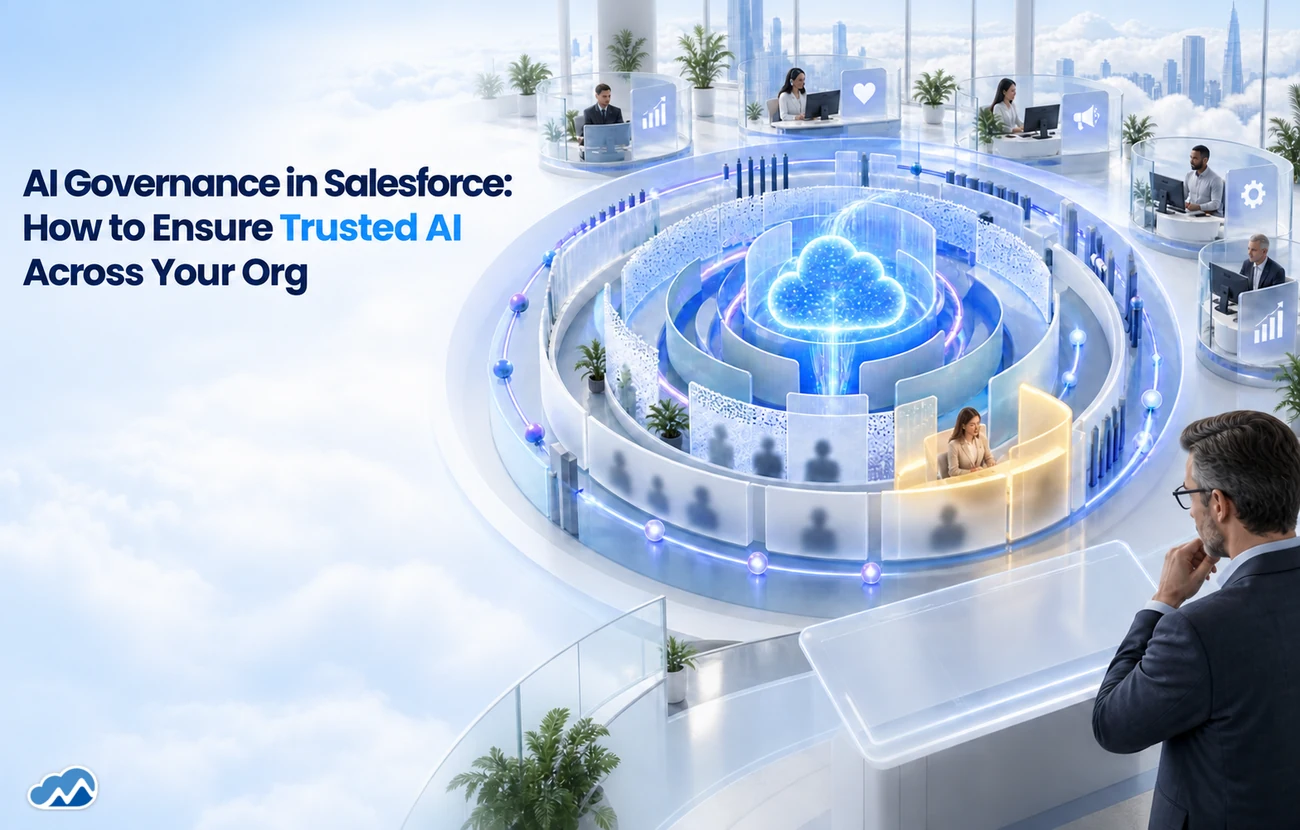
As AI moves from a novelty to the centre of Salesforce, a question that used to be optional has become essential: can you trust what your AI is doing? Agents that act on customer data, models that make predictions, all of it needs guardrails, oversight and accountability. That is what Salesforce AI governance is about, and getting it right is what separates AI that helps from AI that quietly creates risk. This guide covers how to ensure trusted AI across your org.
Here is what Salesforce AI governance involves, and how to make sure the AI running in your org can actually be trusted.
Why AI Governance Matters Now
For years, AI in Salesforce was mostly predictive and advisory, a human always decided and acted. That has changed. With Agentforce, AI agents now take action within your systems, which raises the stakes considerably. An agent acting on the wrong data, or beyond its intended scope, is a real risk rather than a hypothetical one. Salesforce AI governance is the discipline of making sure that as AI does more, it stays trustworthy, controlled and accountable.
For a grounding in what these agents are, our What Is Salesforce Agentforce guide is the primer, and the wider direction is in our Salesforce Agentforce & AI Trends 2026 guide. The more AI acts, the more Salesforce AI governance matters.
It Starts With the Data
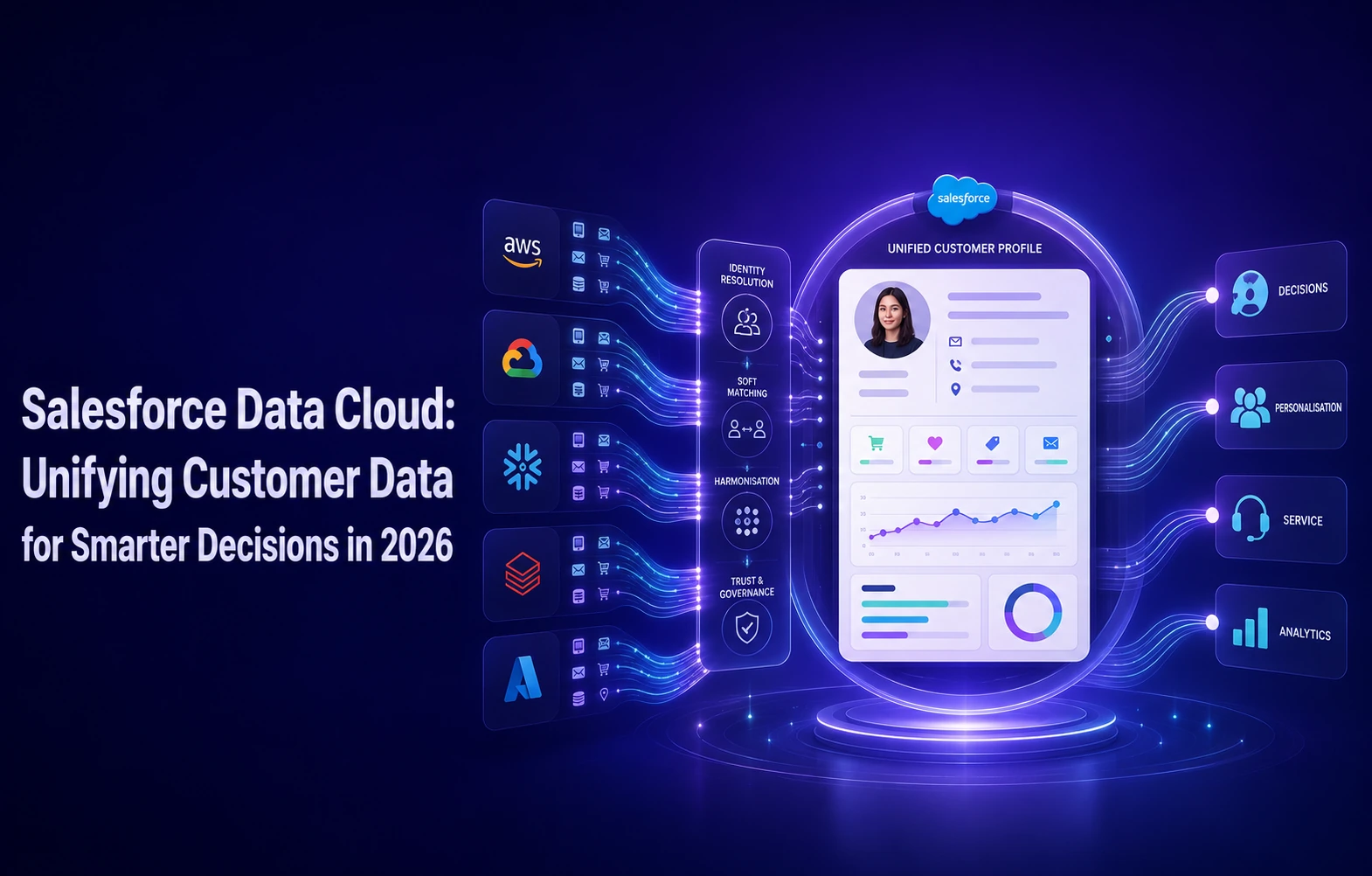
Trusted AI begins with trusted data. An AI model or agent is only as reliable as the information it reasons over, so unified, clean, well-governed data is the foundation of Salesforce AI governance. Fragmented or messy data does not just produce weak results; it produces confident, wrong ones, which is worse. Governing your data, knowing what it is, where it comes from and who can use it, is the first step to governing your AI.
This is exactly what our Salesforce Data Cloud guide is about, and it is why data and AI governance belong in the same conversation. You cannot have trusted AI on untrusted data.
Guardrails, Permissions and Human Oversight
The heart of Salesforce AI governance is control. That means clear guardrails on what AI agents can and cannot do, permissions that limit what each agent can see and touch, and human oversight for anything sensitive or high-stakes. Agents should act within your existing permissions and business rules, so they can only do what a given user is allowed to do, and there should always be a human in the loop where judgement or risk demands it. Humans direct, agents execute, and the org governs, that is the model to aim for.
Transparency and Accountability
Trust also requires knowing what your AI did and why. Good Salesforce AI governance includes audit trails, so every AI action is traceable, and transparency about how decisions are made. When something goes wrong, or a regulator or customer asks, you need to be able to show what happened. Accountability is not a nice-to-have in AI governance; it is the difference between a system you can defend and one you cannot.
Governance Becomes Harder With Multiple Agents
As organisations move from a single agent to several working together, Salesforce AI governance gets more demanding, not less. Every additional agent is another thing to scope, permission and monitor, and the coordination between them adds its own complexity.
Our Multi-Agent AI in Salesforce guide explains that shift, and the governance lesson is clear: build the controls in as you scale, not after. An AI workforce without governance is just risk at greater volume.
Frequently Asked Questions











Agentforce for Financial Services: AI-Driven Banking & Insurance Solutions












.webp)









n8n Workflow Automation: From Lead Capture to CRM in Minutes, Not Hours



%20(1).webp)