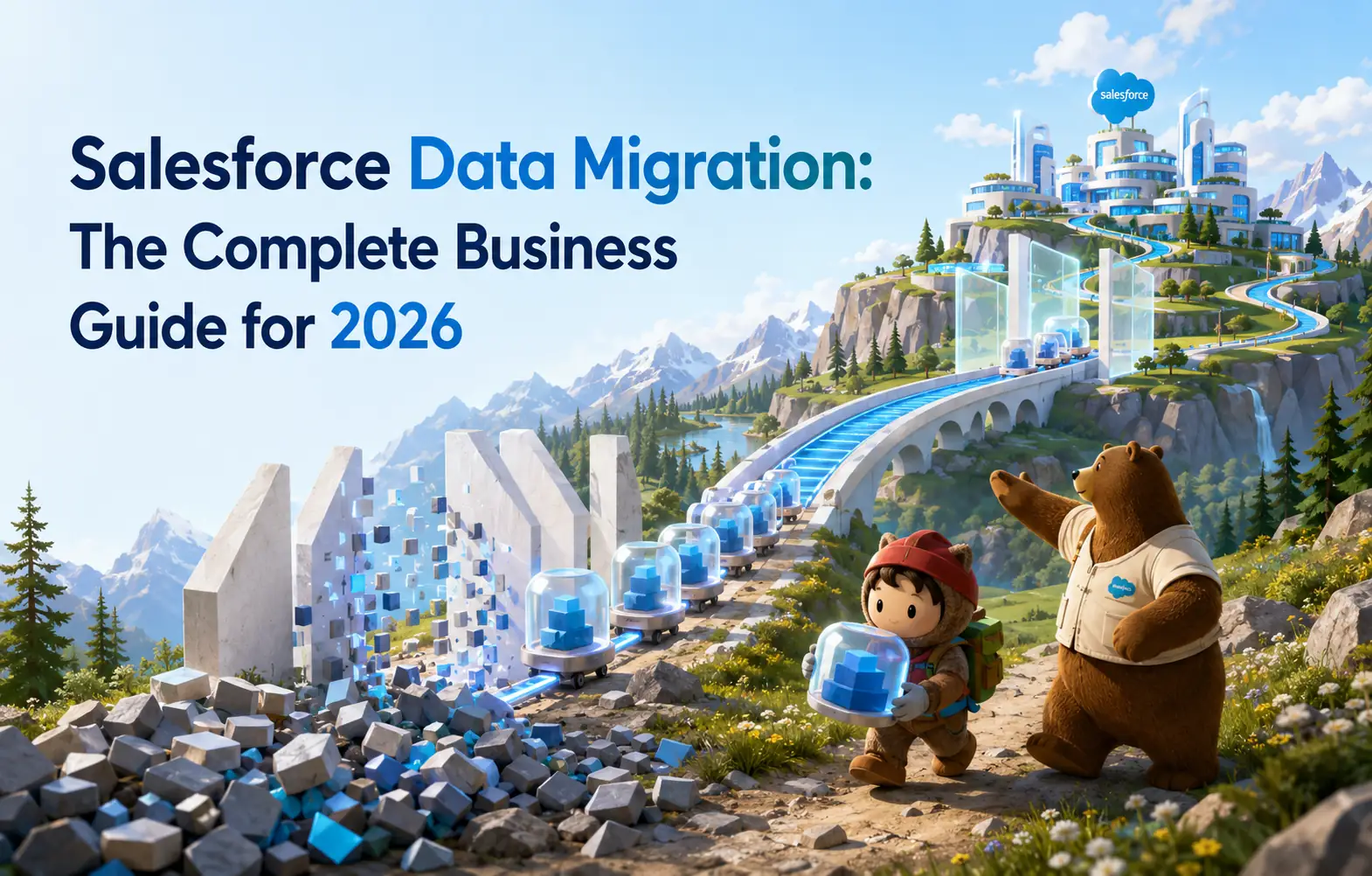
Salesforce CRM Data Migration: 7 Common Pitfalls and How to Avoid Them

Table of content
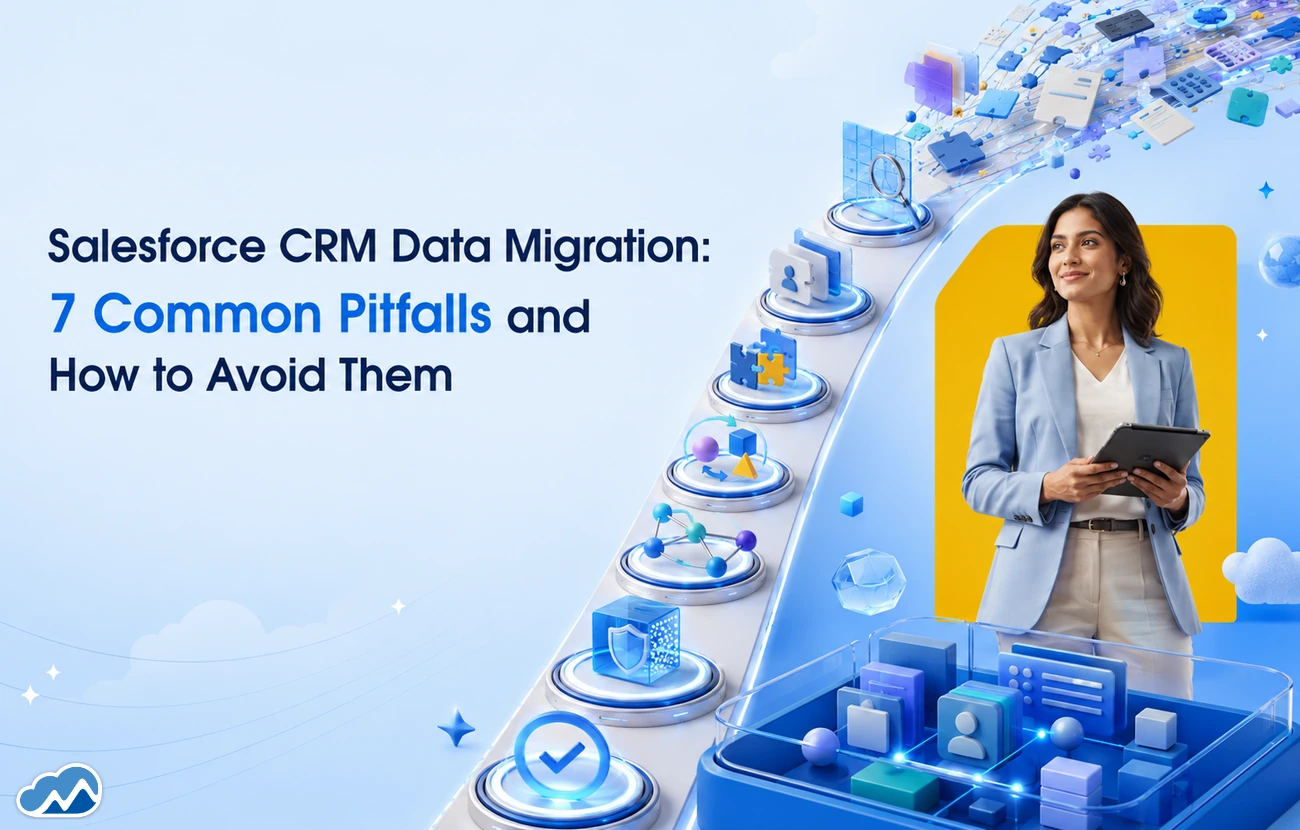
Here is the uncomfortable truth about a Salesforce CRM data migration. It almost never goes wrong because the technical work was hard. It goes wrong because decisions were skipped, corners were cut, and problems that were cheap to fix early turned expensive later. The good news is that these failures are predictable, which means they are avoidable.
If you are moving data into Salesforce, from a spreadsheet, an old CRM, or a tangle of both, these are the seven pitfalls we see most often, and exactly how to stay out of each one.
1. Migrating Everything Just Because You Can
The most common mistake is treating a Salesforce CRM data migration as a lift-and-shift of every record you have ever held. More data is not more value. It is more failure points, more storage, more cost, and more noise in every report you run afterwards. Old, stale, duplicate records do not get better by moving into a shiny new system. They just make the new system messy on day one.
How to avoid it: decide what actually needs to move before you move anything. Migrate the data people will genuinely use, archive the rest, and treat the migration as a chance to clean house rather than carry the mess forward.
2. No Field Mapping Agreed Before You Start
This is where budgets quietly disappear. If nobody has agreed exactly which field maps to which, in detail, developers hit an unanswered question, guess, and get it wrong, or they stop and wait while two teams argue. Either way the project drifts. "Customer data" is not a field map. The actual, column-by-column list is.
How to avoid it: agree the field mapping on paper before a single record moves. Which fields go where, in which direction, and what happens to anything that has no clean home in Salesforce. Boring work, but it is the difference between a smooth migration and a stalled one.
3. Skipping De-Duplication
Every source system has duplicates. The same customer entered three times with slightly different spellings, the same company under two names. Move that straight into Salesforce and you have simply centralised the confusion, then built reports and automations on top of it. A Salesforce CRM data migration that skips de-duplication is storing up a problem that gets harder to fix the longer it runs.
How to avoid it: clean and de-duplicate before and during the migration, with clear rules for what counts as a duplicate and what wins when records conflict. AI-assisted matching helps here, but the rules still have to be your decision.
4. Testing in Production Instead of a Sandbox
Running a live migration straight into your production org, with no trial run, is a decision you make exactly once. When something goes wrong, and on a first attempt something usually does, you are now fixing it in the environment your business actually depends on.
How to avoid it: always test the migration in a sandbox first. Run it, check the results, find the surprises, fix the mapping, and only then run it for real. The sandbox is where you want to discover problems, not in front of your users.
5. Forgetting to Decide About Historical Data
New records tend to flow cleanly. Then someone asks about last year's orders, or a closed deal from three years ago, and the answer is that the history was never brought across. Historical data is a decision, not an afterthought, and it is far cheaper to make that decision early than to go back for it later.
How to avoid it: decide up front how much history comes with you, and in what shape. Some of it you migrate, some you archive for reference, some you retire. Just make it a deliberate choice rather than a gap someone discovers in a meeting.
6. No Validation After the Migration Runs
Moving the data is only half the job. Plenty of migrations are declared finished the moment records land, with nobody actually checking that they landed correctly. Then a field is off, a relationship broke, a number does not tie out, and trust in the whole system erodes quietly from there.
How to avoid it: build validation into the plan. Check record counts, spot-check important fields, confirm relationships held, and make sure the numbers reconcile against the source. A Salesforce CRM data migration is not done when the data moves. It is done when you have proven the data is right.
7. No Owner or Plan After Go-Live
A migration is not the finish line. Data quality decays, users create records in new ways, and without someone owning the org, the clean system you just built starts drifting within months. Many teams pour effort into the migration and then leave the result to fend for itself.
How to avoid it: decide who owns data quality after go-live, and put light-touch rules and automation in place to keep things tidy. The migration gets you a clean start. Ongoing ownership is what keeps it clean.
The Pattern Behind All Seven
Notice that almost none of these pitfalls are technical. They are decisions, agreed too late or not at all. That is genuinely reassuring, because it means a successful Salesforce CRM data migration is mostly about doing the thinking before the doing. Agree what moves, map it properly, clean it, test it in a sandbox, decide about history, validate the result, and own it afterwards. Do that, and the build itself is usually the straightforward part.
If you are weighing up outside help for the move, our guide on how to choose the right Salesforce consulting partner walks through what to look for.
Frequently Asked Questions
.webp)
.webp)
.webp)


















Agentforce for Financial Services: AI-Driven Banking & Insurance Solutions














.webp)

















n8n Workflow Automation: From Lead Capture to CRM in Minutes, Not Hours





%20(1).webp)