Salesforce Health Cloud Integration: Connecting Your Care Systems Seamlessly

Table of content
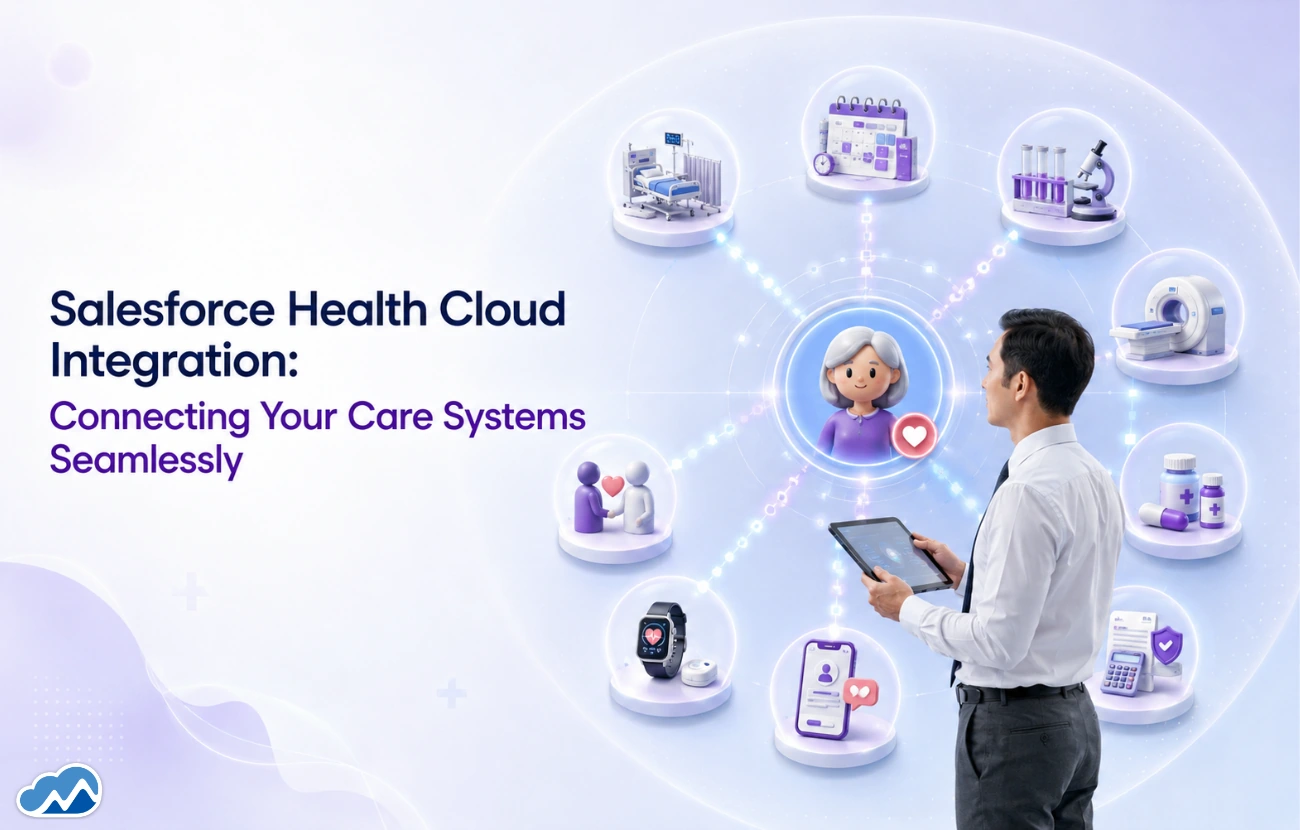
A patient sees a specialist, has bloods taken at a lab, picks up a prescription, and gets a follow-up call from a coordinator. Four touchpoints, and in a lot of healthcare organisations, four systems that never compare notes. The result is the patient repeating themselves, staff chasing information across screens, and details slipping through the gaps between systems that were never designed to talk. Salesforce Health Cloud integration is how you close those gaps, and this guide covers what it actually involves.
Here is what connecting your care systems really means, why it is the hard part of any Health Cloud project, and how to approach it without cutting the corners that matter in healthcare.
What Salesforce Health Cloud Integration Means
Salesforce Health Cloud integration is the work of connecting Health Cloud to the other systems that hold your clinical and operational data, so the complete picture of a patient lives in one place instead of being scattered. Health Cloud gives you a patient-centred view, but that view is only as complete as the data flowing into it, which is exactly why the integration is what decides whether it works.
Health Cloud itself, and how to set it up, is covered in our Salesforce Health Cloud Implementation Guide. Where Health Cloud sits among Salesforce's industry solutions is in our Salesforce for Every Industry guide. This piece focuses on the integration that connects it to the rest of your care systems.
Why Integration Is the Hard Part
Healthcare runs on more systems than almost any other sector. There is usually an electronic health record at the centre, plus separate systems for labs, scheduling, billing, pharmacy and patient communication, and often several of each across departments or sites. Getting Health Cloud to exchange data cleanly with those, in the right direction, at the right time, is genuinely demanding work, and it is where these projects tend to succeed or stall.
This is not a plug-and-play exercise. A sound Salesforce Health Cloud integration means deciding which systems feed which data, how records match to the same patient, and what happens when two systems disagree. Those are careful decisions, and they matter more in healthcare than almost anywhere because the cost of getting a patient record wrong is high.
Compliance Comes First, Not Last
In healthcare this is non-negotiable. Every connection you build is a path that patient data travels along, so a Salesforce Health Cloud integration has to be designed around HIPAA and the relevant privacy rules from the very start. That means secure data exchange, controlled access so each system and user sees only what they should, clear consent handling and full audit trails across every integration point.
A partner who treats compliance as something to check at the end is a real risk in this sector. The safe integrations are the ones where security and privacy were designed in from the first connection, not retrofitted before go-live.
What to Connect, and Why
A few Salesforce Health Cloud integration patterns come up in almost every organisation.
The electronic health record. The big one. Connecting the EHR so clinical context is visible alongside the coordination and engagement work Health Cloud handles, without duplicating or compromising the clinical system of record.
Scheduling and labs. So appointments, results and follow-ups flow into the patient view, and coordinators are working from current information rather than yesterday's.
Billing and administration. So the operational side of care is joined up and patients are not caught between clinical and financial systems that disagree.
Patient communication channels. So outreach, reminders and messages are logged against the right patient and nothing is sent blind.
Where Data Cloud Fits
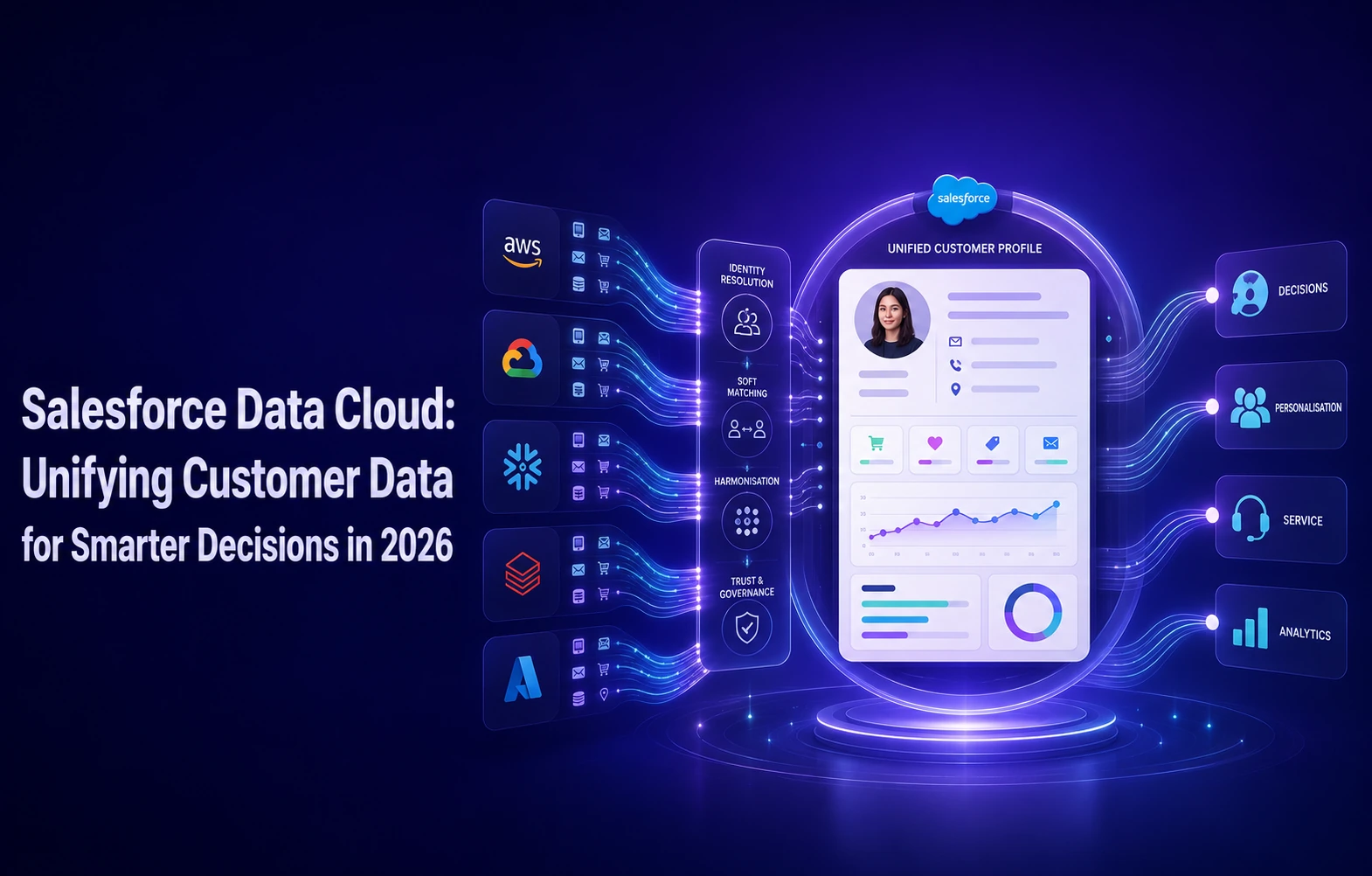
For larger healthcare organisations, integration often runs alongside unifying data more broadly. Connecting systems point to point gets you exchange between them, but unifying that data into one real-time profile of each patient is a further step that makes the whole picture usable in the moment.
That is what our Salesforce Data Cloud guide is about, and it is a natural companion to Salesforce Health Cloud integration when the goal is a genuinely complete, current view of each patient rather than a set of separate connections.
The Integration Work Itself
Much of this is real integration engineering: APIs, secure data exchange, matching rules and error handling so a failed sync surfaces as an alert rather than a silent gap. Healthcare raises the bar on all of it, because reliability and security are not optional when patient data is involved.
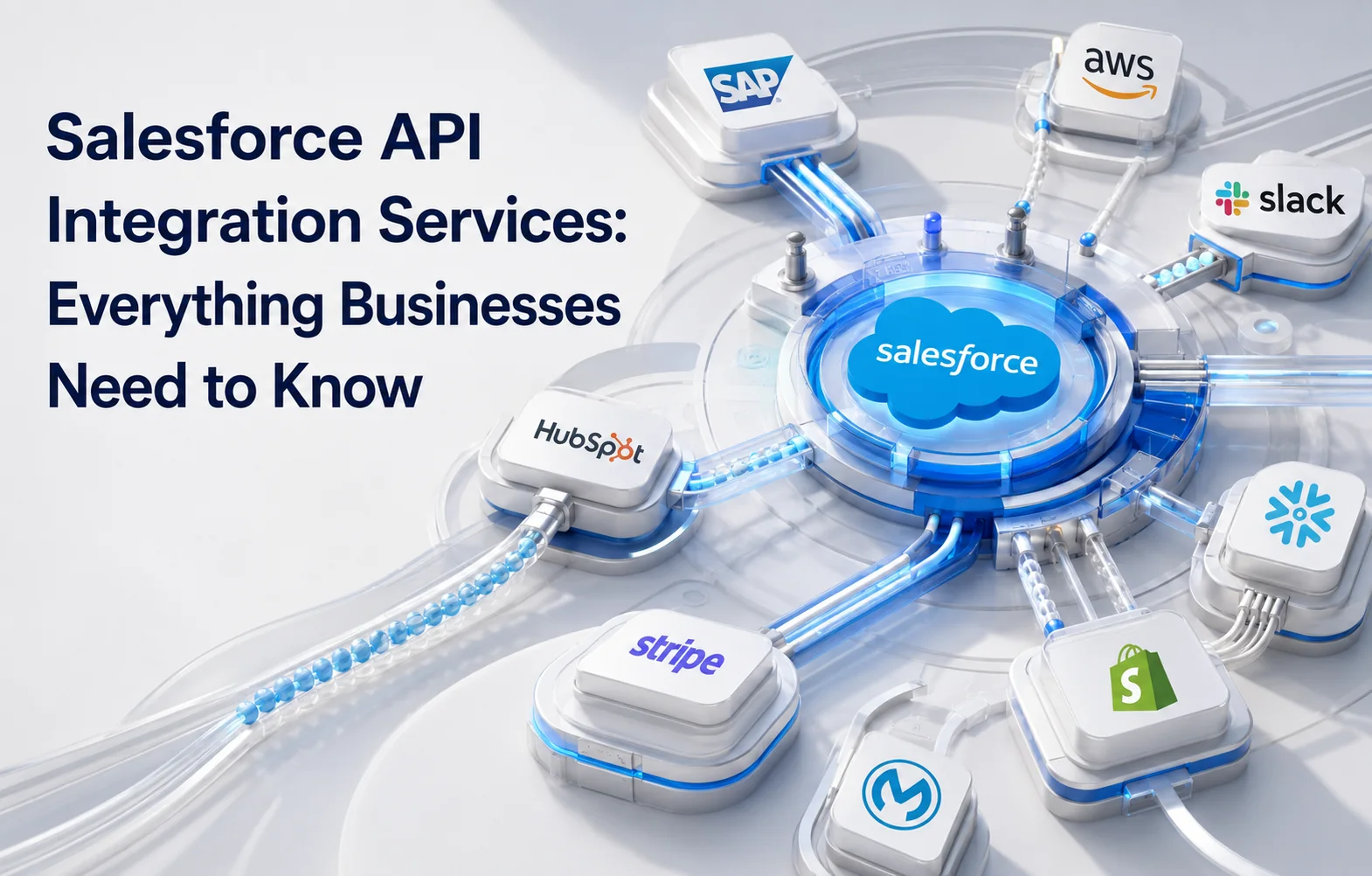
The underlying discipline is the same one covered in our Salesforce API Integration Services guide, applied with the extra care that healthcare demands. And because the value of any integration depends on the quality of the data flowing through it, joining systems and cleaning data tend to go hand in hand.
Where AI Fits, Carefully
Once systems are connected and data is unified, AI can add operational value in healthcare, provided it stays in its lane. The safe uses are administrative rather than clinical: flagging patients who may miss appointments so outreach can focus there, summarising interaction history so staff are briefed before a call, and handling routine coordination tasks. Deployed with people firmly in the loop and on well-governed data, it helps. It should never make clinical decisions it is not fit to make. A credible Salesforce Health Cloud integration keeps that boundary clear.
Frequently Asked Questions
Agentforce for Financial Services: AI-Driven Banking & Insurance Solutions










.webp)










n8n Workflow Automation: From Lead Capture to CRM in Minutes, Not Hours



%20(1).webp)