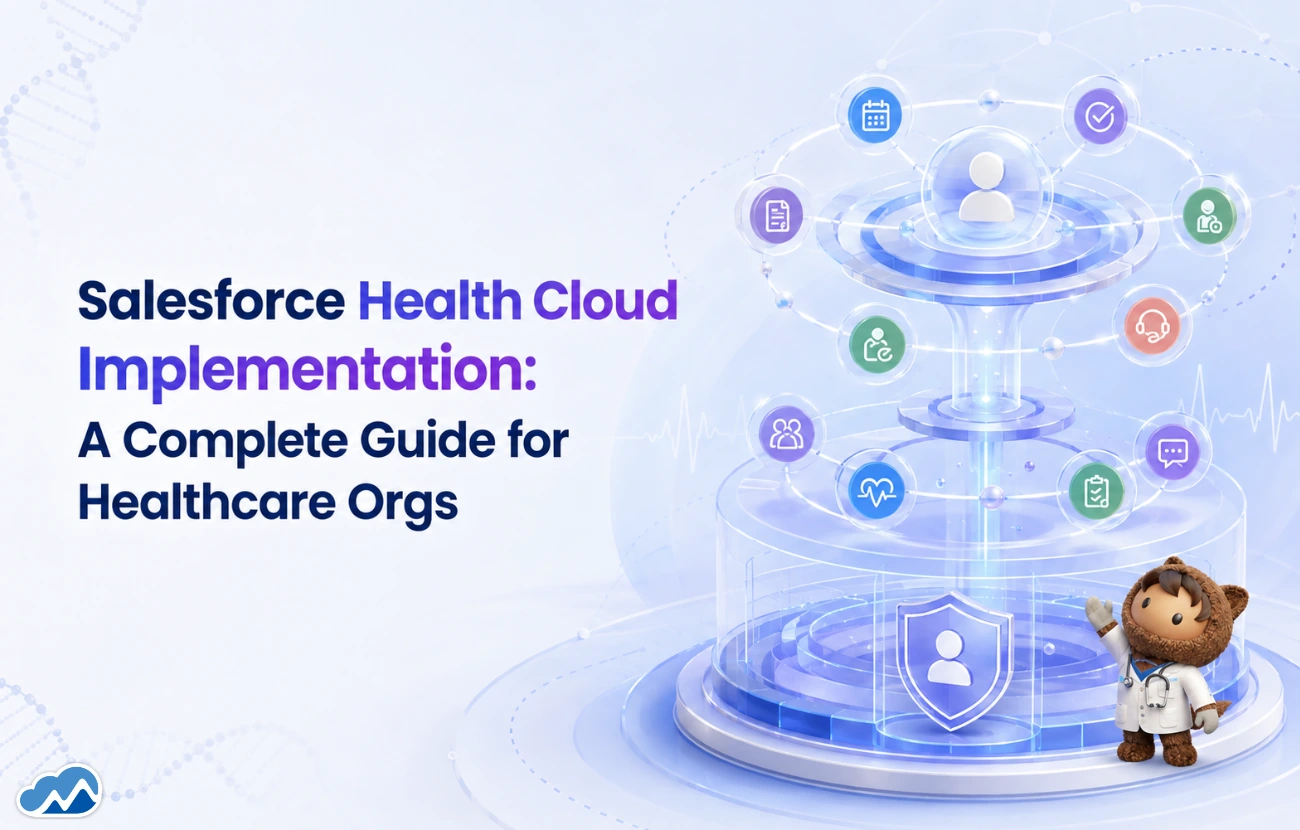
Salesforce Health Cloud Implementation: A Complete Guide for Healthcare Orgs

Table of content
Healthcare organisations do not fail at technology because the tools are weak. They struggle because the systems do not join up around the patient, and a generic setup rarely fixes that. Salesforce Health Cloud implementation is meant to close that gap, but only when it is done with the sector's realities in mind: sensitive data, strict compliance, and workflows unlike any other industry. This is a complete, practical guide to getting a Health Cloud implementation right for a healthcare organisation.
Here is what a Salesforce Health Cloud implementation actually involves, and where these projects succeed or come unstuck.
What Salesforce Health Cloud Implementation Means
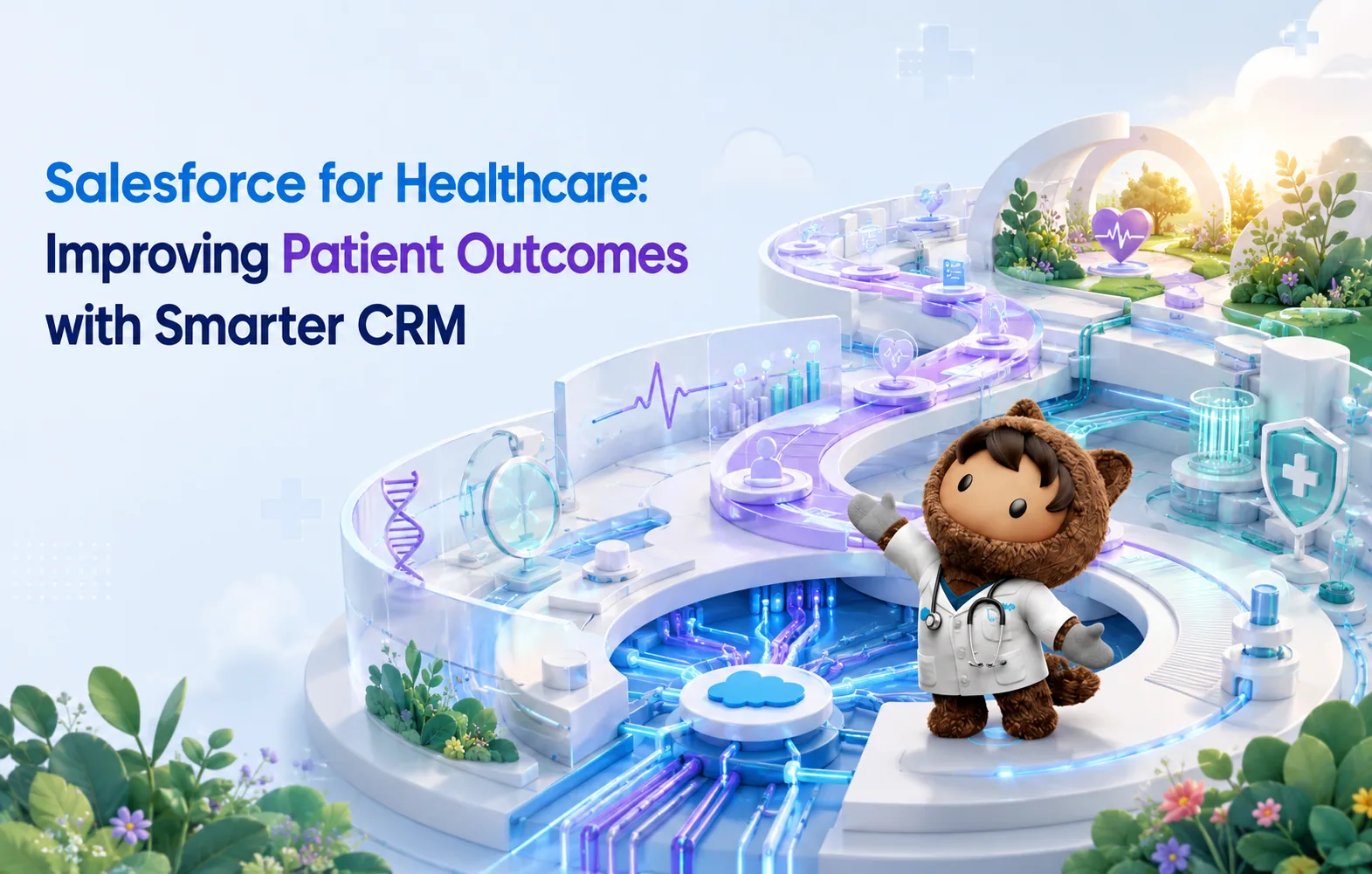
Health Cloud is the version of Salesforce built for healthcare, centred on a complete view of the patient, their history, interactions, care team and journey, rather than a generic contact record. A Salesforce Health Cloud implementation is the work of setting that up around how your organisation actually delivers and coordinates care, so people stop falling through the cracks.
Health Cloud is part of the wider set of industry-tailored Salesforce solutions covered in our Salesforce for Every Industry guide, and the healthcare-specific picture is in our Salesforce for Healthcare guide. This piece focuses on the implementation itself.
Compliance Comes First, Not Last
In healthcare this is non-negotiable. Patient data is among the most sensitive there is, so a Salesforce Health Cloud implementation has to be built around HIPAA and the relevant privacy rules from the very start, not added before launch. That means proper security architecture, controlled access so people see only what they should, clear consent handling and full audit trails.
A partner who treats compliance as a final checkbox is a genuine risk in this sector. Getting it engineered in from day one is a large part of what makes a healthcare implementation reward real expertise.
What a Health Cloud Implementation Involves
A sound project follows a clear shape. It starts with discovery, mapping how care and communication actually flow through your organisation and where patients get lost. Then the data model and the patient view are designed around that reality, with compliance built throughout. Care coordination workflows are set up so tasks and hand-offs between team members do not fall through gaps. Patient engagement journeys are built to keep people connected to their care. And integration ties Health Cloud to the systems that hold clinical and operational data, so the patient view is complete and current.
That integration work matters as much as the build, and it often runs alongside moving existing patient data across cleanly, which our Salesforce Data Migration guide covers. Health Cloud also draws on the same service foundations as our Service Cloud Implementation Roadmap, since coordinated patient support has a lot in common with well-run service operations.
Where AI Fits, Carefully
AI has real value in healthcare when it stays in its lane. The safe, high-value uses are operational rather than clinical: predicting which patients may miss appointments so outreach can focus there, summarising interaction history so staff are briefed before a call, and handling routine administrative tasks. Deployed with people firmly in the loop and on well-governed data, it genuinely helps. It should never wander into clinical decisions it is not fit to make. Any credible Salesforce Health Cloud implementation understands that line clearly.
Adoption Decides the Outcome
As with any Salesforce project, a Health Cloud implementation that clinical and administrative staff will not use is a failed one, however elegant the build. Designing around how busy healthcare teams actually work, and planning the rollout properly, is what turns the system into something that improves both the patient experience and day-to-day efficiency.










.webp)






















%20(1).webp)