Top 10 Questions to Ask Before Hiring a Salesforce Consulting Firm

Table of content
Hiring the wrong Salesforce consulting firm is an expensive mistake, and it rarely looks like a mistake at the start. The proposal sounds confident, the timeline looks reasonable and the team on the sales call seems sharp. Then three months in, the person who ran that sales call has vanished, the build doesn't match what you actually asked for, and nobody can tell you what happens if you need support after launch. The good news is that almost every one of these problems shows up in the answers to a handful of direct questions, asked before you sign anything. This guide walks through the ten questions worth asking, and why each one actually matters.
Does This Sound Like a Risk You're Worried About?
Before the questions themselves, a quick check. See how many of these describe your current worry.
- You've had a bad experience with an outside vendor before, and you're nervous about repeating it.
- The proposal you're looking at is light on specifics and heavy on general promises.
- Nobody's told you who will actually be doing the work day to day.
- You're not sure how support and maintenance get handled once the project is technically finished.
If two or more of those sound familiar, the ten questions below are exactly the ones to bring to your next call.
1. How Do You Scope a Project, and What Happens After the Contract Is Signed?
A confident, specific answer here tells you a lot. A solid Salesforce consulting firm will describe a real discovery phase: sitting with your team, mapping your actual process, and documenting requirements before writing a single line of configuration. A vague answer, something like “we'll figure it out as we go,” is a warning sign. Scope drift is one of the most common reasons Salesforce projects run over budget, and it almost always starts with a discovery phase that got rushed or skipped entirely.
2. Can We See Examples of Work Similar to Ours, Not Just a General Portfolio?
Every firm has a portfolio page full of logos. What matters more is whether they've done work that resembles your specific situation: your industry, your data complexity, your scale. Ask for a walkthrough of a comparable project, including what went wrong and how it got fixed. A firm that only wants to talk about their wins, and gets vague the moment you ask about a challenge, is telling you something worth hearing.
3. Who Exactly Will Be on Our Project, and Will That Team Stay Consistent?
This is the question that catches the most people off guard later. The person pitching you on the sales call is often not the person who ends up doing the actual configuration work. Ask directly who will be assigned, what their experience level is, and whether that team is expected to stay consistent for the life of the project. Constant team turnover mid-project is one of the fastest ways a build loses coherence, since each new person inherits decisions they didn't make and don't fully understand.
4. What's Your Approach to Data Migration Specifically?
Data migration deserves its own direct question, not a passing mention buried inside a broader implementation pitch. Ask how they handle deduplication, how they validate that everything landed correctly, and whether they test in a sandbox before touching production data. A firm that treats migration as an afterthought is setting you up for a bad first impression of your new system, since a Salesforce org full of duplicate or incomplete records erodes trust fast. If you want a deeper sense of what a properly run migration actually looks like step by step, our guide on Salesforce Data Migration covers the full process in detail.
5. How Do You Handle Change Requests Once the Build Is Underway?
Requirements shift. That's normal on almost every project of real size. What matters is whether the firm has a defined, transparent process for handling changes, including how it affects timeline and cost, versus an informal approach where scope quietly balloons and nobody notices until the invoice arrives. Ask to see an example of how a past change request was documented and priced. The answer tells you whether you're dealing with a firm that manages expectations or one that manages surprises.
6. What Does Support and Maintenance Look Like After Go Live?
A launch date isn't the finish line, even though plenty of proposals are written as if it is. Ask specifically what happens the week after go live, and the months after that. Is there a defined support window included in the contract? What's the process for reporting a bug versus requesting a new feature? Who do you actually call if something breaks at nine on a Tuesday morning? A capable Salesforce consulting firm should have a clear, specific answer here, not a shrug and a promise to “figure it out.” Our breakdown of Salesforce Support & Maintenance is worth a read if you want a fuller picture of what good post-launch coverage actually includes.
7. How Do You Handle a Project That's Falling Behind Schedule?
Every project can slip. The honest firms tell you that upfront instead of pretending it won't happen to yours. What separates a firm worth hiring is how they respond when it does: do they flag the risk early and give you options, or do they stay quiet until the deadline arrives and the excuses start? Ask for a specific example of a project that ran behind and how they communicated it. A firm that can't answer this honestly probably hasn't been honest with a client about it before either.
8. What's Included in the Price, and What Typically Gets Billed Extra?
Pricing structures vary a lot across firms, fixed fee, time and materials, retainer, and each has real trade-offs. What matters more than the structure itself is transparency. Ask them to walk through exactly what's covered in the quoted number and what commonly ends up as a separate line item: data migration, third-party integrations, user training, ongoing support. A firm that's cagey about this during the sales process tends to stay cagey about it once you're a client and less able to walk away.
9. Can You Show Us Documentation From a Past Project?
Good documentation is one of the clearest signs of a disciplined team, and it's something you can actually verify before signing anything. Ask to see an example of technical documentation, or a handover document, from a completed engagement, with identifying details removed if needed. If a firm can't produce anything, that's a strong signal about what your own project's documentation will look like once the engagement ends and you're on your own.
10. What Happens If the Relationship Isn't Working?
Nobody likes asking this question during a sales pitch, but it matters more than almost any other item on this list. What does the exit process actually look like if things aren't going well? Do you own your own configuration and data outright? Is there a notice period, and what happens to work in progress if you decide to leave? A firm confident in the value they deliver won't flinch at this question. One that gets defensive or evasive is telling you something about how much leverage you'd actually have if the relationship soured.
Where These Conversations Usually Go Wrong
A few patterns show up repeatedly when businesses skip this kind of due diligence.
- Taking the sales pitch at face value. The person selling you the engagement isn't always the person delivering it, and their confidence isn't a substitute for specific answers to specific questions.
- Focusing only on price. The cheapest quote often hides costs that show up later: rework, scope disputes, or a support gap nobody planned for.
- Not asking for references who can speak candidly. A reference hand picked by the firm will say nice things by default. Ask if you can speak to someone who had a bumpier project, and see how the firm reacts to that request.
- Skipping the exit conversation entirely. Nobody wants to plan for a relationship ending before it's begun, but skipping that conversation is exactly how businesses end up stuck with a vendor they've outgrown.
A properly vetted Salesforce consulting firm should be able to answer all ten questions above clearly and specifically, without needing to check with someone else or dodge into generalities.
What a Strong Answer Actually Sounds Like
It helps to know what you're listening for, not just what to ask. A strong answer is specific: names, timelines, real numbers, concrete examples from actual past work. A weak answer stays abstract: “we have a proven process,” “our clients love working with us,” phrases that sound reassuring but tell you nothing you could verify. If you find yourself asking a follow up question and getting the same vague reassurance twice in a row, that's worth paying attention to. The firms worth hiring tend to welcome the scrutiny, since they know their answers hold up.
Red Flags Worth Taking Seriously
Beyond the ten questions themselves, a few signals tend to predict trouble regardless of how the firm answers directly. Pressure to sign quickly, before you've had time to check references, is rarely a good sign from a firm confident in its own value. Reluctance to put commitments in writing, preferring verbal promises over anything documented in the contract, tends to matter later when memories of what was agreed start to diverge. And a proposal that reads almost identically to a generic template, with your company's name swapped in but nothing reflecting your actual process, suggests a firm that hasn't really engaged with your specific situation yet.
Why This Matters More With Salesforce Than With a Simpler Tool
Salesforce is powerful specifically because it's flexible, and that same flexibility is what makes hiring the wrong firm so costly. A poorly configured Salesforce org doesn't just look messy. It can quietly encode bad assumptions about your business into custom fields, automations, and permission structures that take months to untangle later, long after the firm that built it has moved on to another client. The room Salesforce gives a firm to do things well is the same room it gives them to do things badly, and you often can't tell the difference until you're deep into using the system day to day.
A Simple Way to Compare Your Shortlist
Once you've asked all ten questions across a few firms, it helps to compare answers side by side rather than trusting your memory of separate conversations held days apart. Write down each firm's answer to the team consistency question, the data migration question, and the exit question specifically, since those three tend to reveal the most about how a firm actually operates day to day. If one firm's answers are noticeably more specific and verifiable across all three, that's usually a stronger signal than anything on their website or in their marketing materials.
How This Fits Into the Bigger Picture
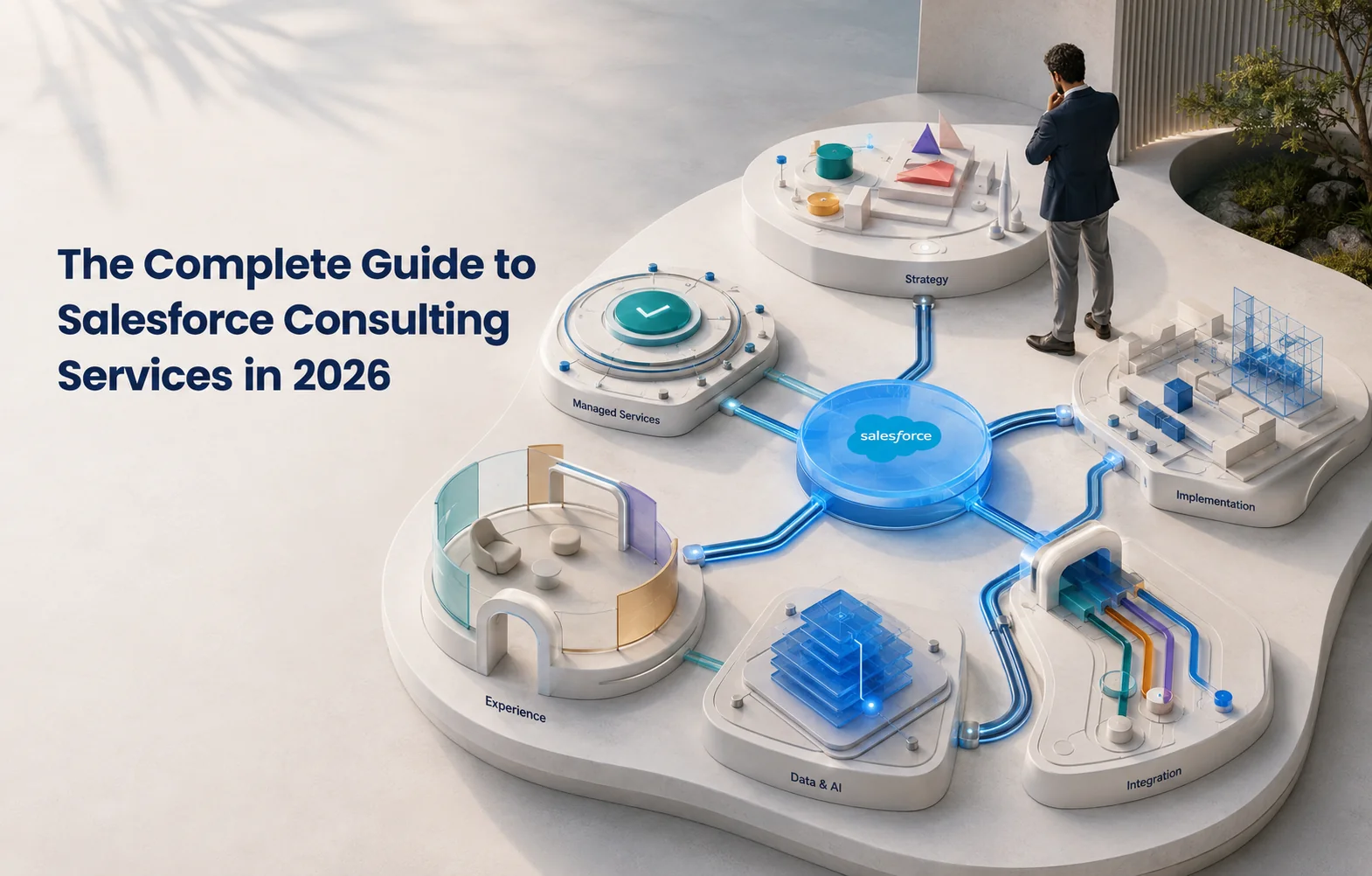
These ten questions are really about one thing: making sure the firm you hire treats your project the way they described it during the pitch, not just during the sales call but for the whole life of the engagement. For the fuller picture of what a properly run engagement covers from first conversation through ongoing support, our Complete Guide to Salesforce Consulting Services walks through the full scope of what a good partnership actually looks like.
Choosing a Salesforce consulting firm isn't about finding the one with the flashiest pitch deck. It's about finding the one whose answers to these ten questions hold up under a little pressure, because a firm that's honest and specific before you've signed anything is far more likely to stay that way once you have.
Frequently Asked Questions
.webp)

.webp)
.webp)


















Agentforce for Financial Services: AI-Driven Banking & Insurance Solutions














.webp)













n8n Workflow Automation: From Lead Capture to CRM in Minutes, Not Hours



%20(1).webp)