Salesforce Commerce Cloud for Retail: Features, Pricing & Implementation

Table of content
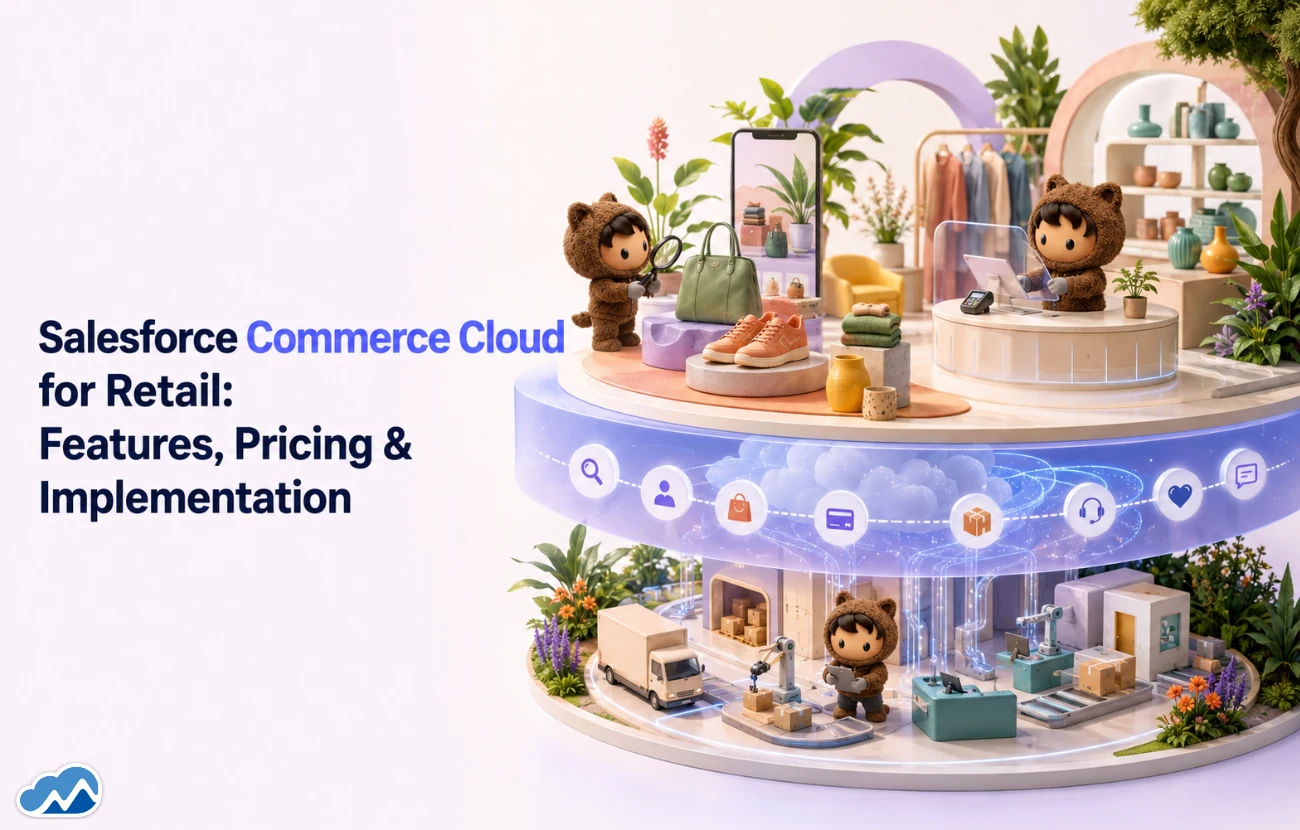
If you sell to consumers at any real scale, the storefront is only the visible tip of a much bigger system. Behind it sit catalogue, pricing, promotions, order management and the customer data that ties a shopper's browsing, buying and returns together. Salesforce Commerce Cloud for Retail is built to run all of that as one connected platform rather than a patchwork of tools. This guide covers what it does, how the pricing model works, and what a real implementation involves, without the sales gloss.
Here is a practical look at Salesforce Commerce Cloud for Retail: the features that matter, how it is priced, and how to approach implementing it.
What Salesforce Commerce Cloud for Retail Is
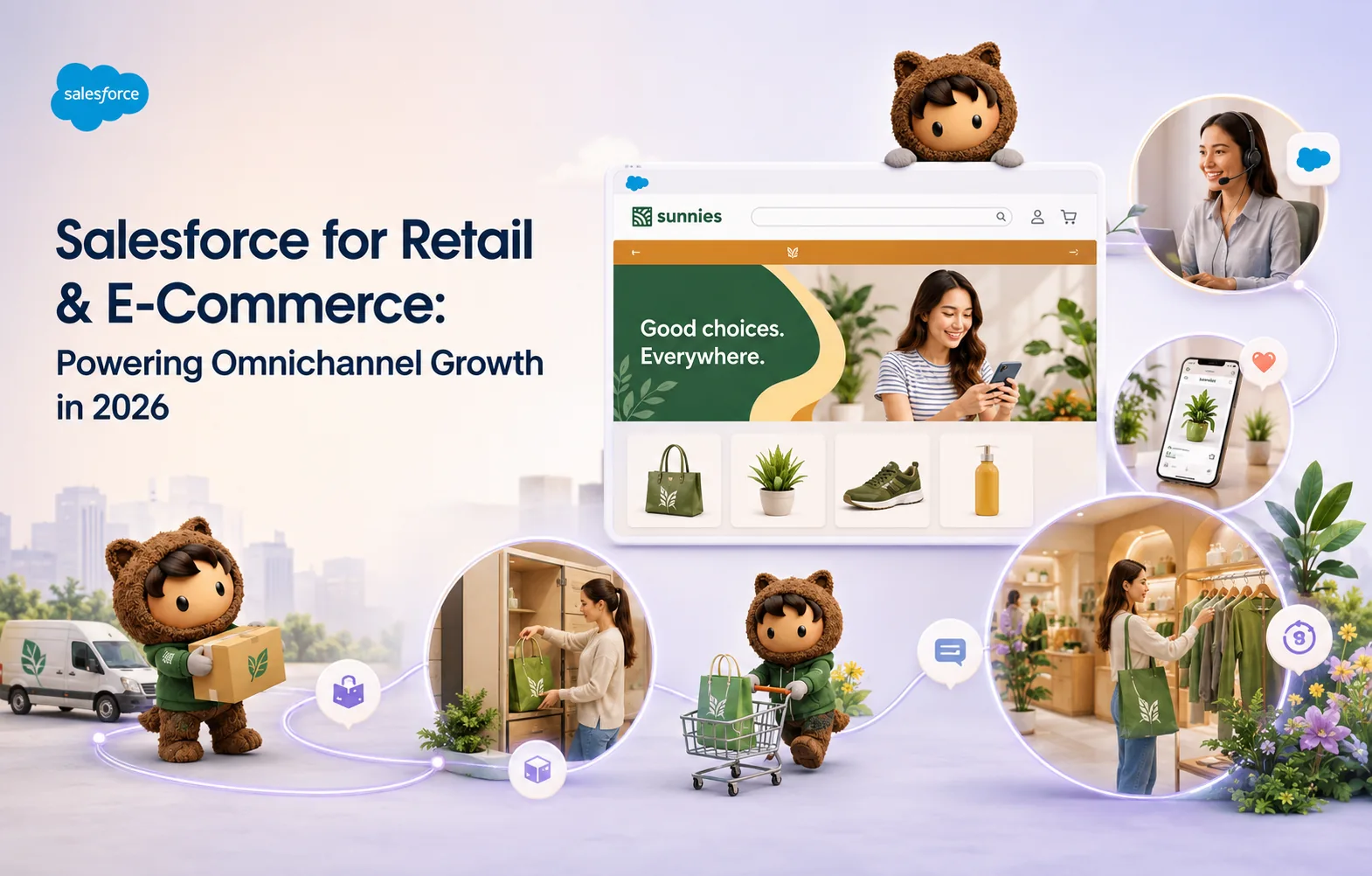
Salesforce Commerce Cloud for Retail is Salesforce's platform for running consumer-facing digital commerce, the storefront and everything behind it, connected to the wider Salesforce customer view. The point that separates it from a standalone e-commerce tool is that connection: the same shopper can be recognised across online, store and service, so commerce is part of one customer relationship rather than a silo.
The wider retail picture is on our Salesforce for Retail & E-Commerce guide, and the platform detail is on our Commerce Cloud page. This piece focuses on the features, pricing and implementation specifically.
Key Features
A few capabilities do most of the heavy lifting in Salesforce Commerce Cloud for Retail.
Storefront and merchandising. The tools to build and run a digital storefront, manage the product catalogue, and merchandise it, promotions, categories, search, without rebuilding the site every time.
Personalisation. Because it sits on the customer data, the store can tailor what each shopper sees, recommendations and offers shaped to the individual rather than the average, which is where a lot of conversion uplift comes from.
Order management. Handling orders cleanly across channels, so stock and fulfilment stay accurate and a customer is never promised something that sold out.
Omnichannel and mobile. Connecting online and in-store into one experience, with mobile treated as a first-class channel rather than an afterthought, because that is where a large share of retail traffic now sits.
AI and agents. Increasingly, AI-driven recommendations and Agentforce commerce and service agents that can handle routine shopper questions, order status and returns, around the clock.
How Salesforce Commerce Cloud for Retail Is Priced
This is the part retailers most want clarity on, so here is the honest shape of it. Salesforce Commerce Cloud for Retail is typically priced on a model tied to the value flowing through it, most often a percentage of the gross merchandise value your store transacts, rather than a flat per-user licence. In practice that means pricing scales with your sales, and the exact terms are quoted based on your volume and needs rather than published as a fixed number.
The practical takeaway is that Commerce Cloud is an investment sized to serious retail volume, and the total cost of ownership includes the implementation and the ongoing running, not just the platform. Because the pricing is quote-based and depends on your specifics, the sensible step is a proper scoping conversation rather than assuming a figure.
If you are weighing Commerce Cloud against other options, or trying to understand where it fits among Salesforce's many clouds and their different pricing models, our Salesforce Clouds Explained guide is a useful comparison. It helps set expectations before you get into quotes.
What Implementation Involves
Implementing Salesforce Commerce Cloud for Retail is a real project, not a switch-on. It starts with the storefront and catalogue, but the value comes from what surrounds it: connecting the customer data so shoppers are recognised across channels, integrating with order management, payments, inventory and often an ERP, and building the personalisation and merchandising that make the store convert.
The most important design decision is unifying the customer. A storefront that does not connect to the rest of your customer view is just a website; a Salesforce Commerce Cloud for Retail implementation that unifies online, store and service is what delivers genuine omnichannel. Timelines vary widely with scope, from a focused build to a large, multi-channel programme, and the biggest variable is usually how clearly you can define the experience you want rather than the technology itself.
Getting It Right
As with any serious Salesforce project, the value of a Salesforce Commerce Cloud for Retail implementation is in the decisions and the integration as much as the storefront design. A partner who leads with your customer journey and your data, rather than jumping to templates, will build something that converts and connects. One who treats it as a website project tends to deliver exactly that: a website, disconnected from the rest of your business.
If you are planning a Commerce Cloud build, our Salesforce Consulting Services team can help you scope it properly, from features and pricing through to a connected implementation. That conversation is usually shorter than people expect.
Frequently Asked Questions



Agentforce for Financial Services: AI-Driven Banking & Insurance Solutions





.webp)




n8n Workflow Automation: From Lead Capture to CRM in Minutes, Not Hours
%20(1).webp)