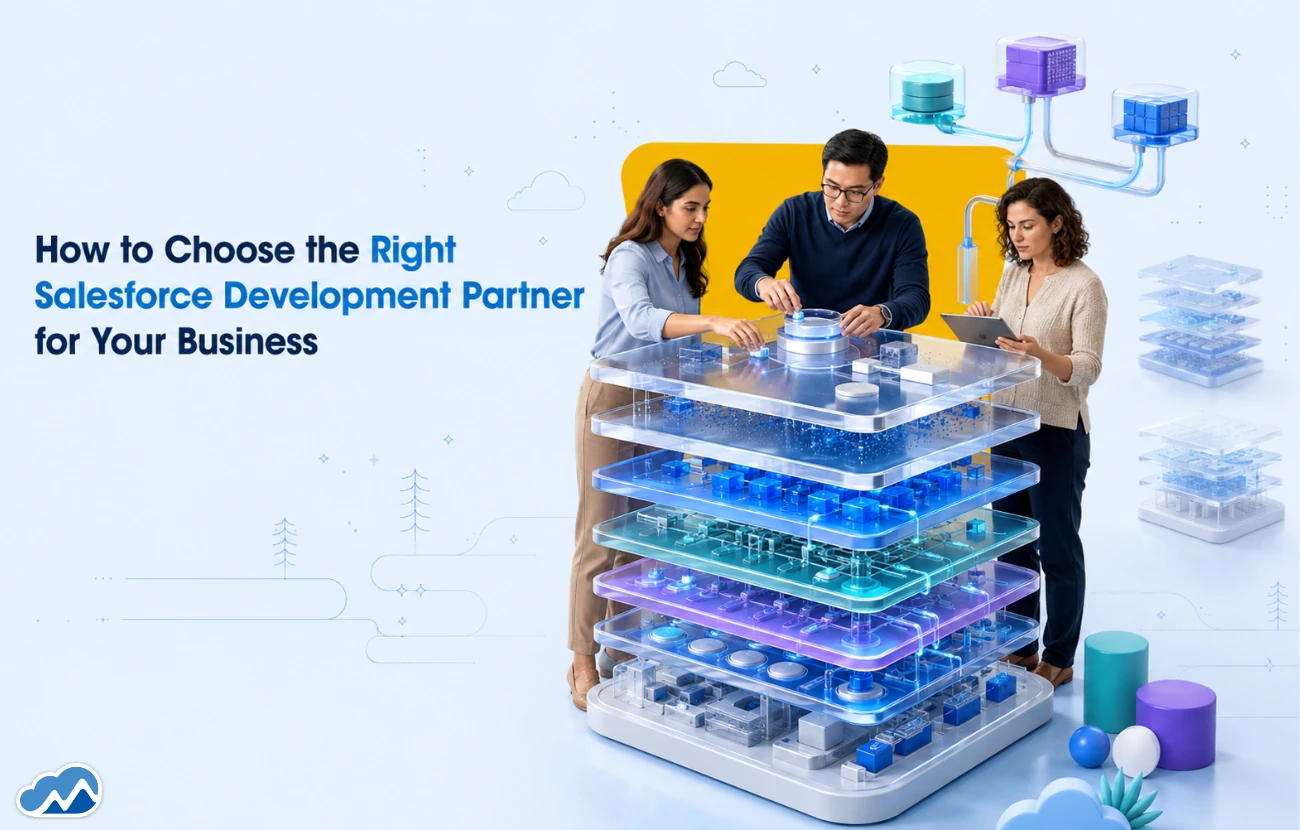
How to Choose the Right Salesforce Development Partner for Your Business

Table of content
Choosing who builds on your Salesforce is a bigger decision than it looks. A good development partner leaves you with an org that is easy to change and pleasant to work in. A bad one leaves you with a pile of code nobody understands, that breaks every time Salesforce ships a release, and that quietly makes every future change slower and more expensive. The catch is that both look identical in the first sales meeting. This guide is about telling them apart before you sign.
Here is what actually matters when choosing a Salesforce development partner, what to ignore, and the questions that reveal the truth fast.
Why Development Is Different
Hiring someone to build custom code on Salesforce is not the same as hiring an admin or a general consultant. Configuration is relatively forgiving, but custom code is something your business now owns forever. It has to be written well, tested properly, and kept working through Salesforce's three yearly releases. Bad code does not just fail once. It becomes a permanent tax on everything you build afterwards.
That is why the bar for a Salesforce development partner is higher than for general Salesforce work. You are not just paying for something that works today. You are paying for something that will still work, and still be changeable, in three years. Judging for that is the whole game.
What a Great Development Partner Looks Like
A few things separate a partner who builds for the long term from one who just ships features.
A configuration-first mindset. The best developers reach for code only when configuration genuinely cannot do the job, because they know custom code is a cost as well as a capability. A partner who writes Apex for everything is creating future maintenance, not showing skill.
Real code quality and testing. Ask how they test what they build. Salesforce requires test coverage, but a good Salesforce development partner goes beyond the minimum, writing tests that actually check behaviour, so a future change does not silently break something.
Respect for technical debt. Strong partners keep the org clean as they go, refactoring and consolidating rather than piling workaround on workaround. An org they have worked in for years should be easier to change, not harder.
Documentation and handover. You should own a clear record of what was built and why. A partner who keeps everything in their own heads is protecting their retainer, not your business.
Genuine communication. Development involves constant decisions, and a partner who is hard to reach now will be harder to reach when something breaks in production.
Freelancer, Agency, or Offshore?
Beyond the individual, think about the model. A freelancer can be excellent and cost-effective for a contained build, but you are relying on one person, and their knowledge leaves when they do. An agency costs more but gives you a team, cover, and a spread of skills across development, integration and admin. Offshore or hybrid models can offer real value, as long as communication and code quality are genuinely there and not just promised.
There is no single right answer. What matters is that whoever you choose as your Salesforce development partner has real depth, documents their work, and will still be reachable when you need them. Fit and reliability beat the lowest rate almost every time.
Red Flags to Walk Away From
A few warning signs come up again and again. A partner who reaches for custom code on every requirement. Vague answers on testing, or coverage numbers with no real behaviour behind them. No plan for documentation or handover. An org they built that only they can safely touch. And a rush to build before the requirements are properly agreed. Any one of these is a reason to keep looking.
Questions to Ask Before You Sign
Before committing, get honest answers to a handful of things. When do you choose configuration over custom code, and why? How do you test what you build, beyond meeting the minimum coverage? What documentation do we own at the end? How do you keep the org maintainable over time? And what happens if something breaks after go-live? The quality of those answers tells you almost everything about a Salesforce development partner.
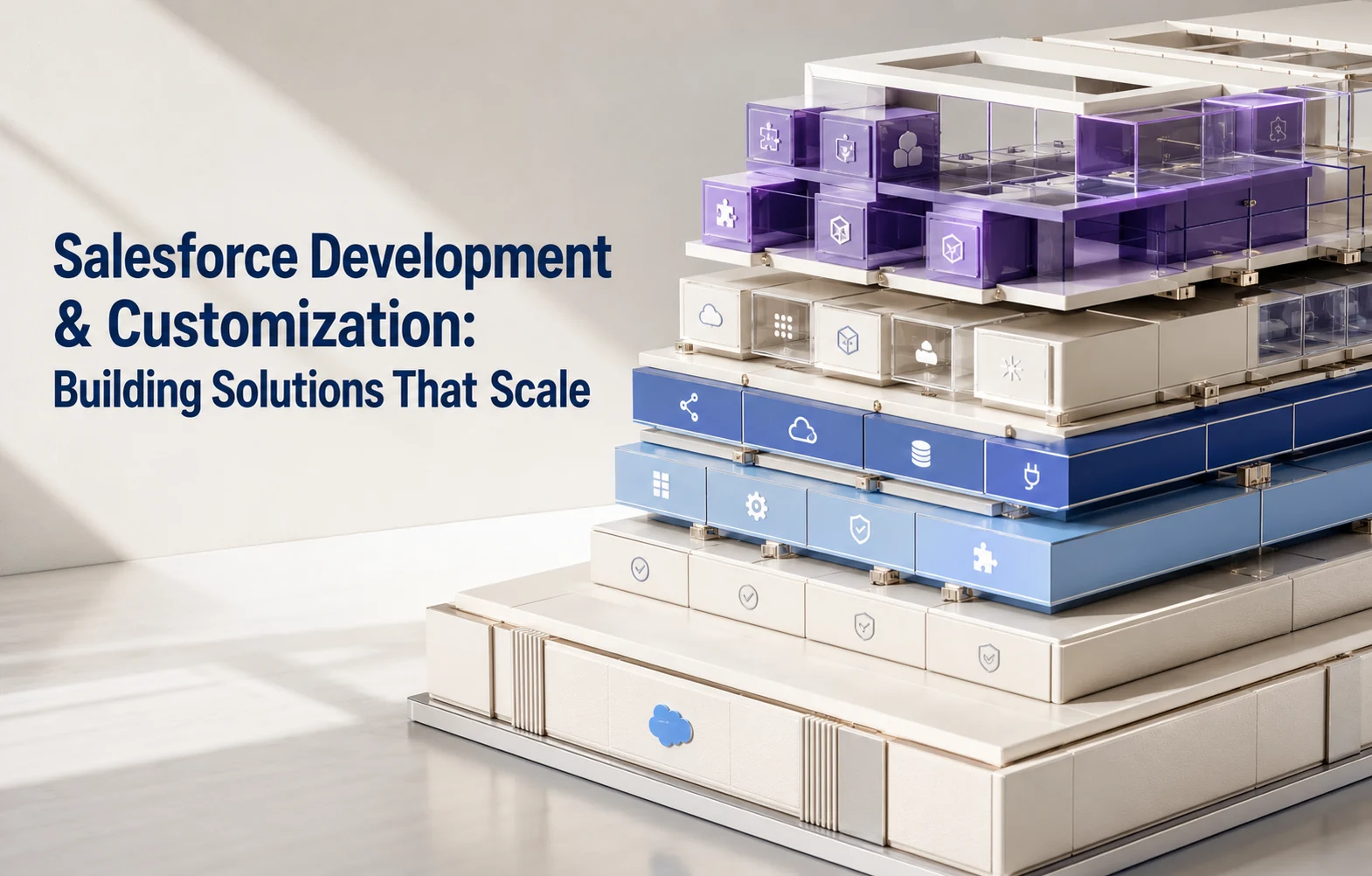
If you want to understand what good, scalable development actually looks like, our Salesforce Development Guide goes into the detail. This piece is about choosing the right people to do it.
Frequently Asked Questions
.webp)
.webp)
.webp)







Agentforce for Financial Services: AI-Driven Banking & Insurance Solutions





.webp)



n8n Workflow Automation: From Lead Capture to CRM in Minutes, Not Hours
%20(1).webp)