How to Hire a Salesforce API Integration Consultant: A Buyer's Guide

Table of content
So you have decided your Salesforce needs to talk to another system, and you need someone who can make that happen. That is the easy part. The hard part is working out who to actually hire, because the market is full of people who describe themselves the same way and charge wildly different amounts. This is a buyer's guide to that decision, written to help you hire a Salesforce API integration consultant who will build something that lasts rather than something that breaks the first time an API changes.
No jargon, no sales pitch. Just what to look for, how to compare your options, and the questions that get you a straight answer.
Freelancer, Agency, or In-House?
Before you compare individuals, decide what kind of help you actually want, because each has a trade-off. A freelancer is usually the cheapest and can be excellent for a single, well-defined connection, but you are relying on one person, and if they disappear, so does the knowledge. An agency costs more but gives you a team, cover when someone is away, and a spread of skills across the harder parts of integration. Building the capability in-house makes sense only if integration is going to be a constant, ongoing need.
There is no universally right answer. For a one-off ERP connection, a strong freelancer may be perfect. For an evolving stack with several systems, the reliability of an agency usually wins. What matters is that whoever you hire as a Salesforce API integration consultant has genuine depth, not just a confident profile.
What Skills a Good Consultant Actually Has
Integration is a specific skill, and it is easy to mistake general Salesforce experience for it. When you hire a Salesforce API integration consultant, these are the things worth checking for.
Real command of the Salesforce APIs. They should know when to reach for REST, SOAP, Bulk or Streaming, and why. Picking the wrong one is how you end up with slow syncs or hitting your limits mid-quarter.
Security done properly. Look for someone who uses OAuth rather than hardcoded credentials, and who scopes each integration to only what it needs. Security is not an add-on when you are connecting customer data.
Error handling and monitoring by instinct. Integrations fail quietly. A good consultant builds logging, alerting and retry logic from the start, so a broken sync pings a human rather than sitting unnoticed for weeks.
Awareness of governor and API limits. They should be thinking about call volume from day one, not discovering the limits in production.
Business understanding, not just code. The best consultants ask how your business works before they build, because most integration problems are really undecided business rules wearing a technical costume.
How to Evaluate Before You Hire
Once you have candidates, a few checks separate the capable from the confident. Ask for examples of relevant integration work, ideally connecting the kind of system you need connected. Ask for references and actually call them. Notice whether they ask about your process and your data before quoting, or whether they jump straight to a price. And pay attention to communication, because an integration project involves a lot of back and forth, and a consultant who is hard to reach now will be harder to reach when something breaks.
How Consultants Charge
Pricing for integration work comes in a few shapes, and knowing them helps you compare fairly. Fixed-price suits a single, clearly defined connection where the scope is genuinely nailed down. Hourly or day-rate suits more open-ended or evolving work. A retainer makes sense if you will need ongoing integration and maintenance. Whichever it is, remember that the number that moves the total most is not the rate. It is how many of your business rules are still undecided when the work starts, because every open question becomes billable discovery. A consultant who pushes you to decide those things early is saving you money.
Red Flags to Watch
A few warning signs come up again and again. Someone who talks only about technology and never asks about your business. Vague answers on how they handle security, errors or API limits. A rush to start building before the requirements are agreed. No references, or references they are strangely reluctant to share. And no plan for documentation or handover, which leaves you dependent on them forever. Any one of these is a reason to keep looking.
Questions to Ask Before You Hire
Before you commit, get honest answers to a handful of things. Can you show me a similar integration you have built? How do you handle authentication, errors and API limits? Do you document what you build, and what do we own at the end? How do you approach requirements before you start coding? And what happens if something breaks after go-live? The quality of those answers tells you far more than any profile or proposal when you hire a Salesforce API integration consultant.
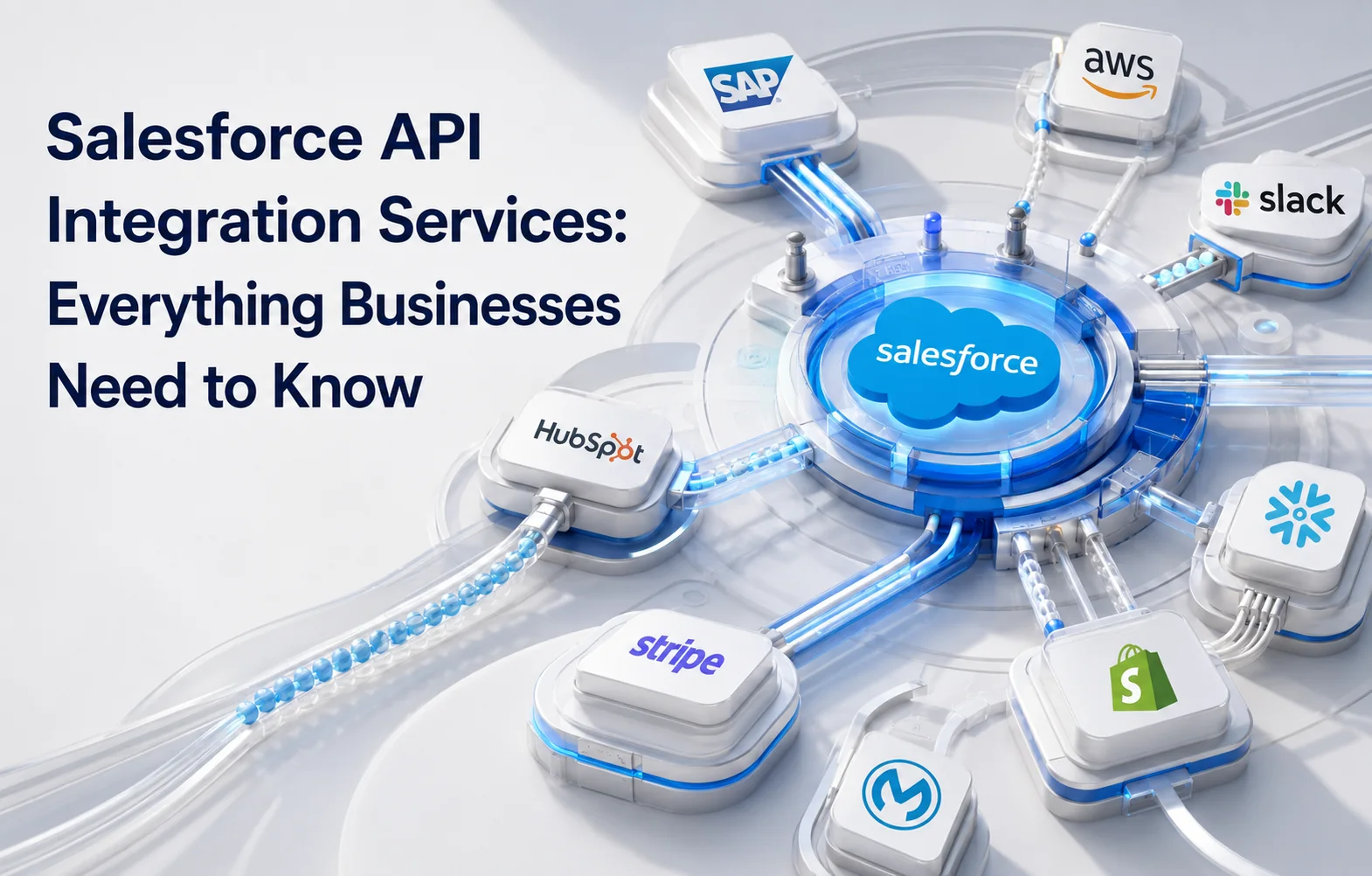
If you want the technical background behind these questions, our Salesforce API Integration Services Guide explains how the integrations themselves actually work. This piece is about hiring the right person to build them.
Frequently Asked Questions
.webp)
.webp)
.webp)














Agentforce for Financial Services: AI-Driven Banking & Insurance Solutions












.webp)










n8n Workflow Automation: From Lead Capture to CRM in Minutes, Not Hours


%20(1).webp)