Salesforce Consulting Companies in the USA: What to Look For

Table of content
You have a shortlist. Three or four names, all with clean websites, all saying more or less the same confident things. Now comes the hard bit, which is working out which one is actually right for you before you hand over a budget and a timeline. That is the real problem with choosing between Salesforce consulting companies in USA. The market is huge, everyone sounds capable, and the differences that matter are the ones nobody puts on their homepage.
This is a practical checklist for that moment. Not a market overview, but the specific things worth checking, the red flags worth walking away from, and the questions that get you a straight answer fast.
Why "What to Look For" Beats "Who Is Biggest"
The instinct is to reach for the biggest name and feel safe. It rarely works out that cleanly. Salesforce is the same powerful, mostly empty platform whoever you hire. What decides whether it succeeds is the implementation, and the implementation is only ever as good as the people doing it. A specialist that genuinely understands your business will beat a giant where you are a rounding error on the invoice.
So the goal when comparing Salesforce consulting companies in USA is fit, not size. Here is what fit actually looks like when you break it down.
1. Certifications That Are Current and Relevant
Certifications are not everything, but they are a baseline, and they tell you whether a firm keeps its skills fresh. Ask what certifications the people on your project hold, not the company overall, and check they are current and relevant to what you need. A pile of certificates in areas unrelated to your project is padding. Certified expertise in the specific clouds you are implementing is the point.
2. Proof of Work in Your Industry and at Your Size
A partner who has solved problems like yours moves faster and guesses less. Ask for examples of work with businesses in your industry and roughly your size. A firm that only ever works with enterprises will over-build for a mid-market team, and a firm that only does small setups will stall on your complexity. The best Salesforce consulting companies in USA can point to relevant, comparable work without scrambling.
3. A Process-First Approach
This is the single biggest tell. A good partner asks how your business actually works before they talk about features and configuration. A weak one wants to jump straight to the build. Integration and setup problems are almost never technical at heart. They are business decisions that were never made. A firm that leads with discovery and process is one that will build something your team actually uses.
4. Communication and Time Zone Coverage
The United States spans several time zones, and this matters more than people expect. Check who will actually be on your project, where they sit, and how they cover your working hours. You want a partner you can reach when something breaks, not an account manager relaying messages to a team you never speak to. Clear, responsive communication is worth more than a slightly lower rate.
5. Documentation and No Lock-In
A confident partner documents what they build and hands it over, so your team can maintain and extend it. A partner who keeps the knowledge in their own heads is protecting their retainer, not your interests. Before you sign, ask what documentation you receive and what happens if you part ways. If the honest answer leaves you dependent on them forever, keep looking.
6. A Real Point of View on AI
Agentforce and Einstein are part of serious Salesforce conversations now, so a modern partner should be able to tell you plainly where AI helps and where it does not. Be wary of both extremes. A firm that dismisses AI entirely is behind, and one that promises it will fix everything on day one is overselling. The right answer is specific, sober, and grounded in your data being ready first.
7. Transparent Pricing and Scope
Cost across Salesforce consulting companies in USA spans a wide range, so price alone tells you little about quality. What matters is transparency. A good partner is clear about what is included, what is not, and how change is handled. The number that moves a project budget most is not the hourly rate, it is how many of your business rules are still undecided when work starts, because every open question turns into billable discovery. A partner who pushes you to decide those things early is saving you money, not padding the bill.
Red Flags to Walk Away From
A few warning signs come up again and again. A firm that only talks technology and never asks about your business. Vague answers on who is doing the work and where. A rush to start building before the process is agreed. No clear plan for documentation or handover. And anyone promising to solve everything with AI before your foundations are ready. Any one of these is a reason to slow down and ask harder questions.
Questions That Reveal the Truth Fast
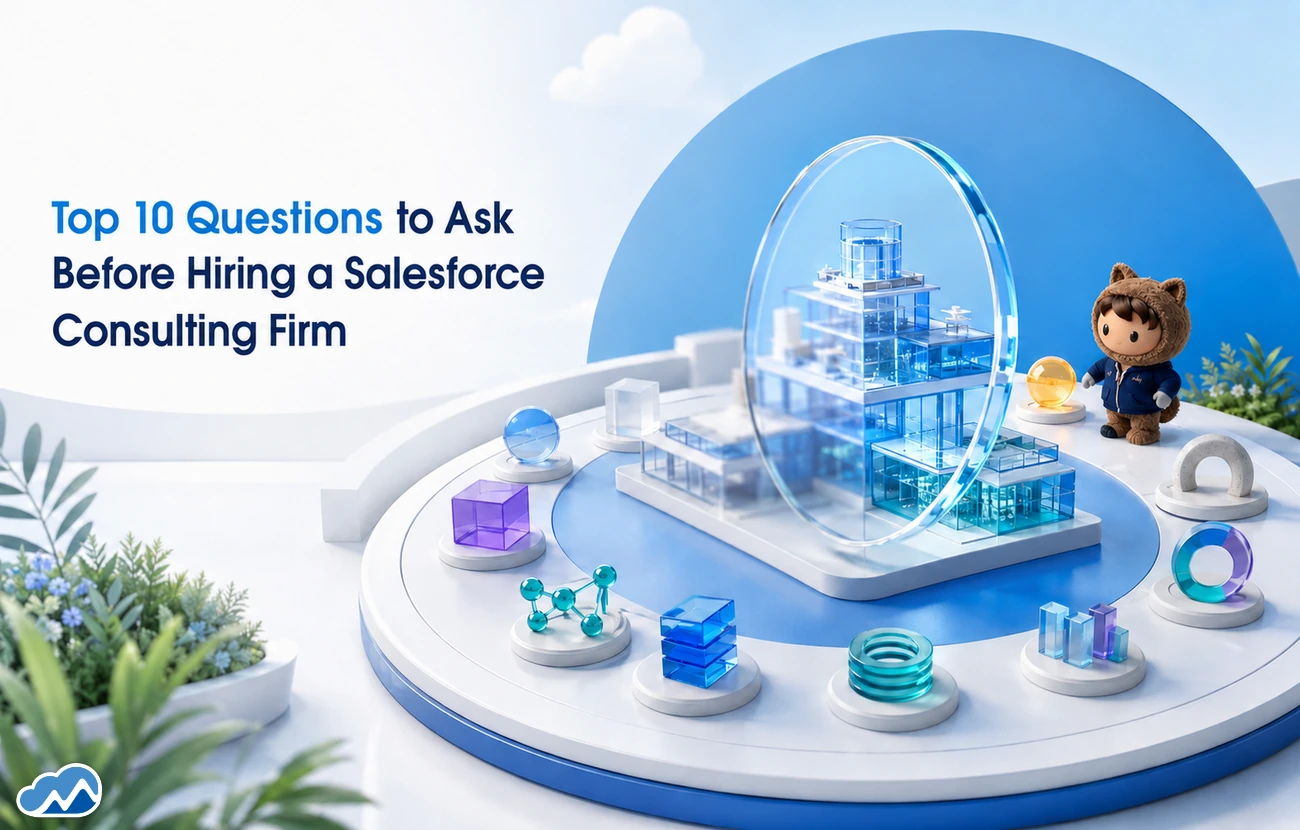
Before you commit, get honest answers to a handful of things. Can you show me relevant work with businesses like ours? Who exactly will be on my project, and where are they based? How do you approach discovery before building anything? What documentation do we get, and what happens after go-live? And where do you genuinely think AI fits for a business like mine? The quality of those answers will tell you more than any sales deck.
If you want the fuller framework behind these criteria, our guide on How to Choose a Salesforce Consulting Partner walks through the whole decision. This checklist is the fast version for when you already have a shortlist.
Frequently Asked Questions
.webp)
.webp)
.webp)














Agentforce for Financial Services: AI-Driven Banking & Insurance Solutions











.webp)









n8n Workflow Automation: From Lead Capture to CRM in Minutes, Not Hours



%20(1).webp)