Why Certified Salesforce Service Cloud Experts Make a Difference

Table of content

Here is a truth that costs businesses real money: almost anyone can configure Salesforce Service Cloud, but very few can make it genuinely work. The gap between a support operation that runs smoothly and one that quietly frustrates customers usually comes down to who built it. That is the case for certified Salesforce Service Cloud experts, and it is a stronger case than the word certified alone suggests.
This is an honest look at what certification actually signals, why Service Cloud in particular rewards real expertise, and what separates an expert who transforms your support from someone who simply switches the platform on.
What "Certified" Actually Signals
A Salesforce Service Cloud certification means someone has proven, tested knowledge of Service Cloud specifically, not just general Salesforce familiarity, and that they keep their skills current. When you bring in certified Salesforce Service Cloud experts, that credential is a sensible baseline. It filters out people winging it and confirms a real grounding in the product.
But certification is the entry ticket, not the whole story. The value of genuine experts shows up in judgement: knowing which features to use, which to avoid, and how to design support around how your team actually works. That judgement is what you are really paying for.
Service Cloud is one of several Salesforce clouds, and if you are still deciding which ones fit your business, our Salesforce Clouds Explained guide covers the landscape. This piece is about why expertise matters once you have chosen Service Cloud.
Why Service Cloud Rewards Real Expertise
Service Cloud is deceptively deep. Behind the case list sit channels, omni-channel routing, knowledge, SLAs, escalation rules, automation and now AI agents, and every one of those has to be designed rather than just enabled. Get the routing wrong and cases pile in the wrong queue. Skip the knowledge base and self-service deflects nothing. Rush the SLAs and you break promises you did not know you were making.
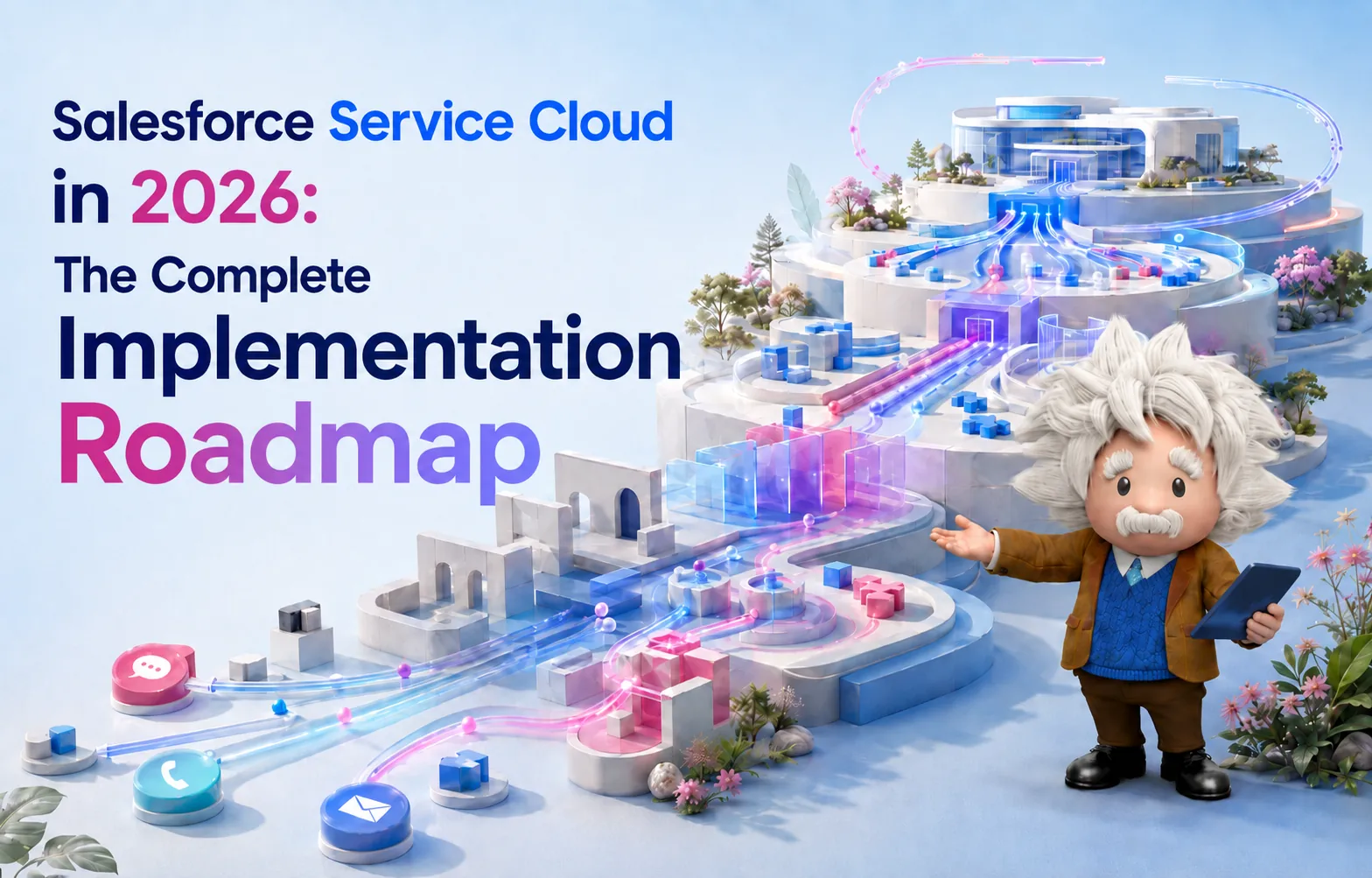
This is exactly why a solid build matters, and why the sequence in our Service Cloud Implementation Roadmap is worth following. Certified Salesforce Service Cloud experts know that roadmap instinctively, because they have seen where support operations break when the steps are skipped.
What Certified Experts Do Differently
The difference is not that experts click faster. It is that they make better decisions. They design case management and routing around your real support flow, not a generic template. They insist on a proper knowledge base because they know it powers self-service and AI. They set SLAs you can actually keep, with escalation that fires before a breach rather than after. And they plan for adoption, because a beautifully configured console your agents avoid is a failed project.
Just as importantly, certified Salesforce Service Cloud experts avoid the expensive mistakes that generalists walk into: channels with no routing behind them, automations that fight each other, and a setup so tangled nobody can safely change it later. Avoiding those mistakes is worth more than any single feature they switch on.
The 2026 Angle: Agentforce Service
Service Cloud has changed. Salesforce now wraps it in a layer of AI agents and brands the combined product Agentforce Service, with agents that can resolve routine Tier-1 cases autonomously. That raises the bar for expertise, because these agents are only as good as the knowledge and data behind them. A modern expert understands how to deploy them safely, grounded in a solid knowledge base, rather than switching them on and hoping.
If you want the wider view of where AI is taking Salesforce, our What Is Salesforce Agentforce guide is a good primer. The takeaway here is simple: in the Agentforce era, certified Salesforce Service Cloud experts need genuine AI judgement, not just configuration skills.
Certification Is a Baseline, Not a Guarantee
Because certification alone does not guarantee a good outcome, it pays to look for the same things you would when hiring any Salesforce help: relevant experience in businesses like yours, a process-first approach, clear documentation, and a plan for ongoing care after go-live. A support platform is not a one-time project. It needs maintenance as your business and Salesforce both change.
For how to evaluate a partner properly, our guides on How to Choose the Right Salesforce Consulting Partner and the Top 10 Questions to Ask Before Hiring a Consulting Firm are worth reading before you commit. And because support lives on long after launch, our Salesforce Support & Maintenance guide covers keeping the org healthy afterwards.
Frequently Asked Questions
.webp)
.webp)
.webp)









Agentforce for Financial Services: AI-Driven Banking & Insurance Solutions





.webp)





n8n Workflow Automation: From Lead Capture to CRM in Minutes, Not Hours

%20(1).webp)